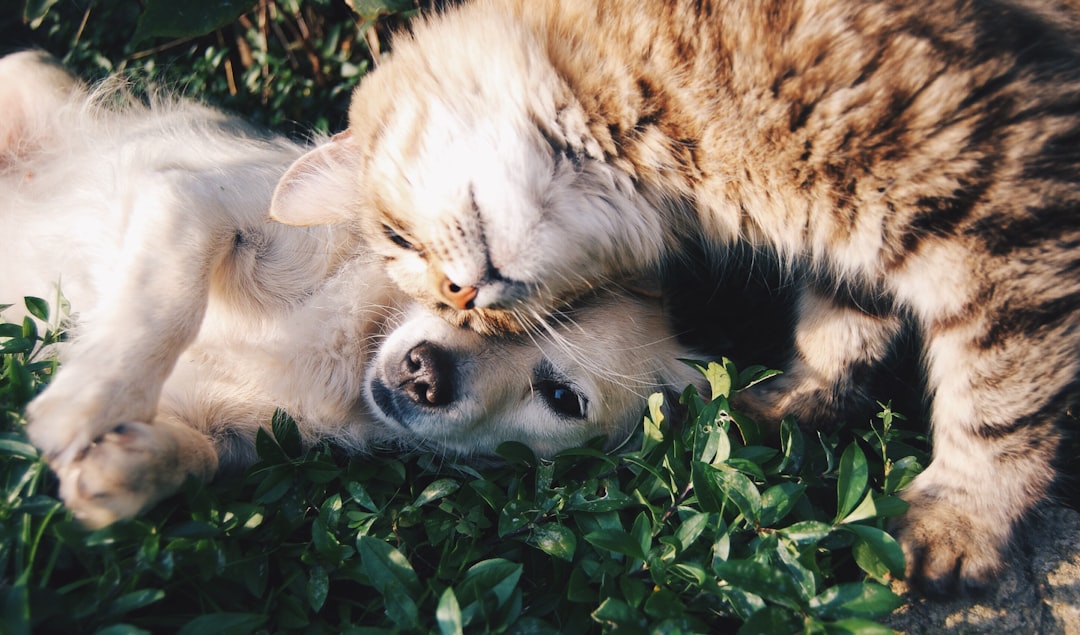
Photo by Krista Mangulsone on Unsplash
If you've ever watched your cat deliberately push a pen off your desk while maintaining eye contact, you've witnessed one of the most misunderstood behaviors in the feline world. We laugh about it on social media. We joke that cats are tiny jerks plotting our demise. But the reality? Your cat is actually executing a complex behavioral pattern that's been hardwired into their DNA for thousands of years.
The Hunting Instinct Never Goes Away
Here's what most people get wrong: your cat isn't being naughty. She's hunting. When domestic cats knock objects off surfaces, they're practicing the exact same movements they'd use to dislodge prey from tree branches, rocks, or other elevated positions in the wild. A study published in the journal Animal Behavior found that indoor cats perform these swatting behaviors at rates comparable to their wild counterparts stalking actual prey.
Think about it from your cat's evolutionary perspective. For millions of years, felines have been ambush predators. They use paws to test objects, gauge their weight, and practice the precise movements needed to disable small animals. When your tabby bats at that water glass? She's not trying to ruin your Tuesday. She's mentally cataloging texture, density, and the exact force needed to topple it. It's muscle memory without the actual hunting necessity.
The objects on your nightstand, kitchen counter, and bookshelf? They're training dummies in her mind. That pen that rolled under the refrigerator represents success—it fell, it moved unpredictably, and it provided the sensory feedback her brain craves. Mission accomplished from a neurological standpoint.
Environmental Enrichment and Boredom Are Real Factors
Before you start romanticizing your cat's wild predatory nature, let's address the uncomfortable truth: cats with adequate stimulation and enrichment knock things off tables significantly less often than bored cats. A 2019 study from Oregon State University revealed that indoor cats lacking environmental complexity and interactive play exhibited more destructive behaviors, including object displacement.
Your house cat doesn't have the mental stimulation that wild felines experience daily. She can't hunt for food, navigate complex territory, or engage in the cognitive challenges that keep wild cats mentally engaged. That expensive toy you bought sits in the corner while she's fascinated by your iPhone charger. Why? Because electronic items move, light up, and produce sounds—they're actually more engaging than static toys.
The cats with the fewest table-clearing incidents are those whose owners invested in interactive play. Wand toys, puzzle feeders, automated laser pointers, and even simple cardboard boxes provide outlets for that hunting drive. One cat behaviorist I spoke with mentioned that her client's persistent Siamese stopped knocking things off surfaces entirely after implementing two 15-minute play sessions daily. The difference was remarkable and immediate.
It's Also About Communication and Territory
Here's something else behavioral scientists have discovered: cats use object manipulation to communicate with their humans. When your cat bats something off a table while you're watching, she's testing your reaction. Some cats have learned that this behavior guarantees attention—even if it's negative attention in the form of scolding. Punishment actually reinforces the behavior because it's still interaction, and interaction means you're present and engaged.
Cats also knock things off surfaces to claim territory. The object transfers scent particles when it falls and lands, essentially marking the space as theirs. Your cat isn't being destructive; she's interior decorating in her own feline way. She's saying, "This is my counter. These are my objects. You live here too, but I want you to understand the hierarchy."
This territorial aspect explains why some cats target specific items repeatedly while ignoring others. That hairbrush you use daily? It smells intensely of you. Knocking it off the counter allows your cat to intermingle her scent with yours, essentially claiming you as part of her territory. It's actually quite sweet when you stop viewing it as sabotage.
What You Can Actually Do About It
If you're at your wit's end with the constant crashes and shatters, the solution isn't punishment—it's redirection and enrichment. Start by removing temptations from high surfaces. That sounds obvious, but most people leave vulnerable items exactly where their cats find them most interesting.
Next, invest genuinely in interactive play. Get a wand toy with feathers or string, and engage your cat in 15-minute hunting simulations twice daily. Make it part of your routine like brushing your teeth. Your cat's impulse to knock things off tables often diminishes significantly when she has legitimate outlets for her predatory energy.
Consider puzzle feeders and treat-dispensing toys that reward problem-solving. Window perches where she can observe birds provide mental stimulation. Some owners have found success with motion-activated toys that engage cats when humans aren't home. And if all else fails, invest in a sturdy shelving unit specifically for your cat where she can safely practice her knocking behavior without destroying your possessions.
One more thing: create consequences that your cat will actually understand. Cats don't connect cause and effect the way you think they do. Yelling at her five minutes after she knocked something over teaches her nothing except that you're unpredictable. If you catch her in the act, a firm "no" and immediate redirection to appropriate play is far more effective than anything else.
Your cat's table-clearing habits aren't a character flaw or a sign of malice. They're the echo of millions of years of evolution, combined with boredom, territorial marking, and a healthy desire to communicate with you. Understanding that distinction transforms the frustration into something more like admiration. She's not a tiny criminal. She's a tiny predator doing exactly what her instincts demand. And maybe—just maybe—that's worth a little less sleep and a few more strategically placed coasters.
If you want to understand more about your cat's mysterious behaviors, you might also enjoy reading about how different pets display their unique personalities, which reveals fascinating insights into animal psychology beyond just cats.
Comments (0)
No comments yet. Be the first to share your thoughts!
Sign in to join the conversation.