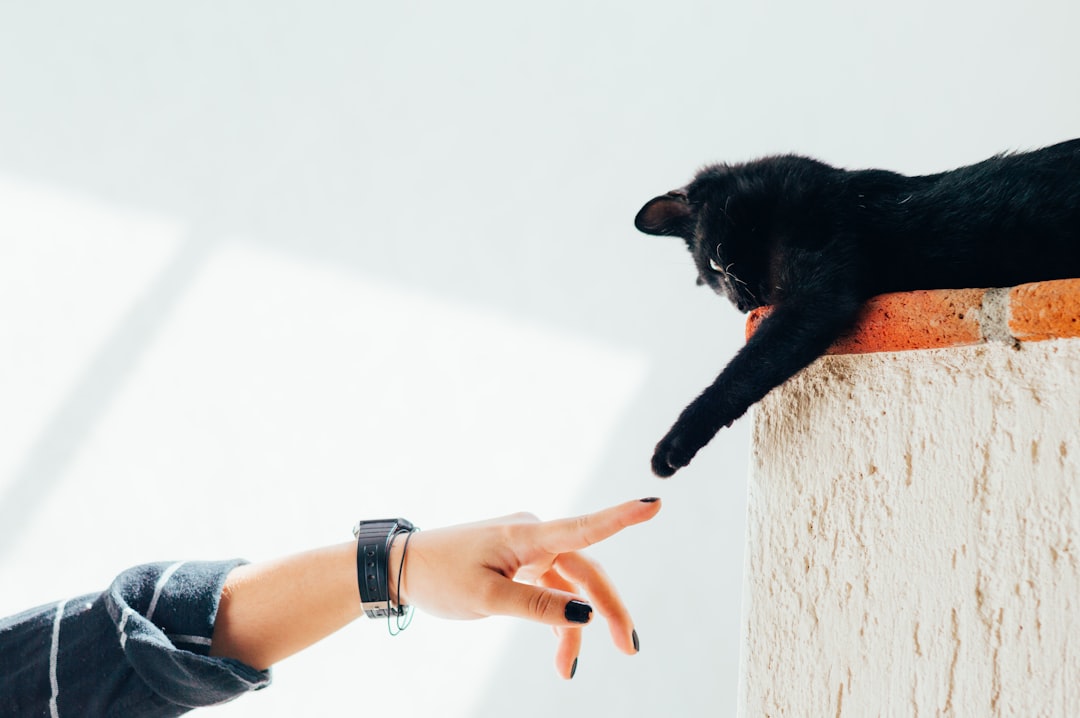
Photo by Humberto Arellano on Unsplash
We've all experienced it. You're sitting on the couch, peacefully minding your own business, when your cat walks up to a lamp, makes direct eye contact with you, and slowly pushes it toward the edge of the table. The item tumbles to the floor with a crash, and your cat simply walks away as if nothing happened. Infuriating? Absolutely. Random? Not even close.
For decades, cat owners assumed this behavior was pure mischief—felines being jerks just for the sake of being jerks. But animal behaviorists have discovered something far more interesting: cats knock things off tables for multiple, surprisingly logical reasons rooted in their instincts, personality, and communication styles. Understanding these motivations doesn't just help you manage the behavior; it offers a genuine window into how your cat thinks and perceives the world.
The Hunting Instinct That Never Really Died
Here's the thing about domestic cats: they're hunters living in a world without prey. Thousands of years of domestication haven't erased the instincts that drove their wild ancestors, and table-clearing behavior is a direct expression of those predatory drives.
When your cat nudges that water bottle or pen off your desk, they're essentially conducting an experiment. Wild cats hunt by testing their environment, touching moving objects, and observing how things respond. That tiny movement from their paw—the object teetering at the edge—triggers something primal. Cats are intensely interested in how things move and respond to force. The act of knocking something off a table creates movement, generates sound, and produces an immediate reaction. It's environmental enrichment dressed up as annoying behavior.
Dr. John Bradshaw, a renowned cat behavior expert from the University of Bristol, noted that cats who lack sufficient hunting stimulation during their daily lives are more likely to engage in object-batting behavior. In other words, a bored indoor cat is a cat looking for something to interact with, and your carefully arranged nightstand becomes a playground.
Testing Your Boundaries and Asserting Control
Cats are observation masters. They watch you constantly, learning what upsets you, what gets your attention, and what creates interesting consequences. When your cat knocks something off a table and you immediately react—whether with frustration, attention, or even just cleaning it up—they've learned something valuable: this action produces a result.
Unlike dogs, who generally want to please their owners, cats are fundamentally self-interested creatures making calculations about their environment. If pushing that pen off your desk guarantees you'll jump up, look at them, and make noise, some cats will absolutely do it again. You've essentially created a game with rewards.
There's also an element of territory assertion here. Cats mark their spaces through scent and physical manipulation. When your cat rubs against you, they're marking you with scent glands. When they knock things off your desk, they're claiming that space as their own and literally rearranging their territory according to their preferences. That cleared-off nightstand isn't chaos to your cat—it's organization.
Attention-Seeking, Plain and Simple
Let's address the obvious possibility: sometimes your cat is just demanding attention. Cats have learned that not all attention is created equal. Being ignored is boring. Being yelled at is actually more stimulating than being ignored. This isn't sophisticated manipulation—it's a simple cost-benefit analysis that even relatively unsophisticated creatures can make.
If you work from home and your cat has been napping all day with minimal interaction, that 3 PM knock-something-off-the-desk incident might be pure attention-seeking. Your cat wants engagement, preferably play, and the fastest way to guarantee a reaction is to commit a minor act of destruction.
This is why the worst response you can give is an immediate, reactive one. The louder you react, the more interesting your cat finds the behavior. Conversely, if you completely ignore it—no sound, no eye contact, just steady cleanup—the behavior becomes less rewarding over time.
Medical Issues and Neurological Factors
Before you assume your cat is simply being difficult, it's worth considering that excessive object-batting can sometimes indicate an underlying problem. Cats experiencing pain, especially arthritis in their front legs or shoulders, sometimes develop unusual behaviors as they work through discomfort. Similarly, older cats with cognitive dysfunction or younger cats with neurological sensitivities might engage in repetitive object manipulation.
If your cat's table-clearing behavior is sudden, obsessive, or accompanied by other behavioral changes—excessive vocalization, changed eating habits, or unusual litter box behavior—it's worth a veterinary check-up. Most of the time it's behavioral, but ruling out medical causes first is smart pet ownership.
What You Can Actually Do About It
Punishment doesn't work with cats. Spraying them with water, yelling, or any reactive punishment just teaches them to knock things off when you're not paying attention. Instead, focus on environmental management and enrichment.
Move breakable or precious items out of reach. Make your cat's environment more interesting with toys that create movement, puzzle feeders, window perches for bird-watching, and interactive play sessions twice daily. A tired cat is a less destructive cat.
If your cat is using table-clearing as an attention-seeking tool, make sure they're getting sufficient positive interaction. Regular play sessions, intentional petting, and environmental enrichment are actually investments in reducing destructive behavior. And if you do witness the behavior, resist the urge to react. Quietly picking up the item without eye contact or vocalization removes the reward system.
Your cat isn't a jerk. They're an intelligent predator with instincts, needs, and their own form of communication living in your home. Understanding the why behind the behavior doesn't eliminate your frustration, but it does shift the interaction from you versus your cat to you and your cat working together to create a more enriched environment. And honestly, that's a much better foundation for the relationship anyway.
For more insights into puzzling cat behaviors, you might also enjoy learning about why different pets communicate in unexpected ways.
Comments (0)
No comments yet. Be the first to share your thoughts!
Sign in to join the conversation.