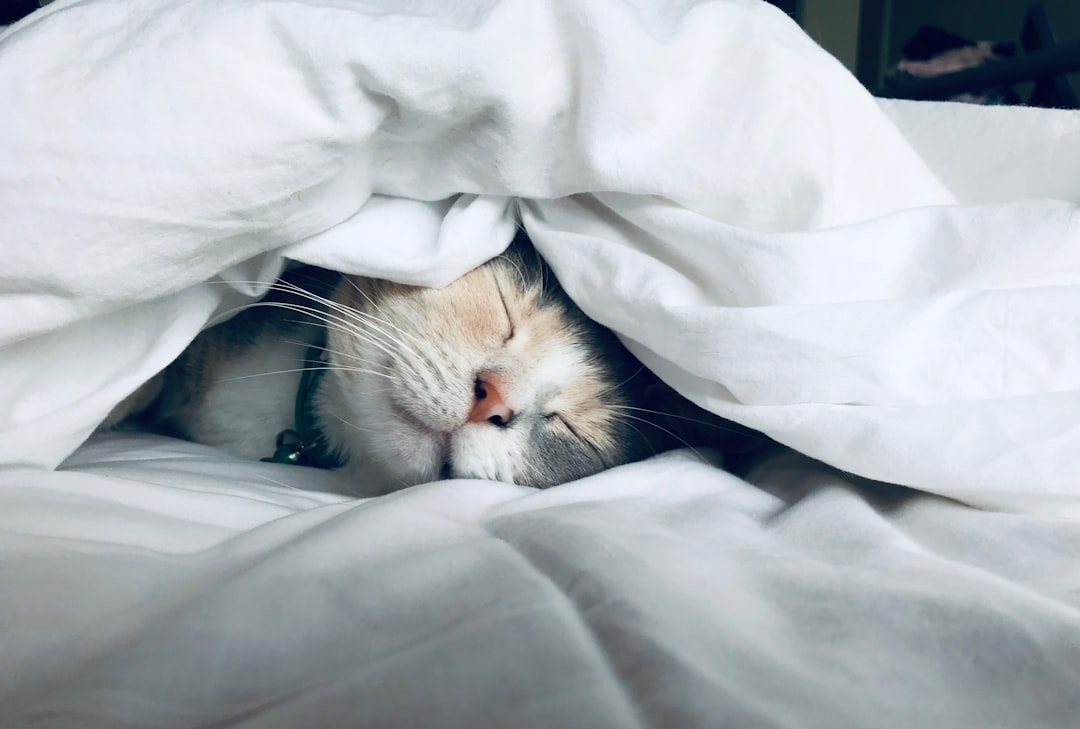
Photo by Kate Stone Matheson on Unsplash
We've all been there. You're sitting on the couch, finally relaxed, when your cat positions itself next to your drink and deliberately—yes, deliberately—pushes it off the table. You hear the crash. The water spreads across your floor. Your cat blinks at you with what looks like satisfaction. Welcome to one of pet ownership's most frustrating mysteries.
For years, I assumed my orange tabby, Marmalade, was just a little chaos agent with paws. He'd wait until I was looking directly at him, lock eyes, and send my phone across the nightstand. It felt personal. It felt calculated. It felt like he was mocking me. But after talking with veterinarians and animal behaviorists, I discovered something unexpected: my cat wasn't actually being malicious. He was trying to tell me something.
It's About Cause and Effect, Not Cruelty
Here's what most people get wrong about table-knocking cats: we assume it's about destruction or spite. We think they're being naughty on purpose. But cats don't operate on the same moral framework we do. They're not sitting around plotting how to ruin your day.
What they're actually doing is conducting an experiment. Cats are natural scientists, and pushing objects off surfaces is basic research. They're asking questions: What happens if I touch this? Does it fall? Does it make a sound? Does the human react? This behavior starts in kittens around 8 weeks old, when they begin understanding object permanence and cause-and-effect relationships.
Dr. Sarah Ellis, a certified cat behavior consultant, explains it this way: "Cats push things off surfaces because they find the action itself rewarding. The movement is engaging, the sound is stimulating, and the human reaction is incredibly reinforcing." In other words, every time you jump up and yell, you're basically giving your cat a standing ovation for their behavior.
Think about what your cat sees from their perspective. They're sitting on a table (a place of power and observation in cat hierarchy), and they notice an object within paw's reach. The object is novel, it moves when touched, and it produces immediate, dramatic results. From a cat's point of view, this is the most interesting game in the house.
Boredom Is Often the Real Culprit
Cats who engage in frequent table-knocking are often under-stimulated. This might sound surprising if your cat has toys everywhere, but here's the catch: most cat toys are boring to cats. A ball that sits in the corner doesn't engage a cat's hunting instincts. A feather toy that never moves the way a real bird would isn't satisfying.
Indoor cats, in particular, have limited opportunities to do what evolution designed them to do: hunt, climb, explore, and problem-solve. So they create their own entertainment. And pushing your grandmother's vase off the bookshelf? That's legitimately the most stimulating thing that happens to them all day.
A 2015 study from Oregon State University found that cats engage in destructive behaviors (including knocking things over) significantly more when they lack sufficient environmental enrichment. The researchers noted that cats need opportunities to climb vertically, access window perches, and interact with toys that mimic prey behavior.
I realized this was Marmalade's problem when I actually started paying attention to when he knocked things over. It wasn't random. It was always in the late afternoon, right around the time when he'd get the "zoomies" and start bouncing off the walls. He wasn't being naughty—he was bored out of his mind.
Some Cats Are Just Attention-Seeking
Let's be honest: sometimes a cat knocks something off a table because they know you'll react. And that reaction—whether you're annoyed, amused, or angry—is actually attention. For some cats, negative attention is still attention, and attention from their human is the most valuable resource in their world.
If your cat specifically knocks things over when you're ignoring them, they've learned an effective strategy. You're on your phone? Cup goes down. You're working on your laptop? Water bottle follows. It's not malicious; it's a communication attempt. They're saying, "Hey, I exist, and I want your engagement."
This is especially common in cats who've been raised in homes where table-knocking triggers an immediate response. They've essentially trained their humans to respond to them on demand. Which, if you think about it, is pretty clever.
What Actually Works (Spoiler: Punishment Doesn't)
Here's where most people go wrong: they try to stop the behavior through punishment. They yell, they squirt water bottles, they clap their hands loudly. The problem? This often makes things worse. Punishment teaches cats to hide the behavior (they'll knock things over when you're not looking) or to become fearful of their humans. Neither outcome is good.
What actually works is redirecting their energy and removing the opportunity. Start by eliminating temptation—put breakable or valuable items on surfaces your cat can't access. Move that water glass away from the edge. Keep your nightstand clear.
Then, dramatically increase environmental enrichment. This means vertical space (cat trees, wall-mounted shelves), interactive toys, and scheduled play sessions. A study from the Journal of Feline Medicine and Surgery found that cats who engaged in daily interactive play showed significantly reduced destructive behaviors.
I also discovered that giving Marmalade an appropriate outlet for this behavior made a huge difference. I got him a tall cat tree with dangling toys, installed window perches, and started playing with him for 15 minutes twice a day using a wand toy that mimics bird movements. Within two weeks, the table-knocking dropped by about 80%.
Additionally, make sure your cat has plenty of climbing opportunities. Cats have a biological need to be up high—it makes them feel safe and gives them a better vantage point of their territory. If your only option for climbing is your shelves, those shelves are going to get cleared.
The Bottom Line: Your Cat Isn't Evil
Your cat knocking things off tables is frustrating, sure. But it's not a sign of malice or spite. It's a sign that your cat is curious, possibly bored, or seeking connection. Understanding this changes everything about how you respond.
Instead of seeing your cat as a tiny furniture destroyer, see them as a smart animal who's trying to engage with their environment in the most interesting way they can. Once you start addressing the underlying causes—boredom, lack of stimulation, or insufficient interaction—the behavior usually resolves itself.
Marmalade still occasionally bats at things, but it's rare now. And honestly? I don't even mind when he does. Because I finally understand what he's trying to tell me. He's not being a jerk. He's just being a cat.
If your cat is exhibiting other behavioral issues, you might find it helpful to understand what other behaviors really mean. Learn why some animals communicate in ways that seem confusing at first—it's often less about what you think it is.
Comments (0)
No comments yet. Be the first to share your thoughts!
Sign in to join the conversation.