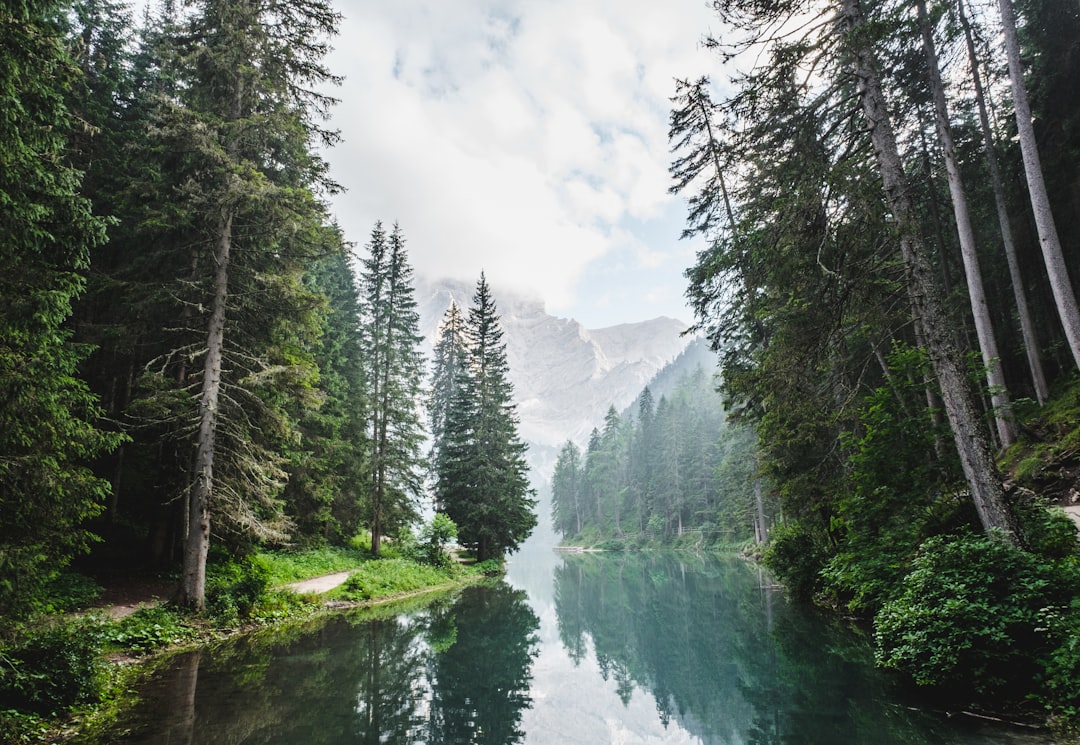
Photo by Luca Bravo on Unsplash
Last spring, a mycologist named Suzanne Simard conducted an experiment that would eventually shake the foundations of forest ecology. Using radioactive isotopes, she tracked how a mother Douglas fir tree transferred carbon to her seedlings through an underground fungal network. The results were stunning: the mother tree was actively nurturing her offspring, sending them resources through what would later be dubbed the "wood wide web." But here's what makes this genuinely mind-bending: the fungus wasn't just a passive conduit. It was orchestrating the entire exchange.
The Fungus Plays Matchmaker
Mycorrhizal fungi—the scientific name for these underground collaborators—form symbiotic relationships with about 90% of all plant species on Earth. But "symbiotic" doesn't quite capture what's happening. These fungi are more like venture capitalists, making calculated investments in plant partnerships. A single fungal colony can connect hundreds of trees simultaneously, creating networks that span entire forests.
The mechanics are bizarrely sophisticated. The fungus wraps itself around tree roots, increasing their surface area for nutrient absorption by up to 700 times. In exchange, the tree provides the fungus with photosynthesized sugars—essentially paying for the service with solar energy that only plants can manufacture. But here's where it gets weird: the fungus appears to be selective about which trees get the most resources. Studies have shown that fungal networks preferentially transfer more nutrients to trees that are particularly important to forest health, as if the fungus possesses some understanding of ecosystem value.
The Underground Trading Floor
Imagine walking through a forest and realizing that every step you take, you're treading across what amounts to a biological stock exchange. This isn't metaphorical. Research conducted at the University of British Columbia demonstrated that trees actually shift their nutrient allocation based on seasonal demands and peer competition detected through fungal networks. A birch tree stressed by drought will receive preferential treatment from the fungi—receiving more water and nutrients. Meanwhile, a healthy oak thriving in ideal conditions might see its resource flow reduced, effectively forcing it to compete for survival.
Dr. Merlin Sheldrake, in his research on fungal networks, found that fungi can distinguish between different plant species and even different individual trees. They recognize "friend" from "foe" with remarkable accuracy. Coniferous trees and deciduous trees that occupy different forest niches will be connected by the same fungal network, but the fungi regulate resource flow differently to each type. It's less like a simple utility and more like a conscious economic system with rules, preferences, and consequences.
When the Network Gets Weaponized
Perhaps the most disturbing discovery came from research on fungal network toxicity. When a tree becomes diseased or infested with pests, the fungal network can actually block its access to shared resources—effectively quarantining it from the community. Scientists observed this phenomenon in white pine forests infected with blister rust. Healthy trees in the network actively reduced nutrient flow to infected neighbors, creating an antimicrobial firewall that protected the broader forest community.
But there's a darker application. Some fungi deliberately maintain relationships with parasitic plants. Studies on Rafflessia—a parasitic flower that feeds entirely on grapevines—showed that certain fungal species actively facilitate this predatory relationship. The fungus essentially brokers the connection, allowing the parasite to drain the host tree while receiving fungal nutrients in return. The fungus profits from the arrangement because a weakened host plant produces more sugars in desperation, which the fungus then harvests.
What This Means for Forest Survival
When we log a forest, we're not just cutting down trees. We're obliterating networks that have been operating for thousands of years. A single old-growth forest might contain fungal colonies that are among the oldest living organisms on Earth—some fungal networks are estimated to be over 8,000 years old. These ancient networks possess what we might call "institutional knowledge." They've weathered droughts, fires, and plagues. They've optimized resource distribution patterns that maximize forest resilience.
Climate researchers now believe that damaged fungal networks may be one reason forests are becoming increasingly vulnerable to catastrophic wildfires. When you remove old-growth trees, you sever the connections younger trees depend on for survival during stress periods. The young trees become fragile, flammable, and prone to beetle infestation. What appears to be a simple timber harvest is actually a neurological attack on the forest's collective intelligence system.
For those interested in how organisms communicate in ways we're only beginning to understand, the shocking truth about why trees talk to each other underground provides additional fascinating insights into forest communication networks.
The Future of Fungal Conservation
Some forward-thinking conservation groups are now protecting forests based on fungal network mapping rather than traditional biodiversity metrics. They're beginning to understand that you can't preserve a forest by protecting random patches. You need to protect the network architecture. This represents a fundamental shift in how we think about wilderness preservation.
The implications are staggering. Forests might not be collections of individual trees competing for resources. They might be unified organisms—superorganisms with distributed intelligence coordinated through fungal networks. If that's true, then our entire approach to forestry, agriculture, and land management needs reconsideration. We've been treating the forest as a resource extraction system when we should be treating it as a thinking system. The fungus beneath our feet might just be the most sophisticated biological computer we've ever encountered.
Comments (0)
No comments yet. Be the first to share your thoughts!
Sign in to join the conversation.