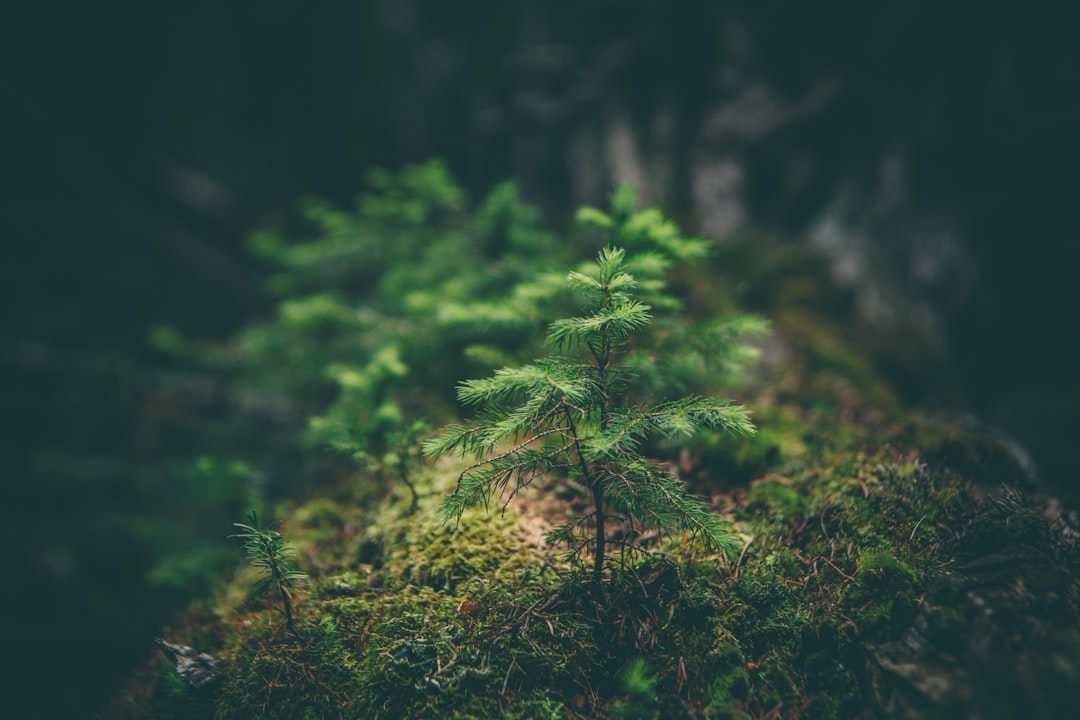
Photo by Matthew Smith on Unsplash
The Wood Wide Web
Walk through an old-growth forest and you're standing on top of one of nature's best-kept secrets. Beneath the soil, stretching invisibly between tree roots, lies an intricate network of fungal threads that scientists call the "mycorrhizal network"—or more poetically, the "wood wide web." This isn't metaphor or fantasy. It's as real as the Wi-Fi router in your home, except it's been operating continuously for over 400 million years.
In the late 1990s, forest ecologist Suzanne Simard conducted a groundbreaking experiment in British Columbia that would change how we understand forests forever. She took three trees of different species—a Douglas fir, a paper birch, and a ponderosa pine—and traced the movement of radioactive carbon between them. The results stunned the scientific community. Carbon was moving between trees, traveling through the fungal network, and doing so in a pattern that suggested something even more remarkable: the trees appeared to be *sharing resources*.
When a Douglas fir was shaded and photosynthesizing less, it received more carbon from its neighbors. When the birch was in full sun and thriving, it sent extra carbon through the network to the struggling fir. This wasn't random molecular drift. This looked, suspiciously, like intentional sharing.
How the System Actually Works
The wood wide web functions through partnerships between trees and fungi. Specifically, tree roots form relationships with mycorrhizal fungi—microscopic organisms that wrap around the root tips or actually penetrate the root cells themselves. In exchange for carbon-rich sugars that trees produce through photosynthesis, the fungi provide the trees with something equally valuable: enhanced access to water and nutrients like nitrogen and phosphorus that would otherwise be locked in soil particles.
But here's where it gets interesting. These fungal networks don't just connect a tree to the soil. They connect trees to *each other*. A single fungal colony can link hundreds of trees across an area of several acres. One famous example is a honey fungus in Oregon spanning 2,384 acres—making it one of the largest living organisms on Earth.
Scientists have documented something remarkable happening through these networks: trees share more than just water and nutrients. They transfer chemical signals. When a tree is attacked by insects, it releases volatile compounds. Through the mycorrhizal network, these "distress signals" reach neighboring trees, which then begin producing defensive compounds in their leaves *before* the insects even arrive. It's like a forest-wide early warning system, and trees that are connected through the fungal network receive the alert faster than trees separated from it.
Research published in 2020 showed that trees in the same fungal network experienced fewer pest problems than isolated trees. The connected trees had already ramped up their chemical defenses, making them less appealing to hungry insects. The fungi weren't just a passive conduit for these signals—they appeared to be amplifying them, passing along chemical messages with enhanced urgency.
The Controversy That Won't Die
Not everyone is convinced that trees are intentionally "helping" each other or that there's real communication happening. Some researchers argue we're projecting human concepts of cooperation onto what is ultimately just chemistry—that trees aren't consciously sending signals any more than your body is consciously deciding to raise your temperature when you have a fever. The fever response happens automatically through biochemistry, not through your fever "deciding" anything.
Dr. Toby Kiers, a mycorrhizal researcher at VU University Amsterdam, has spent years studying the economics of these fungal relationships. She argues that what looks like altruism might actually be pure self-interest at the fungal level. The fungi have evolved to manage the entire forest network because a diverse, healthy forest produces more sugar to feed them. A sick tree is bad for the fungus. So the fungus naturally works to keep all its "partners" alive and thriving. The trees aren't being generous—they're being manipulated, in a way, by an organism that has learned how to play gardener.
This debate matters because it affects how we interpret what we see. Are trees conscious collaborators in a democratic network? Or are they unconscious participants in a system evolved by fungi for fungal benefit? The truth, almost certainly, is somewhere more nuanced than either extreme.
What This Means for Forest Management
Whether we call it cooperation, mutualism, or fungal manipulation, the wood wide web reveals something crucial about how forests actually function. Clear-cutting doesn't just remove trees—it severs network connections built over centuries. Logging operations that extract trees but destroy the fungal network essentially lobotomize the forest, removing both the individual trees and the communication infrastructure that holds the ecosystem together.
Some forward-thinking forestry operations are beginning to change their practices based on this knowledge. Instead of complete clear-cuts, they're adopting selective logging that preserves the fungal networks connecting remaining trees. Young saplings planted near older trees do better—possibly because they're tapping into the established fungal network and receiving carbon and nutrients from mature neighbors.
If you want to learn more about how predators like wolves also reshape entire forest ecosystems—including the fungi—check out The Resurrection of Wolves: How One Predator's Return Rewrote an Entire Ecosystem. It's a fascinating example of how removing one species from a forest completely transforms everything else, from fungi to water flow to vegetation.
Why You Should Care About Underground Conversations
Trees have been on Earth for over 300 million years. They survived ice ages, asteroids, and continents shifting. They've done this partly because of an innovation that predates human civilization by hundreds of millions of years: the ability to work together through networks we're only just beginning to understand.
The next time you walk through a forest, you're not just walking through a collection of individual trees competing for survival. You're walking through a superorganism—a interconnected community that thinks, communicates, and collaborates in ways we're still struggling to comprehend. The trees beneath your feet are talking right now. We're finally learning to listen.
Comments (0)
No comments yet. Be the first to share your thoughts!
Sign in to join the conversation.