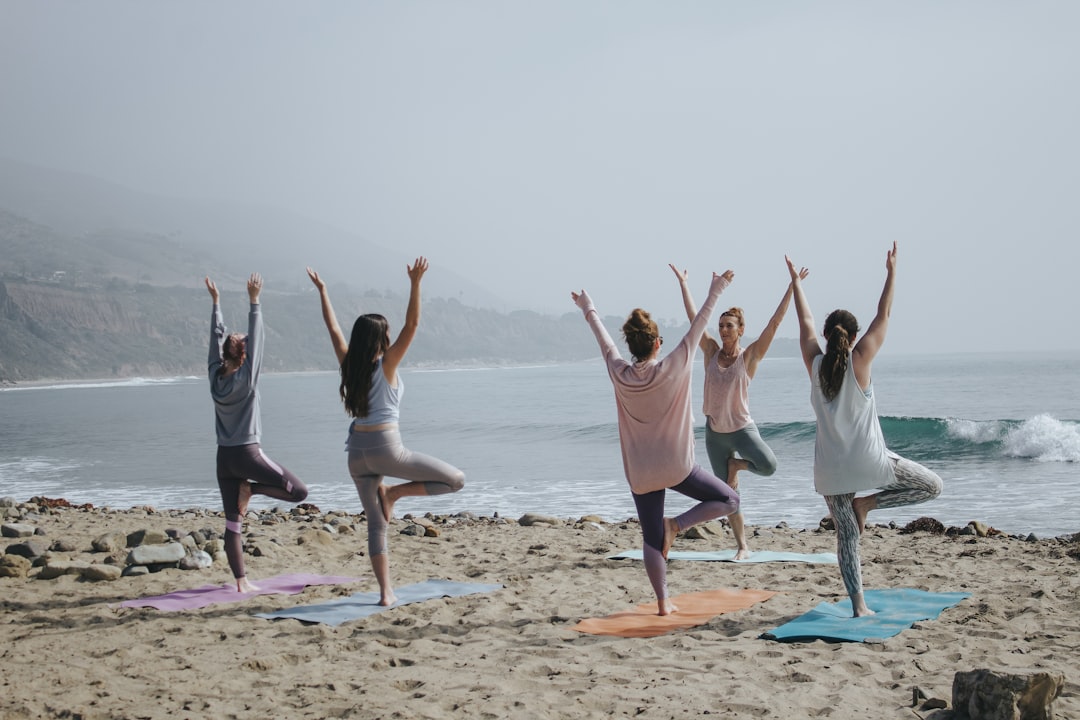
Photo by Kaylee Garrett on Unsplash
Sarah sat in her car outside the office, gripping the steering wheel so hard her knuckles turned white. Her heart raced. Her palms sweated. She'd done this breathing thing before—in and out, in and out—but it never seemed to help. So she grabbed her phone, scrolled through Twitter for five minutes, and walked in feeling only slightly less panicked.
What Sarah didn't know was that her breathing technique was probably wrong. And that small mistake meant the difference between calming her nervous system and just... breathing while anxious.
The relationship between your breath and your mental state isn't some yoga-studio mythology. It's hard neuroscience. And once you understand how it actually works, you can stop white-knuckling your way through stressful situations and actually fix what's happening inside your body.
Why Your Nervous System Cares About Your Breath More Than You Think
Your autonomic nervous system—the part of your body you don't consciously control—runs on two basic modes: sympathetic (fight-or-flight) and parasympathetic (rest-and-digest). When you're anxious, your sympathetic nervous system is in charge. Your heart beats faster. Your breathing quickens. Your body tenses. It's useful when you're actually being chased by something dangerous. It's less useful when you're nervous about a presentation.
Here's where breathing becomes your secret weapon: it's the one autonomic function you can actually control voluntarily. You can't tell your heart to slow down directly. You can't command your stomach to relax. But you can control your breath. And when you do it correctly, your nervous system follows.
Research from Stanford University found that different breathing patterns activate different neural circuits. Slow, regular breathing signals safety to your brain. Your body takes this signal seriously. Within minutes—not hours—your heart rate drops, your blood pressure decreases, and your cortisol (the stress hormone) begins to decline.
A 2019 study in Frontiers in Human Neuroscience had participants use a specific breathing technique for just five minutes. The results? Their measured anxiety levels dropped by 24% on average. Some people experienced even more dramatic shifts. And the effect wasn't placebo—researchers tracked actual physiological markers.
The Mistake Everyone Makes (And Why It Doesn't Work)
Most people, when told to "breathe deeply," do exactly what you'd think: they take one long, deep breath in through their nose, hold it, then exhale. Sometimes they repeat this a few times and feel... maybe slightly calmer? Maybe nothing?
The problem is that one deep breath does almost nothing. Your nervous system isn't impressed by a single physiological event. It needs a pattern. It needs consistency. It's like expecting your muscles to get stronger from one push-up.
The second mistake: people focus only on the inhale. This is backwards. When you breathe in, you actually activate your sympathetic nervous system slightly. It's the exhale that triggers parasympathetic activation. A longer exhale than inhale is what actually calms you down.
This is why Sarah's technique wasn't working. She was probably doing equal breathing in and out, or even emphasizing the inhale. Her body had no reason to shift into rest mode.
The Actual Techniques That Research Proves Work
The 4-7-8 Breath (for acute anxiety)
This technique, popularized by Dr. Andrew Weil, is backed by multiple studies showing rapid anxiety reduction. Here's exactly how to do it:
Inhale through your nose for a count of 4. Hold the breath for a count of 7. Exhale slowly through your mouth for a count of 8. The long exhale is doing the heavy lifting here. Repeat this cycle four to eight times. Most people feel noticeably calmer within 2-3 minutes.
The beauty of this technique is that it works immediately. You don't need a special app or a quiet room. You can do it at your desk before a meeting, in your car before walking into a stressful situation, or even in the bathroom at a party when you need to reset.
Box Breathing (for sustained calm)
Navy SEALs use this technique because it works reliably under extreme stress. Inhale for 4 counts, hold for 4, exhale for 4, hold for 4. This creates a balanced pattern that your nervous system responds to positively. Do this for five minutes, and you've created a genuine shift in your baseline stress level.
Extended Exhale Breathing (the most powerful)
If you want maximum parasympathetic activation, make your exhale significantly longer than your inhale. Try a 4:8 ratio—four counts in, eight counts out. You can extend the exhale even more as you practice. Some people work up to a 4:12 ratio. The longer exhale forces activation of the vagus nerve, which is essentially your body's calm-down button.
When You Should Actually Use This (And When It Helps Most)
Breathing techniques work best for acute anxiety—the kind that hits you suddenly. Before a job interview. During a difficult conversation. When you wake up at 3 AM with racing thoughts. If you use the 4-7-8 breath or extended exhale technique before these moments, you can genuinely prevent the anxiety from escalating.
But here's what breathing alone won't fix: chronic anxiety rooted in bigger life issues. If you're in a job you hate or a relationship that drains you, breathing techniques will calm you down temporarily. They won't solve the underlying problem. Think of them as a tool for managing the symptom while you address the cause.
That said, using breathing techniques consistently—even when you're not anxious—creates a longer-term benefit. People who practice slow breathing regularly show lower baseline stress levels and better emotional regulation overall. Your nervous system, like your muscles, gets better at what you practice.
Also worth noting: if you struggle with anxiety related to sleep, you might want to read about why your coffee habit might be sabotaging your sleep. Sometimes the best anxiety management involves removing the sources of stress, not just managing your response to it.
Building the Habit That Actually Sticks
The research shows that breathing techniques work. But they only work if you actually use them. And most people don't, because they forget or they're too stressed to remember.
Start with one technique. Not all three. Pick the 4-7-8 breath and practice it for one week. Do it once a day when you're calm, so your body learns the pattern. Then, when you actually feel anxious, your nervous system already knows how to respond.
Set a phone reminder if you need to. Tie it to something you already do—like after your morning coffee or right before bed. Once it becomes automatic, you won't have to think about it. It'll become your body's default move when stress hits.
Sarah tried this approach. She picked the 4-7-8 breath and practiced it every morning for two weeks. Then, the next time she felt anxiety creeping in before a meeting, she didn't reach for her phone. She did the breathing. Slowly, deliberately. Four in. Hold for seven. Eight out. By the third round, her racing heart had settled. By the fifth, she felt genuinely ready.
It's not magic. It's neuroscience. And unlike most anxiety solutions, it costs nothing, has no side effects, and works in minutes.
Comments (0)
No comments yet. Be the first to share your thoughts!
Sign in to join the conversation.