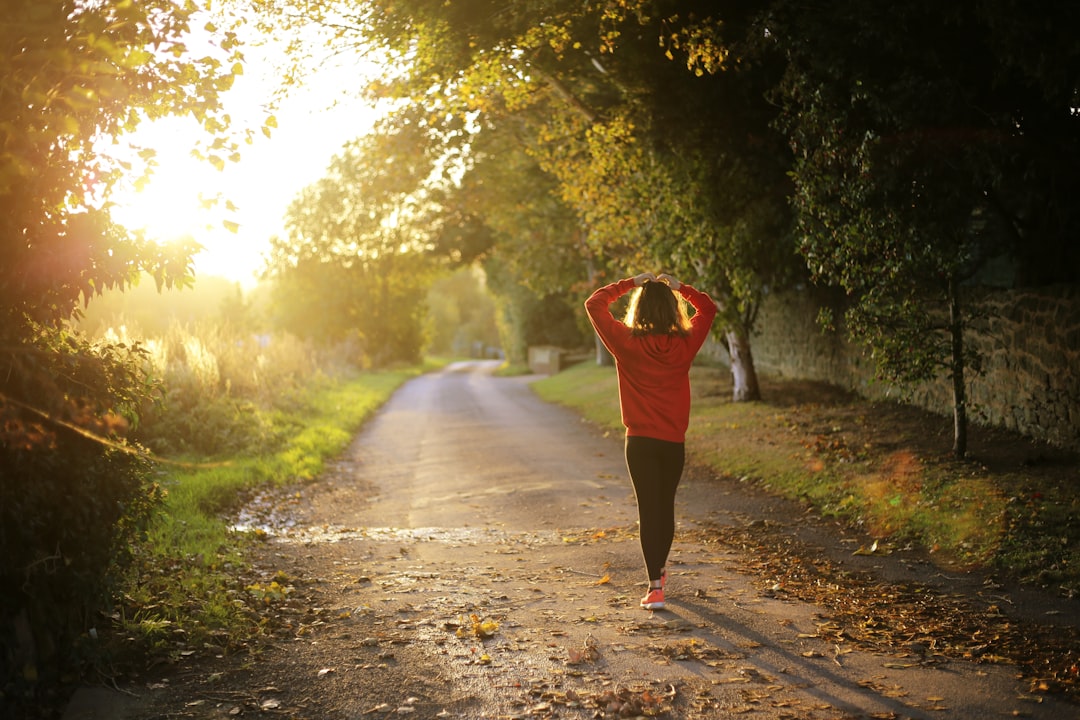
Photo by Emma Simpson on Unsplash
It's 2:47 PM. Your eyelids feel heavy. Your keyboard seems to blur slightly. So you do what millions of people do: you shuffle to the kitchen and brew a strong cup of coffee. That caffeine hits your system, and suddenly you're alert again, ready to power through until 5 PM. Except here's what's happening in your body: you're not just staying awake for the next few hours. You're fundamentally disrupting your sleep cycle in ways that won't fully reveal themselves until midnight, when you're staring at the ceiling wondering why sleep won't come.
Caffeine's Long Game: Why Timing Matters More Than Amount
Most people think about caffeine in simple terms: drink it, feel alert, the effect wears off. But the actual pharmacology is far messier and more stubborn than that. Caffeine has a half-life of approximately 5-6 hours in most adults. This means if you drink a 200-milligram cup of coffee at 3 PM, about 100 milligrams is still coursing through your system at 9 PM when you're trying to fall asleep.
Consider this scenario: Sarah, a 42-year-old project manager, drinks a medium latte at 3:15 PM (roughly 180 mg of caffeine). At 8:45 PM, she's genuinely tired. She goes to bed. But her brain is still processing about 90 mg of caffeine. She falls asleep, sure—but her sleep architecture is compromised. She spends less time in deep sleep and REM sleep, the restorative stages where your body repairs itself and consolidates memories. She wakes up at 2 AM for no reason. Then again at 4:30 AM. She doesn't realize her afternoon coffee is the culprit.
The research backs this up. A study published in the Journal of Clinical Sleep Medicine found that consuming caffeine even six hours before bedtime significantly reduced sleep quality and duration. Participants who had caffeine at 3 PM slept nearly an hour less that night compared to those who avoided it entirely after noon.
What makes this even trickier: caffeine is invisible. You can't feel 90 mg still in your system at 9 PM the way you feel a shot of espresso at 3 PM. Your body has adapted to the constant presence of the drug. You don't perceive the problem until you're lying awake at midnight wondering what's wrong.
The Sleep Debt You Don't Know You're Accumulating
Here's where afternoon caffeine becomes genuinely dangerous: the cumulative effect. You're not losing one hour of sleep. You're losing that hour repeatedly, night after night, week after week. Sleep scientists call this sleep debt, and it compounds like financial debt.
Losing just one hour per night might not sound catastrophic. But over ten days, that's ten hours of sleep you didn't get. Your body treats this the same way it treats actual sleep deprivation. Your immune function drops by 30-40%. Your risk of heart disease increases. Your metabolism slows down, making weight loss nearly impossible. Your emotional regulation deteriorates—you become irritable, anxious, prone to crying over things that normally wouldn't bother you.
And here's the insidious part: you adapt. After two weeks of one hour less sleep per night, you don't feel particularly tired anymore. Your body has normalized the deficit. You've simply become a slightly worse version of yourself—slower thinking, worse memory, worse mood—and you don't even notice.
Studies from the University of Pennsylvania found that people who lost just one hour of sleep per night for 10 days showed cognitive performance equivalent to someone who hadn't slept at all for 24 hours. They couldn't perceive their own impairment. They rated themselves as functioning normally.
Why Your Body Needs You to Stop This at 2 PM
Adenosine is a neurotransmitter that builds up in your brain throughout the day. It's the chemical that creates the sensation of sleepiness. When adenosine accumulates, you feel tired—it's your brain's way of saying "time to rest." Caffeine works by blocking adenosine receptors. It doesn't eliminate adenosine; it just prevents your brain from sensing it.
Consume caffeine after 2 PM, and you're essentially telling your brain to ignore its own biological signals for the next 10-12 hours. This creates a strange situation: your body is genuinely tired (adenosine is still accumulating), but your brain can't feel it. You're fighting against your own physiology.
The 2 PM cutoff isn't arbitrary. Most people have a natural dip in alertness around 2-3 PM, sometimes called the post-lunch dip. For some, it's more pronounced. This is when caffeine feels most necessary. But this is also precisely when you should avoid it. Push through that dip with healthy alternatives, and your natural sleep drive will be strong when bedtime arrives.
What to Drink When You Need That 3 PM Boost
The solution isn't to suffer through afternoons with zero intervention. You need a strategy that lifts your energy without sabotaging your sleep. Here are the best alternatives:
Water with lemon: Sounds simple, but dehydration is a primary cause of afternoon fatigue. Many people mistake thirst for hunger or tiredness. Drink 16 ounces of cold water with fresh lemon, and you'll often feel genuinely refreshed. The cold sensation also provides mild stimulation.
Green tea: Contains L-theanine, an amino acid that provides calm alertness without the aggressive caffeine jolt of coffee. One cup has roughly 25-50 mg of caffeine—enough to help without ruining sleep if you have it by 2 PM. The L-theanine smooths out the caffeine's rough edges, creating focus without jitteriness.
A 15-minute walk outside: This might sound like life advice rather than a drink recommendation, but movement and sunlight are powerful energy boosters. A brisk walk outside in afternoon light resets your circadian rhythm slightly, improving evening sleepiness. You'll also notice increased blood flow to the brain.
Herbal tea or golden milk: Chamomile, peppermint, or turmeric-based golden milk provide the ritual and warmth of a hot beverage without caffeine. They're surprisingly satisfying and actually support better sleep later.
If you absolutely must have coffee, make it before 2 PM. Make it a smaller cup. Consider it your last caffeine consumption of the day.
Breaking the Cycle
If you've been drinking afternoon coffee for years, your body has adapted. You might actually feel more tired initially when you stop, because your brain has become accustomed to the adenosine receptor blockade. This typically lasts 3-7 days before your natural sleep drive returns to normal.
The payoff is significant: one study found that people who stopped consuming caffeine after 2 PM reported better sleep quality within one week and better mood and energy levels within two weeks.
One more thing to consider: many people's afternoon energy crashes are actually caused by their morning caffeine habits. If you're having large amounts of caffeine early in the day, your afternoon slump might be a rebound effect as the caffeine wears off. This creates a vicious cycle where you drink more caffeine to combat the crash you created. Breaking this pattern often requires examining your entire daily caffeine consumption, not just the afternoon cup.
For more on how small daily habits impact your long-term health, read about why your mouth is a window into your heart disease risk—another area where seemingly small daily choices accumulate into major health consequences.
Your 3 PM coffee feels necessary. It feels like it's helping you. But what it's really doing is stealing from your nighttime self. The solution isn't complicated, but it does require changing a habit that probably feels as automatic as breathing. Start tomorrow. Skip the afternoon caffeine. Notice how you sleep that night. Your future self will thank you.
Comments (0)
No comments yet. Be the first to share your thoughts!
Sign in to join the conversation.