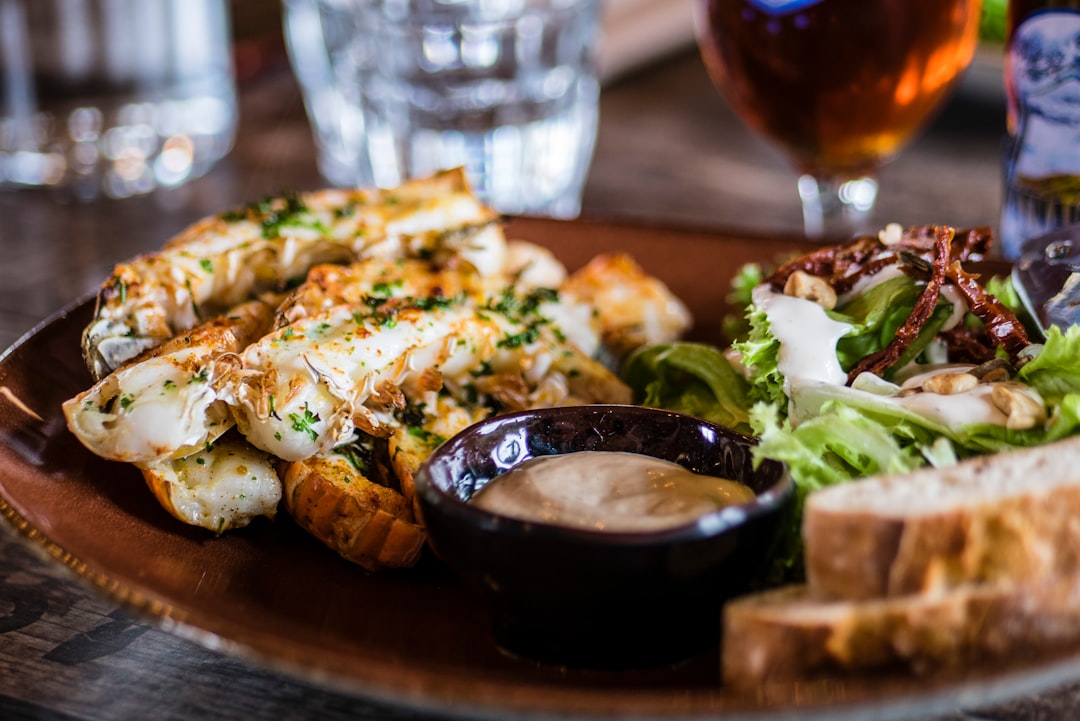
Photo by Davide Cantelli on Unsplash
The $23 Billion Problem Nobody Talks About
Last summer, I bought what was labeled as "wild-caught Alaskan salmon" from my local Whole Foods. It was beautiful—deep orange, perfectly trimmed, priced at $18.99 per pound. I cooked it that evening and something felt off. The texture was too uniform. The color, under closer inspection, seemed almost artificial.
I wasn't imagining things. According to a 2021 study by Oceana, a marine conservation organization, approximately 35% of seafood sold in the United States is mislabeled. That's not a small margin of error—that's a systemic problem worth roughly $23 billion annually. The FDA only tests about 1-2% of seafood imports, which means there's essentially an honor system for an industry that has every incentive to bend the truth.
Fish fraud isn't a victimless crime. When you buy "wild-caught" instead of farmed fish, you're making a choice about environmental impact, nutritional content, and often paying a premium for it. The problem is, you're frequently not getting what you paid for.
How the Swap Actually Happens
The most common scam is straightforward: farmed fish masquerading as wild-caught. Why? Farmed salmon costs roughly $6-8 per pound wholesale, while wild Alaskan salmon runs $15-20. That's a profit margin that makes fraud almost irresistible.
But it goes deeper. Some fish counters sell cheaper species labeled as premium ones. Tilapia gets relabeled as snapper. Farm-raised catfish becomes "grouper." Vietnamese swai—a cheap, muddy-tasting fish—appears on menus as "sea bass" or "Chilean sea bass" (which doesn't even exist as an actual species name; it's actually Patagonian toothfish).
Then there's the geographic mislabeling. "Alaskan halibut" might actually come from Russia or Canada. "Pacific rockfish" could be Atlantic. These aren't random mistakes. They're strategic choices designed to suggest higher quality or origin-based prestige that commands premium pricing.
The infrastructure for this fraud is disturbingly simple. Fish gets caught or farmed, processed, frozen, shipped through multiple distributors, and relabeled somewhere along the chain. By the time it reaches your grocery store, the origin story has been rewritten so many times that traceability becomes nearly impossible.
What You're Actually Getting When You Settle
Beyond the ethical betrayal, mislabeled fish often means inferior nutrition. Farmed salmon, while still nutritious, contains roughly 25% less omega-3 fatty acids than wild-caught. If you're buying the premium product specifically for those omega-3s—which many people are—you're literally paying more for less benefit.
There's also the environmental angle. Wild salmon populations have been in decline for decades. By buying labeled "wild-caught" fish (that's actually farmed), you're contributing to supply chain incentives that prioritize farmed operations, even though you consciously chose otherwise.
And then there's the safety question. Some of the fish species used in mislabeling fraud have been associated with higher levels of contaminants or parasites. You're not just getting a different fish—you might be getting a riskier one.
How to Actually Know What You're Buying
Here's the practical part: you can fight back. First, demand specificity. "Wild salmon" means almost nothing. Ask for the specific species (Chinook, coho, sockeye, pink, or chum) and the origin (Alaska, Pacific Northwest, etc.). Reputable fish counters will have this information readily available.
Second, look for third-party verification. Seafood from certified sustainable sources—look for the Marine Stewardship Council (MSC) certification or similar labels—has been tracked through the supply chain. It's more expensive, but you're actually getting what you pay for.
Third, build a relationship with your fishmonger. Real fish counters exist. They know their suppliers. They care about reputation. These places charge more, but they're transparent about origin and willing to answer detailed questions. Call ahead and ask how they trace their supply chain. Their answer will tell you everything.
Fourth, consider alternative proteins and fermented foods that offer similar nutritional profiles without the fraud risk. Fermented products, for instance, provide probiotics and umami depth that can complement your meals in ways that don't require premium fish.
Finally, download apps. Seafood Watch, created by the Monterey Bay Aquarium, has a free app that tells you which species are sustainable, where they should come from, and which to avoid entirely. It's like having a marine biologist in your pocket.
The Reality Check
Will knowing all this make seafood shopping slower and more complicated? Absolutely. Will it cost more? Probably. But consider what you're actually paying for in the current system: convenience built on deception.
The fish counter at your grocery store isn't trying to scam you personally. They're operating within a system that makes fraud easy and enforcement nearly impossible. By choosing to be a difficult customer—one who asks questions, demands specificity, and votes with your wallet—you're sending a signal upstream through the entire supply chain.
The seafood industry will change when consumers make it more profitable to be honest than to lie. Until then, skepticism at the fish counter isn't cynicism. It's wisdom.
Comments (0)
No comments yet. Be the first to share your thoughts!
Sign in to join the conversation.