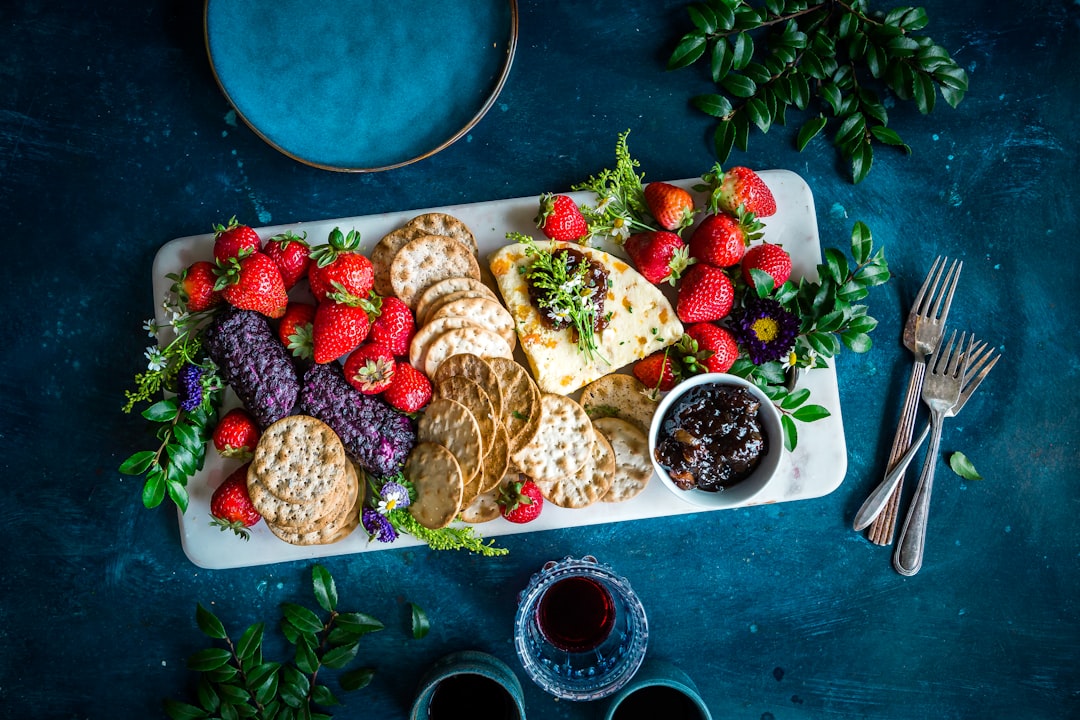
Photo by Brooke Lark on Unsplash
My grandmother kept a ceramic crock on her kitchen counter that looked like it belonged in a museum. It wasn't decorative. Every summer, she'd fill it with cucumbers, salt, spices, and water, then cover it with a cloth and let it sit for weeks. The result? Pickles that tasted nothing like the vinegary jars from the supermarket. They were alive, complex, funky in the best way possible. For years, I thought she was just old-fashioned. Turns out, she was a fermentation scientist who never read a single peer-reviewed paper.
The Science Your Kitchen Already Knew
Fermentation isn't trendy because it's new. It's trendy because we finally stopped dismissing it as something our grandparents did out of necessity. Food scientists at UC Davis and Oregon State University have spent the last decade validating what home fermenters figured out centuries ago: the process of salt fermentation creates complex flavor compounds, preserves vegetables without heat, and produces beneficial bacteria that commercial pasteurization destroys.
Here's what actually happens in that crock. Salt draws water out of vegetables through osmosis, creating a brine. This salty environment kills bad bacteria while allowing Lactobacillus—the good stuff—to thrive. These bacteria produce lactic acid as they consume sugars in the vegetables. That acid both preserves the food and creates those tangy, complex flavors. It's chemistry, sure, but it's chemistry that works whether you understand it or not.
Dr. Robert Hutkins at the University of Nebraska has documented that traditional fermented foods contain live cultures with proven digestive benefits. His research found that a single serving of traditionally fermented vegetables can contain more live cultures than an entire bottle of probiotic supplements. Yet somehow, we spent decades buying pills while throwing away our pickle juice.
Why Commercial Fermentation Got Everything Wrong
The problem started when food manufacturers decided fermentation was too slow and unpredictable. By the 1960s, most commercial pickles weren't fermented at all—they were cucumbers dunked in vinegar and heat-processed to prevent spoilage. It's faster, cheaper, and delivers a consistent product. It also delivers something bland enough that you need to eat it with something else to remember you ate it.
When companies did ferment, they often pasteurized the final product, killing the bacteria that made fermentation valuable in the first place. It's like selling music by describing the song instead of playing it. You get the idea, but you miss everything that matters.
Meanwhile, home fermenters kept their jars on kitchen counters, unconcerned with shelf stability or brand consistency. They cared about taste. About texture. About what happens when you let nature do its job with minimal interference.
The Farmer's Market Renaissance
Something shifted around 2015. Small-batch fermentation producers started appearing at farmer's markets across the country. Places like Farmhouse Culture in California and Real Pickles in Massachusetts built entire businesses on the principle that fermentation should taste like fermentation—sour, complex, alive. Not uniform. Not shelf-stable forever. Real.
These weren't hipster gimmicks, though the markets were certainly hipster-adjacent. These were people who'd grown up eating commercial pickles and wanted something better. They'd tasted their grandmother's version or discovered fermented vegetables while traveling, and they couldn't go back.
The numbers back this up. The global fermented food market was valued at $12.3 billion in 2022 and is projected to grow 8% annually through 2030. That growth isn't coming from Big Pickle. It's coming from small producers, home fermenters, and restaurants that feature fermented vegetables as a major menu element. Napa cabbage and daikon ferments appear on high-end tasting menus. Miso, kombucha, and kimchi have moved from specialty items to grocery store staples.
Starting Your Own Fermentation Practice (It's Easier Than You Think)
The barrier to entry for home fermentation is almost nonexistent. You need salt, vegetables, water, a glass jar, and time. That's literally it. Many people overcomplicate it by buying special equipment or adding airlocks and springs. My grandmother never had any of that. She used a cloth held down by a plate.
The basic method works for almost any vegetable. Cut them into pieces, pack them into a clean jar with roughly 3% salt by weight (about 2 tablespoons per quart of water), add herbs or spices if you want, pour in the brine until vegetables are covered, and let it sit at room temperature. After three days, you'll start seeing bubbles. That's the bacteria working. Taste it after a week. Ferment it longer if you want more sourness and complexity.
The only real rule: keep the vegetables submerged. Once they're exposed to air, mold can develop. Beyond that, fermentation is remarkably forgiving. If it smells bad (like genuine rotting), throw it out. If it smells strong and fermented, you're on the right track.
If you're interested in the broader fermentation revolution happening in professional kitchens, check out why salt-cured fish is making a comeback in fine dining—the same appreciation for traditional preservation methods is reshaping how chefs think about flavor and technique.
The Bigger Picture: Trusting Old Knowledge
What fermentation teaches us extends beyond vegetables. It's about recognizing that people who came before us weren't just surviving—they were solving complex problems with the resources they had. They understood flavor. They understood preservation. They understood how to work with biology instead of against it.
Every time someone dismisses traditional food practices as outdated, they're ignoring the fact that those practices were refined over centuries by millions of people with an immediate interest in whether their food was safe and delicious. They had skin in the game.
My grandmother's pickle crock sits in my kitchen now. I've fermented cucumbers, cabbage, carrots, green beans, and radishes in it. None of them taste exactly like hers—I still haven't gotten the seasoning balance quite right. But every batch reminds me that the best food innovations usually aren't innovations at all. They're just remembering what worked, understanding why, and doing it again.
Comments (0)
No comments yet. Be the first to share your thoughts!
Sign in to join the conversation.