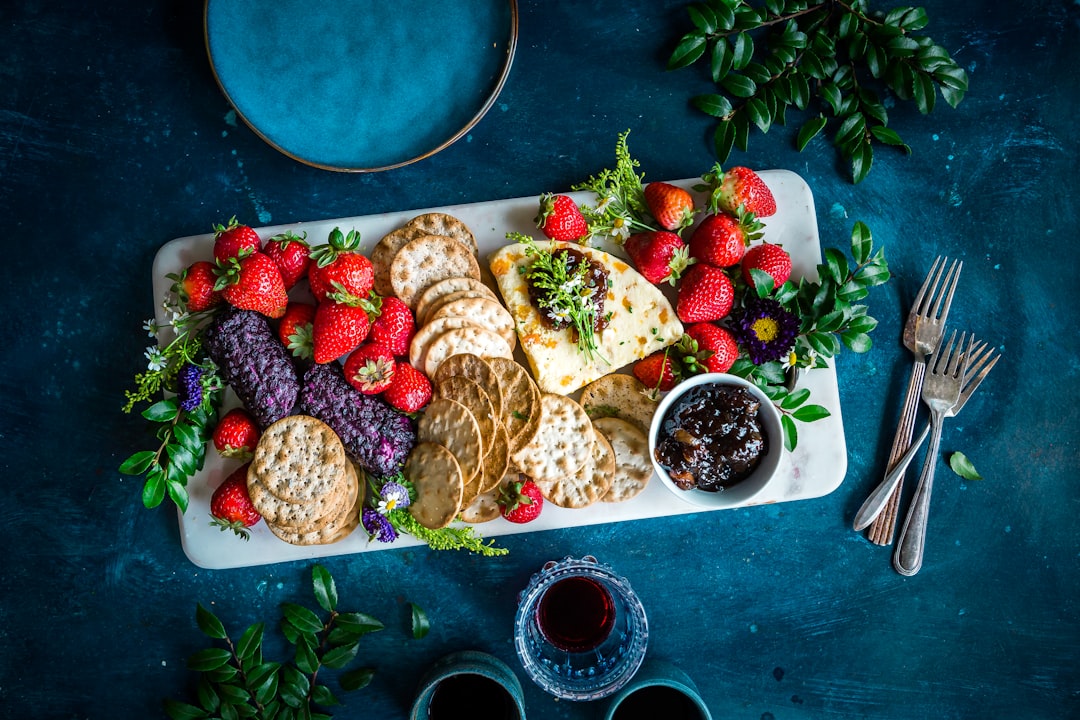
Photo by Brooke Lark on Unsplash
My grandmother kept a container of brown liquid in her refrigerator that she refused to throw away. For years, I assumed it was ancient chicken stock or the remnants of some forgotten soup. When I finally asked her about it, she laughed and explained: it was her umami base, a concentrated essence of mushrooms, tomatoes, and fish sauce she'd been building for nearly a decade. "Taste it," she insisted, holding a spoon under my nose. I did, and it was like tasting the entire history of flavor.
She wasn't being precious or wasteful. She was practicing what neuroscientists and food chemists now call "flavor maturation," and her methods align perfectly with emerging research about how taste compounds develop over time. What feels like kitchen magic is actually biology in action.
The Science of Savory: Why Time Makes Everything Better
Umami, that fifth taste alongside sweet, salty, sour, and bitter, is glutamate's party trick. When you cook fresh ingredients, you're working with baseline glutamate levels. But then something extraordinary happens: as food sits, proteins break down into amino acids, and glutamates concentrate. A 2019 study from the Umami Information Center found that three-day-old beef broth contains roughly 340% more free glutamates than fresh broth. Three hundred and forty percent.
This isn't just about taste buds getting fooled. When glutamate binds to umami receptors on your tongue, it triggers a cascade of neural responses that register as "this is important food." Your brain releases dopamine. Your salivary glands activate. You slow down and actually experience what you're eating instead of mechanically consuming it.
The chemistry extends beyond glutamates. Nucleotides like inosinate and guanylate also increase as proteins denature. Mushrooms gain umami intensity as they age. Aged Parmesan develops crystalline umami compounds that fresh mozzarella simply cannot match. Even something as simple as vegetable scraps—carrot tops, celery leaves, onion skins—become flavor powerhouses when simmered and left to mature for 48 hours.
Why Our Food Culture Got This So Wrong
The obsession with fresh ingredients became mainstream only in the last 70 years, and honestly, it's largely a marketing phenomenon. During the mid-20th century, industrial agriculture needed a reason to sell produce faster and more efficiently. "Fresh" became synonymous with "healthy" and "pure," while aged foods felt vaguely suspicious—something your working-class grandmother did because she couldn't afford to waste anything.
We inverted an entire culinary hierarchy. French haute cuisine built its reputation on stocks simmered for 24 hours. Italian nonnas maintained their soffritto bases perpetually. Chinese cooking traditions emphasized the development of complex broths through repetitive cooking cycles. But when supermarket culture arrived, there was no profit in telling people their food needed to wait.
Celebrity chefs amplified this by fetishizing the pristine and immediate. A plate decorated with microgreens and described as "seasonal and local" seemed elevated compared to a bowl of slowly developed broth. The photography was better too—aged foods don't photograph as nicely. They look murky, brownish, intentionally humble. Yet they taste like the entire accumulated wisdom of your ancestors.
Building Your Own Umami Pantry (Without the Judgment)
You don't need your grandmother's decade-old container, though starting one is genuinely satisfying. Here's what works: save vegetable scraps in a freezer bag. When it's full (usually takes two weeks), simmer everything with water, a splash of soy sauce, and dried mushrooms for at least 8 hours. Cool it completely. Now you have a base that will improve every soup, braise, and sauce you make for the next month.
Alternatively, maintain a simple umami paste: blend dried shiitake mushrooms, tomato paste, miso, and a bit of fish sauce into a thick concentrate. Refrigerate it. A single teaspoon transforms a mediocre dish into something memorable. This is what restaurant chefs do behind closed doors. It's their secret ingredient, and it's not exotic—it's aged.
Parmesan rinds belong in broth, not the trash. Save them obsessively. A single aged Parm rind simmered with lentils creates a depth that no amount of fresh ingredients can replicate. Tomato paste should be caramelized in a pan for 5 minutes before incorporating it into anything, which concentrates its flavors and develops additional umami through the Maillard reaction.
For something immediately gratifying, try this: make a simple chicken or vegetable stock, then leave it uncovered in your refrigerator for three days. Taste it on day one and day three. The transformation is real. The flavors don't just taste stronger—they taste rounder, more complex, more convinced of their own importance.
The Wellness Angle Everyone's Missing
Beyond taste, aged foods and umami-rich broths are experiencing a genuine scientific renaissance in nutritional research. Collagen breaks down into gelatin and amino acids, which support joint and gut health. Bone broth, perpetually mocked by food snobs for being "just boiled bones," contains bioavailable minerals that your body can actually absorb. The umami compounds themselves activate your parasympathetic nervous system—the one responsible for digestion and relaxation.
When you eat something umami-rich, you eat more slowly. You chew more thoroughly. Your body has time to register satiety. You need less food to feel satisfied. It's not a diet; it's the opposite of a diet. It's actual nourishment.
If you're interested in other ways the food industry is lying to us about what's actually good, check out how to spot deception at your fish counter—another place where "fresh" marketing masks some uncomfortable truths.
The Quiet Rebellion
Home cooks are rediscovering this now, and it's the most unglamorous revolution imaginable. People are keeping containers in their refrigerators. They're labeling them. They're actually discussing flavor bases at dinner parties like their grandmothers did. Gen-Z kids are asking their elders how to make proper stock because Instagram foodies are finally admitting that technique matters more than ingredients.
The irony is beautiful: in pursuing authenticity, we rejected the most authentic approach to cooking. We wanted fresh. We got one-dimensional. And now, slowly, we're learning that the best meals come from patience, attention, and time—the ingredients that modern life convinced us we couldn't afford.
Start today. Save something. Wait. Taste the difference. Your grandmother was right.
Comments (0)
No comments yet. Be the first to share your thoughts!
Sign in to join the conversation.