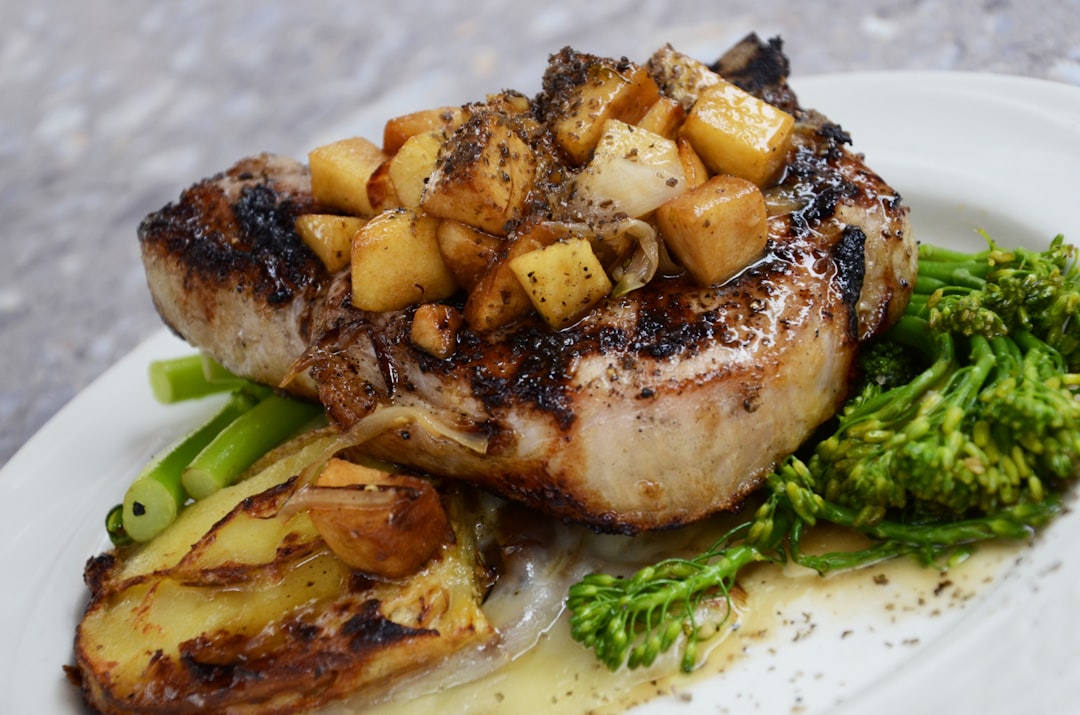
Photo by Alex Munsell on Unsplash
Walk into any serious restaurant kitchen today, and you'll find a small jar of monosodium glutamate sitting somewhere near the salt and pepper. Not hidden away in shame, but displayed openly, almost proudly. This is remarkable when you consider that just fifteen years ago, MSG was the ingredient everyone blamed for everything from headaches to existential dread. The narrative shifted dramatically once people actually bothered to understand what MSG actually does.
The story of MSG's rehabilitation is really a story about how fear, racism, and terrible science can gang up on an innocent compound. But it's also a story about how good food writers, curious chefs, and actual research can slowly, methodically undo decades of damage.
The Villain Origin Story That Never Was
Let's start with the notorious "Chinese Restaurant Syndrome." In 1968, a physician named Robert Ho Man Kwok wrote a letter to the New England Journal of Medicine describing tingling sensations, weakness, and heart palpitations he experienced after eating Chinese food. He speculated—just speculated, mind you—that MSG might be responsible. That letter became the genesis of an entire mythology that has survived, despite being thoroughly debunked.
Here's what's important: Kwok never actually tested his hypothesis. He didn't conduct an experiment. He just threw out an idea. Yet somehow, this casual observation became medical fact in the public imagination. Decades of rigorous research have since shown that MSG doesn't cause these symptoms in any consistent, reproducible way. Double-blind studies repeatedly demonstrate that people can't distinguish between food seasoned with MSG and food seasoned with salt when they don't know which is which.
The naming of the syndrome itself reveals the problem. "Chinese Restaurant Syndrome" attached the blame directly to Chinese cuisine and Asian culinary traditions. It's hard not to notice that MSG became a villain precisely when it became associated with non-Western food. You almost never hear complaints about MSG in Parmesan cheese, even though aged Parmesan contains naturally occurring glutamates in higher concentrations than most other foods.
What MSG Actually Does (The Science Part)
Monosodium glutamate is literally just the sodium salt of glutamic acid, an amino acid that occurs naturally in tomatoes, mushrooms, aged cheese, cured meats, and countless other foods we eat without a second thought. When you taste something with MSG, your taste buds are detecting the glutamate compound—one of the five basic tastes known as umami.
Umami means "pleasant savory taste" in Japanese, and it's the taste of protein, the taste of satisfaction. It's what makes a bowl of bone broth so deeply comforting. It's why Parmesan melted on pasta feels essential rather than optional. It's the reason a perfectly ripe tomato tastes so much better than a grocery store tomato bred for shelf stability—more glutamates, more umami.
When you add MSG to food, you're basically amplifying existing savory signals. You're not creating a false flavor from nothing. You're highlighting and intensifying something that's already there, just in subtle amounts. A pinch of MSG in a soup can make it taste like it simmered for hours.
The Chef's Secret Emerges From the Shadows
What changed the conversation was simple: chefs got curious. Around the early 2010s, respected culinary figures started openly discussing MSG. Chefs like Thomas Keller, David Chang, and J. Kenji López-Alt wrote and spoke publicly about using MSG in their cooking, treating it like any other ingredient. Not as a shortcut or a cheat, but as a precise tool.
David Chang's Momofuku restaurants put MSG directly on tables, the way some Italian restaurants put red pepper flakes out. The message was clear: this is an ingredient we use intentionally, respectfully, and deliciously. There's nothing shameful about it.
The Michelin-starred chefs didn't arrive at this position because they were reckless. They arrived because they understood the science. Food scientist Harold McGee wrote about it. Professional culinary schools began including it in their curricula. The evidence accumulated until it became indefensible to pretend MSG was dangerous when salt, sugar, and other widely accepted seasonings were sitting right there.
Today, if you read discussions about how salt-cured fish is making a comeback in fine dining, you'll notice that MSG often appears in the same conversations about umami-rich seasonings and traditional preservation methods. They're treated as equals in the modern chef's flavor arsenal.
The Vindication Laboratory
What really sealed the deal was the peer-reviewed research. Study after study in the 2010s found no consistent link between MSG consumption and adverse health effects in the general population. A 2019 meta-analysis in Nutrients journal examined decades of research and concluded there was insufficient evidence to support the existence of Chinese Restaurant Syndrome at all.
Even more interesting: when researchers gave people the same food with and without MSG, without telling them which was which, people couldn't tell the difference. They certainly couldn't report having symptoms from the MSG version specifically. Once you remove the psychological element—once you stop people from knowing they're consuming the "villain ingredient"—the entire syndrome vanishes.
Where We Are Now
The rehabilitation of MSG is still ongoing in the public consciousness, but it's won among people who actually cook seriously. The ingredient market reflects this shift. Specialty food stores stock MSG without apologizing for it. Home cooks ask for recommendations on how to use it properly.
What's worth noting is that MSG's comeback isn't really a comeback at all. It never actually disappeared from cooking. It was always there, in those restaurants, quietly amplifying flavors for anyone who understood what they were tasting. The only thing that changed was that people stopped being embarrassed about it.
That's the real story. Not a dangerous ingredient that was vindicated, but a useful one that was always safe, always delicious, and that finally escaped the prison of prejudice.
Comments (0)
No comments yet. Be the first to share your thoughts!
Sign in to join the conversation.