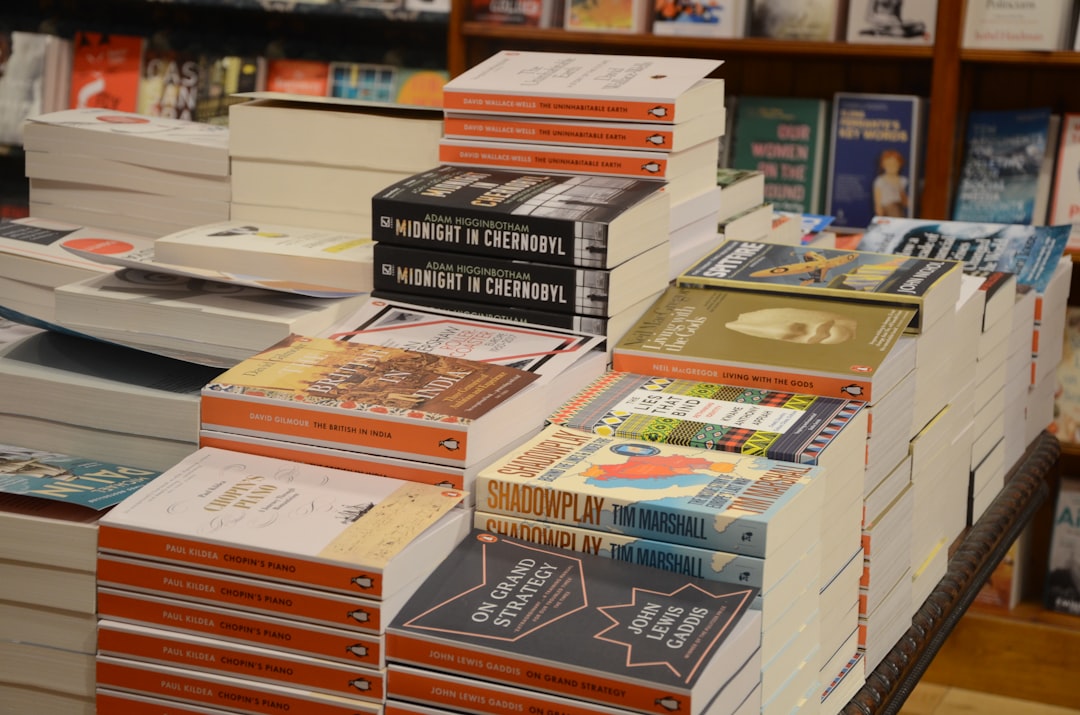
Photo by Geilan Malet-Bates on Unsplash
Last Thursday, I finished a novel where the protagonist spent three hundred pages committing genuinely terrible acts. Theft. Manipulation. Calculated cruelty that left other characters broken. And yet when the final page closed, I felt oddly sympathetic. Not excused—sympathetic. The author had done something increasingly common in modern fiction: they'd made me complicit in someone's moral corruption, forcing me to question whether I was rooting for a hero or a villain.
This isn't a new literary device, but its prevalence has exploded over the last fifteen years. Gone are the days when fiction demanded clear moral hierarchies. The protagonist doesn't have to be likeable. The antagonist doesn't have to be purely evil. Real human beings exist in shades of gray, and contemporary fiction has finally caught up to that reality.
The Death of the Flawless Hero
Remember when protagonists were supposed to be, well, good? Honest. Driven by noble intentions. They made mistakes, sure, but fundamentally they were people we could point to and say, "That's who I want to be."
That's largely gone. Look at the commercially successful literary fiction of the past decade: Gillian Flynn's Gone Girl, where both protagonists are manipulative liars. Donna Tartt's The Secret History, where the main character is complicit in murder. Sally Rooney's Normal People, featuring a couple whose relationship is built on mutual exploitation and dysfunction. These aren't niche, experimental works—they've sold millions of copies and spawned prestigious TV adaptations.
What changed? Partly, readers got bored. We realized that moral perfection is dull. It's the contradictions that grip us. It's the moment a character we've been cheering for reveals that they've been lying to themselves and everyone around them. That's when fiction becomes interesting.
But there's something deeper happening too. Our cultural trust in institutions has fractured. Politicians, CEOs, celebrities—the "good guys" we were told to believe in kept disappointing us. Fiction reflected that cynicism back at us. If the real world doesn't offer clean good-versus-evil narratives, why should our stories?
The Architecture of Moral Complexity
Creating a morally ambiguous character requires serious craftsmanship. You can't just make someone bad and call it complexity. The best modern fiction gives readers access to a character's internal logic—the twisted reasoning that makes their awful decisions feel almost inevitable.
Take Patrick Bateman from Bret Easton Ellis's American Psycho. He's a serial killer. A genuinely vile human being. Yet Ellis makes us understand his obsessions, his frustrations with a society that treats him as interchangeable, his hunger for status and recognition. You still want to recoil from him. But you also see the human underneath the horror.
Or consider Humbert Humbert in Nabokov's Lolita. He's a pedophile. The narrator of his own story. Nabokov forces readers to hear his voice, his justifications, his pseudo-poetic language. The genius is that this doesn't redeem him—it somehow makes the horror worse, because we see how intelligent people rationalize unforgivable things.
As mentioned in The Villain's Redemption Paradox: Why Readers Fall for Characters They're Supposed to Hate, readers have become sophisticated enough to separate empathy from endorsement. We can understand why a character acts without believing they're justified. That distinction has become crucial to modern storytelling.
What This Says About Us
Here's what intrigues me about this shift: it suggests we've become more honest about ourselves. We know we're not purely good. We know we compromise our principles for comfort. We know we sometimes hurt people we care about and rationalize it away. Fiction that embraces moral gray areas mirrors that complexity back at us.
Publishing data supports this observation. According to a 2022 survey of reading habits, 62% of readers prefer protagonists with significant flaws over traditionally heroic characters. That's a genuine shift from a decade earlier. We're not just tolerating flawed leads—we're seeking them out. We're bored by perfection.
There's also something psychologically satisfying about rooting for the morally compromised. It absolves us a little. If everyone in fiction is somewhat terrible, then our own terrible moments feel more forgivable. Literature becomes a space where we can explore darker impulses without consequences. We can understand theft, rage, betrayal, ambition taken too far—all safely contained within pages.
The Danger of Going Too Far
But there's a real risk here. Moral ambiguity can become an excuse for lazy writing. Some authors seem to confuse "flawed" with "inconsistent." They'll have a character do something brutally selfish, then act utterly selfless five pages later, with no real examination of what changed or how they rationalize the contradiction.
The best modern fiction walks a tightrope. It presents morally complex characters without excusing them. It asks readers to understand without requiring them to approve. That balance is harder to achieve than it looks. Too much sympathy and you're writing an apology for your villain. Too little and the character becomes flat, a mere collection of transgressions.
The strongest examples—Donna Tartt, Sally Rooney, Paul Thomas Anderson in his screenwriting—manage both things simultaneously. They make you care about someone awful while never letting you forget that they're awful. That's the real skill.
Where We're Headed
I suspect we'll keep moving deeper into moral ambiguity. AI is starting to generate fiction, and interestingly, it tends to default to simpler moral structures. That might make human-written complexity feel even more precious. Real authors will likely lean harder into the moral mess, the contradictions, the parts of being human that don't resolve neatly.
The flawless hero isn't dead, exactly. YA fiction and commercial romance still trade in clearer moral categories. But in literary fiction, in prestige television, in the stories that dominate cultural conversation? The morally murky character has won. We've accepted that goodness and evil aren't binary. We've learned to live with the uncomfortable fact that the people we love and hate rarely fit neatly into either category.
And maybe that's the most important thing fiction can teach us right now.
Comments (0)
No comments yet. Be the first to share your thoughts!
Sign in to join the conversation.