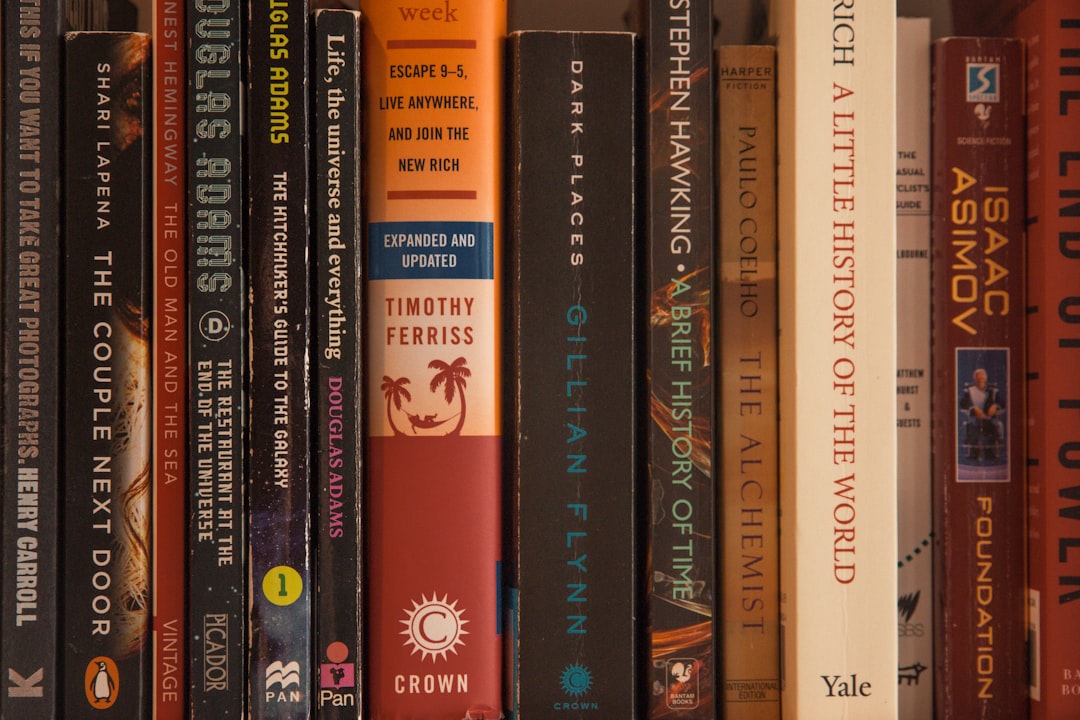
Photo by Stephen Phillips - Hostreviews.co.uk on Unsplash
We've all been there. You're 300 pages into a novel, completely invested in the protagonist's mission, when something unsettling happens. The villain makes an argument that actually holds water. Not a clever rhetorical trick, but a legitimate point about the world and their place in it. And suddenly, you realize you don't want them to lose.
This isn't a bug in storytelling—it's becoming the feature that defines contemporary fiction.
When Bad Guys Make Better Sense Than Good Guys
Consider Cersei Lannister from George R.R. Martin's series. She's ruthless, manipulative, and willing to commit atrocities. She's also a woman playing a game designed specifically so she can never win. Her paranoia isn't irrational when literally everyone has tried to use her. Her ruthlessness makes sense when kindness has only gotten her betrayed. Martin didn't create a villain—he created a person trapped in circumstances that would corrupt anyone.
This approach to antagonists has exploded across modern fiction. Take Killmonger from Black Panther or—more literarily—Tommy from Colleen Hoover's It Ends with Us. These characters aren't cardboard evil. They have systems of logic, historical grievances, and understandable motivations. They're wrong about their solutions, but their diagnoses are often spot-on.
The shift matters because it mirrors how we actually encounter moral complexity. Real-world antagonism rarely involves someone twirling a mustache and cackling about pure evil. It involves reasonable people with incompatible goals, or people reacting logically to trauma, or systems perpetuated by people who believe they're doing the right thing.
The Comfort Trap of One-Dimensional Evil
For decades, fiction allowed us a kind of psychological comfort. The villain wanted power for power's sake. The protagonist fought them because good fights evil. Clean. Simple. Satisfying.
But here's what changed: readers got tired of lying to themselves.
Once you've actually studied history, or sat with people you disagree with, or examined your own biases, simple good-versus-evil storytelling starts to feel insulting. A villain who has no legitimate complaints about the status quo doesn't match anyone's actual experience of conflict. Even fascists believe their ideology serves the greater good. That doesn't make them right, but pretending they're simply "evil" misses the point entirely.
The novels that haunt readers now are the ones that acknowledge this. They present antagonists whose worldviews are coherent, whose pain is real, whose methods might be wrong but whose core critique might be just. The protagonist still wins, often, but the victory feels hollow because the reader understands what's being lost.
Why Readers Actually Want the Complexity
There's data backing this trend. Publishers report that sales of morally ambiguous protagonists and antagonists have risen consistently. BookTok—TikTok's literary corner—obsesses over "problematic" characters with the kind of passion previous generations reserved for straightforward heroes.
Why? Because complexity creates resonance. When a villain has valid points, the story stops being about watching good triumph and becomes about watching someone navigate an impossible situation. That's psychologically stickier. That's the kind of story you can't stop thinking about at 2 AM.
There's also something almost revolutionary happening. By making antagonists intelligible and sympathetic, writers are implicitly arguing that most people—even those we oppose—deserve to be understood. Not agreed with. Understood. In a world increasingly fragmented by ideology, this is subversive. It suggests that empathy doesn't require approval, that you can recognize someone's humanity while fighting their vision for the world.
This is precisely what The Unreliable Narrator's Renaissance explores—readers now expect to be unsettled by perspective shifts and narrative untrustworthiness. We're drawn to stories that force us to interrogate our own judgments.
The Risk: When Complexity Becomes an Excuse
There's a knife's edge here that writers must navigate carefully. Complexity can become a shield for bad storytelling. A villain can be presented as "morally nuanced" when really the author just hasn't bothered to explain their actual worldview.
The difference: genuine complexity shows us why the antagonist believes what they believe, traces the logic backward to trauma or philosophy or circumstance. Fake complexity just asserts that the antagonist is complicated and calls it a day. Readers know the difference instantly.
The strongest examples—figures like Paul Atreides becoming a tragic god-emperor, or Magneto's commitment to mutant survival despite his methods—present full interior lives. We see their reasoning. We see the moment they choose their path. We might not choose it, but we understand it.
What This Means for Stories Going Forward
If you're writing fiction now, the antagonist who's simply evil is dead. Readers have moved on. They want opposition that feels like opposition—genuine disagreement rooted in different values or different information, not simple malice.
This doesn't mean your villain needs a redemption arc or reader sympathy. It means they need to be fully realized. It means you can't rely on the reader's assumption that "evil" is self-evident. You have to show the logic. You have to make the antagonism feel inevitable rather than arbitrary.
The payoff is immense. Stories built this way don't settle neatly in readers' minds. They linger. They generate conversations. They force people to articulate why they believe what they believe. And in a fractured world, that kind of fiction might be the closest thing we have to a shared moral laboratory.
The villains who are right—or at least partially right—aren't a trend. They're the new baseline. And that's exactly as it should be.
Comments (0)
No comments yet. Be the first to share your thoughts!
Sign in to join the conversation.