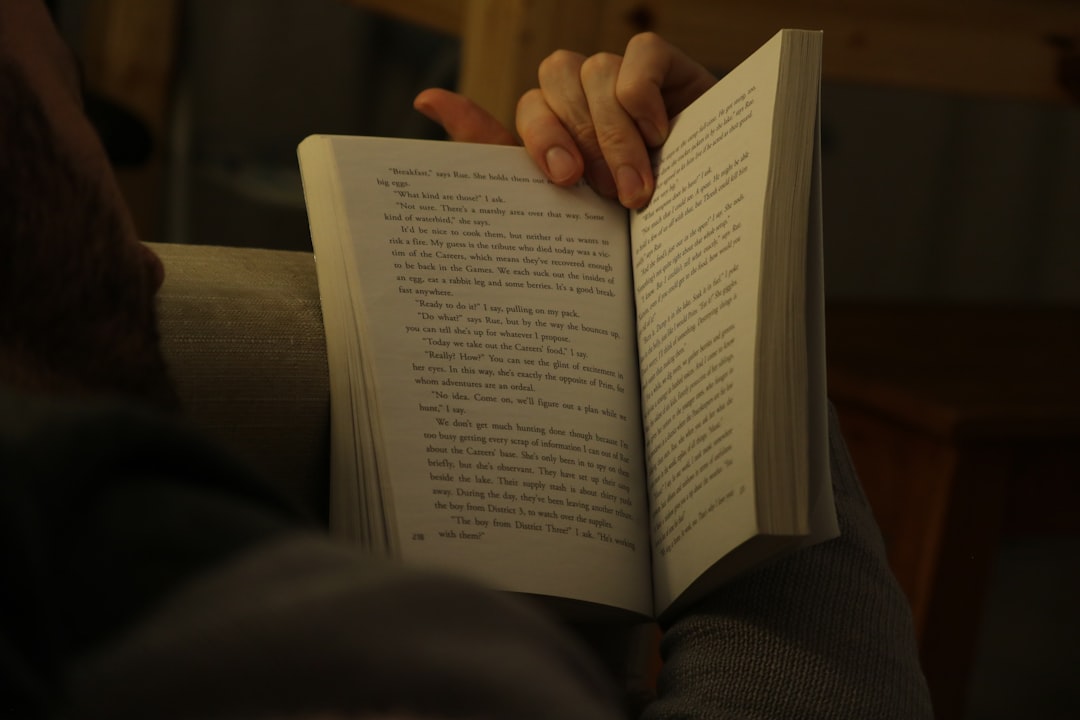
Photo by Alicia Christin Gerald on Unsplash
There's a moment in every thriller where you realize the person telling you the story has been lying the entire time. Not about small things—about everything. The feeling is intoxicating. Your stomach drops. You immediately want to reread the last fifty pages with this new knowledge burning in your mind. That rush? That's the unreliable narrator working exactly as intended, and they've never been more popular.
The unreliable narrator isn't new. Dostoevsky used one in Notes from Underground. Nabokov crafted one in Lolita. But something shifted around 2012 when Gillian Flynn's Gone Girl became a cultural phenomenon. Suddenly, every reader wanted to be tricked. Every publisher wanted to capitalize on that desire. Fast forward to today, and you can barely walk into a bookstore without tripping over a thriller where the narrator is actively working against you—and you're paying for the privilege.
But what makes these liars so magnetic? Why do we keep coming back to stories where we can't trust a single word?
The Psychology of Narrative Betrayal
Trust is the foundation of storytelling. Readers enter into an implicit contract with the author: tell us a story, and we'll believe you. When an author breaks that contract deliberately, something primal happens. We feel foolish, but we also feel alive.
Psychologically, unreliable narrators activate different parts of our brains than straightforward narratives. We're not just consuming information—we're actively solving. We're hunting for clues, contradictions, motivations. Every sentence becomes a potential trap. This engagement is measurable. Studies on reading comprehension show that readers retain more information from unreliable narrator stories because they're forced to engage critically with every line.
Consider how Marisha Pessl handled this in Night Film (2013). The narrator is obsessed, paranoid, possibly delusional. Readers had to constantly ask themselves: Is what he's seeing real, or is he manufacturing evidence of a conspiracy? That uncertainty kept millions of people reading late into the night, unable to put the book down because they needed to know what was actually happening.
There's also something deeply human about encountering a well-crafted liar. We've all been lied to. We've all lied. We know that people are unreliable. Fiction with unreliable narrators mirrors reality in a way that feels more honest than stories built on perfect recall and transparent motivations. A narrator who has gaps in their memory, or who misinterprets events, or who actively deceives? That feels like a real person.
The Technical Mastery It Requires
Writing a successful unreliable narrator is brutally difficult. The author must lie to the reader while simultaneously playing fair. This is the paradox that separates genius from gimmick.
When it works, it's invisible. You don't realize you've been deceived until the author wants you to. When it fails, readers feel cheated—and not in the fun way. The worst version of unreliable narrator fiction feels like a magician revealing their trick too late, after the audience has already left the theater.
Look at how Paula Hawkins constructed The Girl on the Train. Rachel is an alcoholic with unreliable memory. She's also our primary narrator for huge portions of the novel. Hawkins had to remember every single detail she planted, every contradiction she seeded, every moment where Rachel's perception diverged from reality—and she had to do this across 400+ pages while maintaining narrative momentum. One slip, one forgotten contradiction, and the whole house of cards collapses.
That's why so many debut authors attempt unreliable narrators but fail. They get seduced by the concept—by the promise of a big twist reveal—without understanding that the technical execution demands absolute precision. You can't just decide in chapter twenty-five that your narrator has been unreliable. You need to plan this from page one.
The Current Market Saturation Problem
Success breeds imitation, and the success of Gone Girl was nuclear. Publishers saw what happened when readers loved being deceived, and they started acquiring everything that promised that same rush. The result? A market absolutely flooded with unreliable narrator novels, many of them mediocre.
We've reached a point where the twist reveal has become expected. If you pick up a contemporary thriller with a first-person female narrator, there's a decent chance she's going to be lying about something fundamental. The surprise is gone. The betrayal doesn't sting because you're anticipating it.
This is where authors get creative—or where they should, anyway. Some writers have started embedding multiple layers of unreliability. Others have swapped the traditional formula, creating unreliable narrators in genres where readers don't expect them. The Ghost in the Code: How AI Characters Are Becoming Our Most Unreliable Narrators explores how emerging fiction is pushing these concepts into genuinely new territory.
The readers who've exhausted the thriller section are now hunting for unreliable narrators in literary fiction, science fiction, even romance. That migration is keeping the form alive.
Why We'll Never Stop Trusting Liars
Here's the truth: readers will always want to be tricked by a good story. Even as the market saturates, even as the gimmick becomes expected, the fundamental appeal remains. We want to experience that moment where the ground shifts beneath our feet. We want to feel intelligent enough to eventually catch on. We want to be made fools of by a writer skilled enough to deserve our surrender.
The unreliable narrator works because it mirrors the essential experience of being human. We're all unreliable narrators of our own lives, after all. We remember things wrong. We convince ourselves of false narratives. We lie to ourselves about our motivations. A novel that captures that truth—that makes us feel that disorientation—is doing something more than entertaining us. It's showing us ourselves.
The market may be oversaturated, but the best unreliable narrator fiction will always find readers. Because at the end of the day, we don't read these books to be confused. We read them to understand what it feels like to discover we never understood anything at all.
Comments (0)
No comments yet. Be the first to share your thoughts!
Sign in to join the conversation.