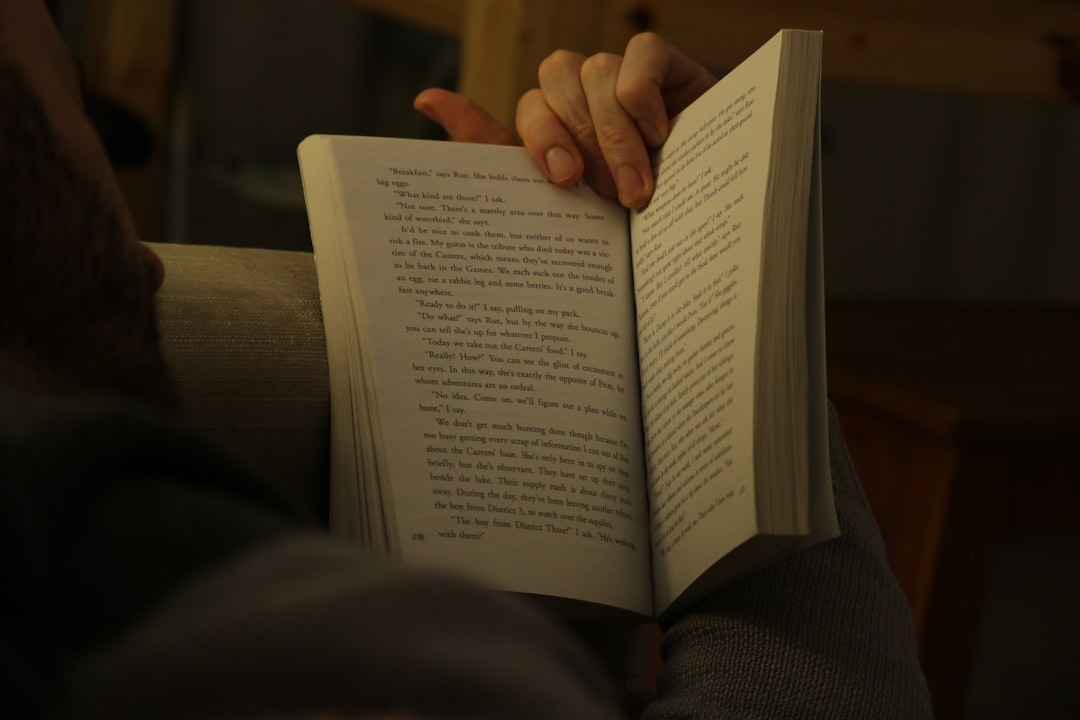
Photo by Alicia Christin Gerald on Unsplash
The Unexpected Power of the Villain
We've all experienced it: that moment when a minor character walks onto the page and suddenly the entire story shifts. You find yourself rooting for the antagonist. You understand their motivations better than the hero's. You close the book thinking not about the protagonist's victory, but about the villain's tragic backstory. This isn't a flaw in the narrative—it's evidence of something fundamental changing in how we tell and consume stories.
Consider Cersei Lannister from George R.R. Martin's "A Song of Ice and Fire" series. She wasn't supposed to be sympathetic. She manipulated, murdered, and destroyed lives in pursuit of power. Yet by the time readers reached the "Caged Lion" chapter in "A Feast for Crows," many found themselves deeply moved by her predicament. Martin had accomplished something remarkable: he made readers understand that villains aren't cartoon characters—they're people with legitimate grievances, complex motivations, and moments of genuine vulnerability.
When the Supporting Cast Becomes the Main Event
This phenomenon extends beyond traditional villains. Secondary characters frequently outshine their supposed betters. Take Javert from Victor Hugo's "Les Misérables." He's not the protagonist—Jean Valjean is—yet generations of readers have found Javert more compelling. His rigid adherence to law and order, his inability to accept redemption or complexity, makes him simultaneously infuriating and profoundly human. When he finally confronts the impossibility of his worldview, his suicide becomes one of literature's most memorable moments.
Authors are increasingly aware of this dynamic and leaning into it intentionally. Gillian Flynn didn't expect readers to love Amy Dunne in "Gone Girl," yet the character became a cultural phenomenon. Why? Because Flynn gave us a character who rejected the "Cool Girl" archetype, owned her manipulations, and somehow became more real than any perfectly flawed protagonist ever could.
The Psychology Behind Our Preference for the Complicated Outsider
There's something psychologically compelling about characters who operate outside traditional hero narratives. We live in a world of complicated morality where right answers rarely exist. A protagonist bound by plot requirements to "do the right thing" can feel naive, even boring. But a character pursuing their goals without that constraint? That feels honest.
Consider statistics from a 2021 survey by the American Booksellers Association: 64% of readers reported that they'd abandoned books specifically because they couldn't connect with the protagonist, yet 78% reported reading entire series for secondary characters. This isn't a minor preference—it's reshaping how publishers acquire and market fiction.
The appeal also connects to what psychologists call "cognitive realism." We're drawn to characters who think like actual humans think, complete with contradictions, justifications for poor choices, and the ability to rationalize almost anything. A villain explaining their perspective in genuine, understandable terms mirrors our own experience of disagreeing with people we don't consider evil.
How Authors Are Rewriting the Rules
Smart contemporary authors have noticed this shift and are exploiting it brilliantly. Instead of relegating complex characters to supporting roles, they're making them central. Hanya Yanagihara's "A Little Life" essentially abandons traditional protagonist-antagonist dynamics entirely. Characters harm each other, sometimes intentionally, sometimes through simple human failure. There's no villain to blame, which somehow makes it more devastating.
Similarly, if you want to understand how modern writers handle morally compromised central characters, you should read about the unreliable narrator's renaissance. This trend directly connects to our appetite for characters who won't be neatly categorized as good or evil.
Colleen Hoover's commercial dominance might puzzle literary critics, but it makes perfect sense through this lens. Her characters—often flawed women in complicated relationships—reject the need to justify themselves to readers. They're selfish sometimes, generous other times, violent and nurturing and petty and brave all in the same chapter. That's the texture of actual human experience.
What This Means for the Future of Fiction
If secondary characters and antagonists consistently capture more reader interest than traditional protagonists, fiction itself might be undergoing a structural revolution. The hero's journey, which has dominated Western storytelling since Joseph Campbell's work in the 1940s, may not be the only viable framework anymore.
We're seeing more fiction that abandons the protagonist-antagonist hierarchy entirely. Ensemble narratives, multiple-perspective structures, and stories where no single character is meant to be our moral center—these are becoming mainstream, not experimental.
What does your reading experience suggest? Think about the last five books that truly grabbed you. How many featured protagonists you actually rooted for versus characters you simply found fascinating? My guess is the balance has shifted. We don't need to be told who to support anymore. We're smart enough to figure it out ourselves, and we're increasingly suspicious of stories that make it too easy.
The villain who steals the spotlight isn't stealing anything. In the current moment of fiction, they're simply doing what villains have always done—revealing uncomfortable truths that heroes often obscure. And that, it turns out, is exactly what modern readers want.
Comments (0)
No comments yet. Be the first to share your thoughts!
Sign in to join the conversation.