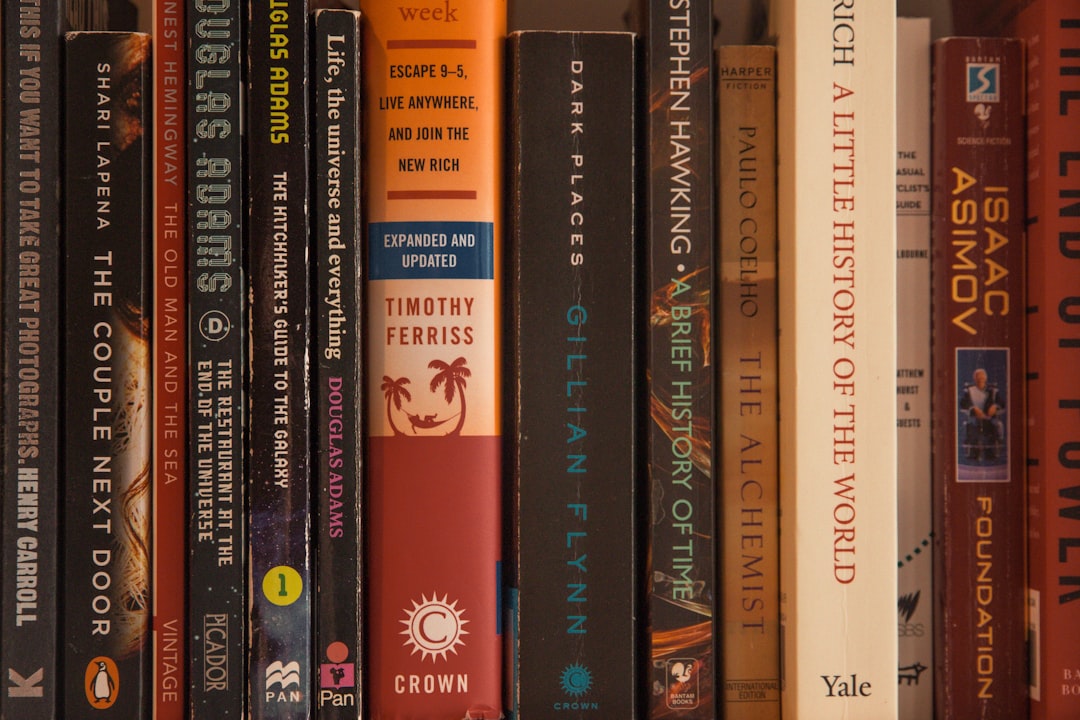
Photo by Stephen Phillips - Hostreviews.co.uk on Unsplash
The Moment You Stop Believing What You're Reading
There's a specific sensation that hits when you realize your trusted guide through a story has been misleading you. Not the slow burn of suspicion, but that sharp, electric moment when the narrative rug gets yanked out. You're reading "Gone Girl" and suddenly Amy's diary takes on a sinister new meaning. You're in "The Turn of the Screw" and those ghosts might just be symptoms. You're deep into "Shutter Island" and the psychiatric hospital walls feel less like setting and more like psychological prison. The unreliable narrator isn't just a literary device—it's a form of controlled chaos that forces readers to become active participants in their own misdirection.
What makes this technique so devastating is that it violates the implicit contract between author and reader. For the first portion of a novel, we agree to trust the voice speaking to us. We accept their perceptions as valid, their memories as accurate, their interpretations as honest. When that contract gets broken, something primal in us reacts. We feel betrayed. We feel stupid. We immediately reread chapters with suspicious eyes, hunting for clues we missed, evidence of the deception we should have spotted. And that's exactly what the author intended.
Why Our Brains Are Wired to Believe Liars
Cognitive psychologists call it the "truth bias"—our natural inclination to believe what we're told unless we have explicit reason not to. It's an evolutionary advantage; constantly questioning every piece of information would be paralyzing. But fiction exploits this beautiful flaw in our thinking. When Holden Caulfield narrates "The Catcher in the Rye," we don't immediately question his teenage cynicism. When Nick Carraway observes Jay Gatsby with admiration in "The Great Gatsby," we don't suspect his own blind spots. Authors bank on our willingness to see the world through their character's eyes.
Consider Agatha Christie's "And Then There Were None." The entire novel operates on the assumption that the narrator is observing events honestly. We trust this voice because it seems objective, because it reports facts, because it doesn't appear to have a stake in lying. Then the final pages destroy everything. The narrator is the killer. The entire story was told by someone with devastating motivation to mislead us. Christie didn't just write a mystery; she conducted a masterclass in exploiting reader psychology. Seventy-five years later, it remains one of the most shocking novels ever published.
What's fascinating is that readers know intellectually that narrators can lie. We're aware of the technique. And yet, we still get fooled. We still trust. We still have to reread to understand what actually happened. This isn't a failure on our part—it's the mark of exceptional storytelling.
The Spectrum of Dishonesty
Not all unreliable narrators are created equal. Some actively, consciously deceive. Others are simply limited by their own perception. The spectrum matters.
At one extreme, you have characters like Amy Dunne in Gillian Flynn's "Gone Girl"—calculating, deliberate, fully aware of their manipulation. Amy knows exactly what she's doing and why. She's not confused; she's a strategic liar playing a game with impossibly high stakes. The reader becomes complicit in her crimes through identification. We understand her motives even when we're horrified by her actions. The Villain's Redemption Paradox explores this phenomenon in depth—how readers can develop genuine affection for characters performing monstrous acts.
Then there's the middle ground. In Kazuo Ishiguro's "The Remains of the Day," Stevens the butler isn't intentionally deceiving anyone. He's deceiving himself. He rationalizes his choices, minimizes his failures, and constructs a narrative where he's a dutiful professional rather than a complicit enabler of fascism. The unreliability emerges from self-deception, from the human capacity to believe comforting lies about ourselves.
Finally, there are narrators limited by circumstance or psychology. In "Fight Club," the narrator isn't lying so much as he's fragmented. He doesn't know the truth about himself because his mind literally prevents him from knowing it. The unreliability isn't moral; it's neurological. Different strategy, same impact: readers finish the book reeling.
Why Authors Choose Deception Over Truth
The unreliable narrator could seem like a gimmick—a trick to surprise readers. But in the hands of serious authors, it's far more sophisticated. It's a way to explore the fundamental unreliability of human perception itself.
We all believe we see the world clearly. We trust our memories, our interpretations, our understanding of events. Yet psychological research consistently demonstrates that memory is reconstructive, not reproductive. We don't record experiences like video cameras; we assemble them from fragments, fill in gaps with assumptions, and reinforce them with each retelling. Every time we remember something, we potentially change it. The unreliable narrator forces readers to confront this discomfort.
Authors also use unreliable narrators to create thematic resonance. If your novel explores the nature of guilt, why not have a narrator who's guilty but won't admit it? If you're writing about obsession, why not have a narrator whose obsession has blinded them? The unreliability becomes inseparable from the subject matter.
And there's something thrilling about it from a writer's perspective. A reliable narrator is constrained by facts, by consistency, by the reader's ability to predict what information will be shared. An unreliable narrator can dance, dissemble, contradict themselves, and create genuine surprise. The author suddenly has access to a kind of freedom that straightforward storytelling doesn't permit.
The Aftershock of Being Fooled
The best unreliable narrator novels stay with readers long after completion. We close the book changed. We think about the experience differently. We reread passages differently. We trust our own perceptions a little less, and perhaps think a little more critically about the stories we tell ourselves.
That's not a bug in the reading experience—that's the entire point. These novels aren't trying to entertain us so much as unsettle us. They're asking us to participate in misdirection, to sit with our own gullibility, to recognize ourselves in characters who can't be trusted. They remind us that our version of events is just that—our version. And that everyone else has an equally convincing version of their own.
The unreliable narrator doesn't break trust with the reader. It deepens the relationship by making the reader complicit, vulnerable, and ultimately more thoughtful about the act of reading itself.
Comments (0)
No comments yet. Be the first to share your thoughts!
Sign in to join the conversation.