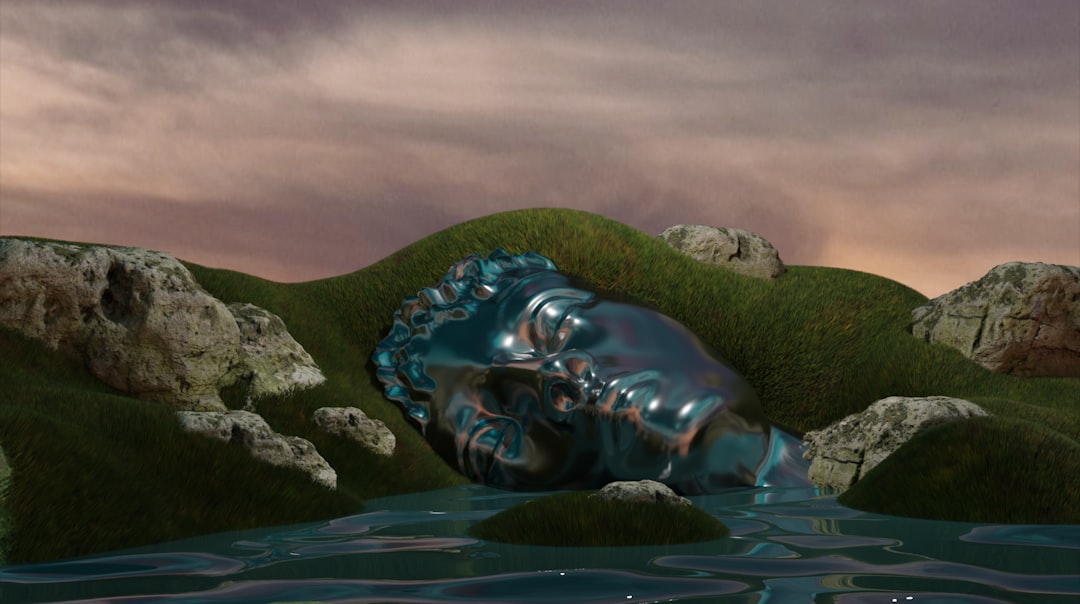
Photo by Vignolo Design on Unsplash
Nobody wants to be you. Or rather, nobody wants to BE you in a novel. Yet writers keep trying to make it happen.
Second-person narration—that strange, disorienting technique where the protagonist is addressed as 'you'—remains one of fiction's most audacious gambles. It's the literary equivalent of pointing directly at the reader and saying, "This is YOUR story now." Sometimes it works brilliantly. More often, it crashes and burns so spectacularly that readers abandon ship within the first chapter.
But the fact that writers keep attempting this risky narrative trick tells us something important: there's profound potential buried in the second person, even if it's criminally difficult to execute.
Why Second-Person Feels So Weird
Let's start with the obvious problem. We don't experience our own lives in second person. We live in the first person (our own perspective) or we observe others in the third person (their perspective). Second person exists primarily in instruction manuals and self-help books. "You preheat the oven to 350 degrees. You grease the baking pan." It's utilitarian. Mechanical. Deeply unnatural for storytelling.
When authors write "You wake up in a dark room, your heart pounding," they're asking readers to perform a bizarre cognitive leap. We must simultaneously be ourselves AND someone else. We must surrender our own perspective while maintaining our own consciousness. It's like being hypnotized while remaining awake.
Italo Calvino understood this peculiar vertigo. His 1979 novel "If on a winter's night a traveler" uses second person to create one of literature's most deliberately disorienting experiences. "You are about to begin reading Italo Calvino's new novel," it opens. The narrative constantly breaks down, shifts perspectives, and reminds you that you're reading a book while also trying to make you feel like the protagonist. It's exhausting. It's brilliant. Most readers don't finish it.
The Rare Successes That Prove It Can Work
Despite its inherent awkwardness, second person has produced some genuinely unforgettable moments in fiction. The trick seems to be committing fully to the strangeness rather than trying to normalize it.
Take Jay McInerney's "Bright Lights, Big City" from 1984. The entire novel uses second person—"You are not the kind of guy who would be at a place like Dorsia at this hour of the morning"—and somehow, it becomes a perfect formal choice for the story. The protagonist is so lost in cocaine-fueled New York nights that he can barely recognize himself. He experiences his own life as if watching someone else. The second person isn't gimmicky. It's psychologically accurate.
Experimental writers like Sergio De La Pava and Diane Williams have also wielded second person effectively, but typically in shorter works where the disorientation can build to a climactic revelation rather than extending across 300 pages. The shorter the work, the more sustainable the second-person illusion becomes.
There's also "Choose Your Own Adventure," which technically uses second person and proved commercially that readers WILL accept it—provided they're actively making choices. The form works when it empowers the reader, making them an agent in the story rather than a passive observer.
The Ego Problem Nobody Talks About
Here's the uncomfortable truth: most readers don't want to be told who they are or what they're doing. We resist it instinctively.
"You check your phone nervously." Maybe I don't check my phone. Maybe I'm the type of person who leaves it in another room. The moment an author assumes my behavior, they've broken the fourth wall in the worst possible way. Third person gives us freedom—the character does these things, not us. We're permitted to observe without being implicated. First person grants us a specific identity to inhabit temporarily. Second person? It tries to hijack our actual identity and write ourselves as the protagonist.
This is why second person often feels accusatory. "You've made terrible choices. You've betrayed everyone who loved you." Are we reading a novel or being psychologically interrogated? The format blurs the line in ways that make many readers profoundly uncomfortable.
Literary fiction scholar Robyn Warhol has noted that second-person narratives often appeal to experimental writers precisely because they're so aggressive toward the reader. There's something almost confrontational about forcing an audience to inhabit a character against their will.
Second Person's Surprising Resurgence
Interestingly, second person has been experiencing a quiet comeback in recent years, particularly among debut authors. Writers like Ling Ma ("Severance") and Hye-young Pyun ("The Hole") have explored second-person perspectives in contemporary fiction, proving that younger writers aren't intimidated by the form's inherent difficulties.
Some theorists argue that second person feels more natural to digital-age readers accustomed to interactive narratives, social media, and video games where second person is standard. We're gradually rewiring our brains to accept "you" as a narrative voice. The resurgence might represent fiction finally catching up to how we actually communicate online.
There's also something appealing about second person's implicit demand for empathy. When a book forces you to experience a character's consciousness as "you," it's harder to distance yourself morally or emotionally. You can't just observe a character's suffering from a safe remove. You become implicated in their choices.
For writers tackling subjects like mental illness, addiction, or moral ambiguity, second person can be devastatingly effective. It removes the shield of fictional distance and forces readers into uncomfortable proximity with difficult truths.
The Verdict: A Tool, Not a Gimmick
Second-person narration isn't inherently better or worse than other narrative modes. It's simply riskier. It asks more of both writer and reader. Most attempts fail, but when they succeed? There's a strange magic to experiencing a story as "you" that neither first nor third person can quite replicate.
If you're curious about how narrative perspective shapes fiction, you might also enjoy reading about The Unreliable Narrator's Gift: How Lies Have Made Fiction Unforgettable, which explores how authors manipulate perspective in equally audacious ways.
The next time you encounter a second-person novel, resist the urge to immediately dismiss it. Yes, it's weird. Yes, it's uncomfortable. But that discomfort? That might be exactly the point.
Comments (0)
No comments yet. Be the first to share your thoughts!
Sign in to join the conversation.