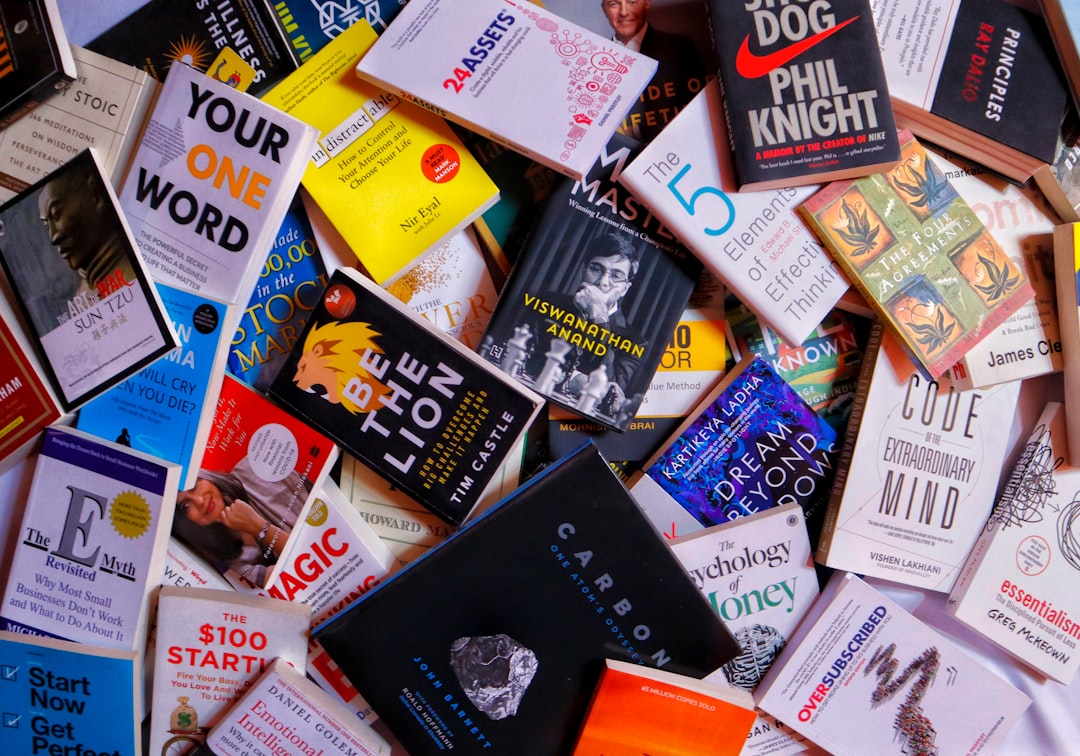
Photo by Shiromani Kant on Unsplash
The Narrator Who Made Us Question Everything
There's a moment in every reader's life when they realize they've been lied to by someone they trusted completely. Not by a friend or partner, but by the very voice guiding them through a story. That moment—when the narrator's credibility shatters like dropped glass—is intoxicating. It's the literary equivalent of a magic trick revealed, except the magician has been misdirecting you the entire time, and somehow, you loved them for it.
Unreliable narrators aren't new. Dostoevsky was playing with this concept in the 1800s. But something shifted in recent years. These deceptive voices stopped being literary gimmicks reserved for experimental fiction and became the beating heart of bestsellers. Gillian Flynn's "Gone Girl" didn't just popularize the twist ending—it made readers question whether they could trust anyone, including themselves. The book sold over 20 million copies worldwide, and a significant portion of that success came from readers compulsively recommending it with the caveat: "Don't let anyone spoil it."
The appeal is primal. We're creatures who crave certainty, yet we're drawn to stories that deny it to us. There's something deeply satisfying about being fooled by fiction—it's a safe way to experience betrayal, confusion, and the disorienting feeling of having our reality rewritten.
Why Our Brains Can't Resist a Liar
Neuroscientists studying narrative engagement have found that when we read, our brains don't just process information—they simulate the experiences described. We literally live the story. When a narrator is unreliable, something else happens: our brains split their attention. Part of us follows the narrator's version of events, while another part works overtime trying to piece together what's actually true.
This cognitive friction is oddly pleasurable. It's why we can't put down a book with an unreliable narrator even when—or especially when—we realize we've been manipulated. The second read-through becomes mandatory. You flip back to page 47, knowing something different now, and suddenly those casual throwaway lines feel loaded with deception. A narrator mentioning they "can't quite remember" something becomes sinister. A character saying "I would never" becomes an obvious lie.
Take Kazuo Ishiguro's "The Remains of the Day." Steven, the butler narrator, presents his life as dignified service. But beneath his measured, formal prose lies a deeply unreliable account of his own emotional paralysis and moral compromise. Most readers don't realize on first reading how completely Steven deceives himself. The brilliance is that he's not a villain orchestrating a cover-up—he's just a man unable to see the truth about his own life. That specificity, that psychological authenticity, is what elevates unreliable narration beyond mere trick.
The Spectrum of Deception
Not all unreliable narrators are created equal. Some are deliberately, consciously lying to us. Others genuinely believe their version of events, even when that version contradicts all evidence. Some are unreliable due to trauma, mental illness, or addiction. Some are simply mistaken.
This spectrum is what makes the device so versatile. A character suffering from memory loss creates existential dread. A character who's a pathological liar creates moral ambiguity. A character with a diagnosed mental health condition struggling to distinguish reality creates empathy and complexity. When handled poorly, unreliable narration feels like a cheap trick. When handled well, it becomes a profound exploration of consciousness itself.
Toni Morrison's "Beloved" uses narrative unreliability to convey trauma that can't be expressed clearly. The story fractures and reforms, memories bleed into the present, and we experience the fractured consciousness of characters dealing with unimaginable horror. It's not deception for deception's sake—it's a narrative technique that embodies the psychological impact of slavery.
Meanwhile, modern thrillers like "The Woman in Cabin 10" by Ruth Ware use unreliable narration as a mystery engine. The narrator isn't evil; she's just questioning her own sanity, and we question it with her. The unreliability becomes the plot itself.
The Reader's Uncomfortable Agency
Here's what bothers some readers about unreliable narrators: they force us to be complicit. We don't passively consume the story; we're actively working to decode it. We're making judgments about a narrator's truthfulness based on subtle cues and our own intuition. That's uncomfortable. It requires us to not trust our first instinct.
And sometimes, we get it wrong. Sometimes different readers will interpret the same unreliable narrator completely differently, and both interpretations feel valid. Is the narrator in "The Turn of the Screw" by Henry James really seeing ghosts, or is she delusional? Over a century later, readers are still arguing. James created such ambiguity that there's no "correct" answer—only the answer each reader constructs for themselves.
This uncertainty frustrates some people. They want the story to tell them what to think. But for others, the complexity of how characters reveal themselves through silence and omission is exactly what makes fiction worth reading.
The Future of Deception in Fiction
As readers become more sophisticated, writers push harder. Multiple unreliable narrators telling contradictory versions of events. Narrators who are unreliable about different things at different times. Narrators who become more trustworthy as the story progresses, or vice versa.
The trend shows no signs of slowing. If anything, unreliable narrators are becoming the default for literary fiction and popular thrillers alike. They appeal to readers who've grown skeptical of grand narratives and singular truths. They reflect our actual experience of reality—messy, contradictory, interpreted through our own biases and limitations.
The best unreliable narrators teach us something about how humans actually think. They lie not because the author needs a plot twist, but because people lie—to others and to themselves. And we keep reading anyway because understanding why someone lies, what they're hiding from, and what truth they're running from, tells us something profound about the human condition. That's not a trick. That's literature doing what it does best.
Comments (0)
No comments yet. Be the first to share your thoughts!
Sign in to join the conversation.