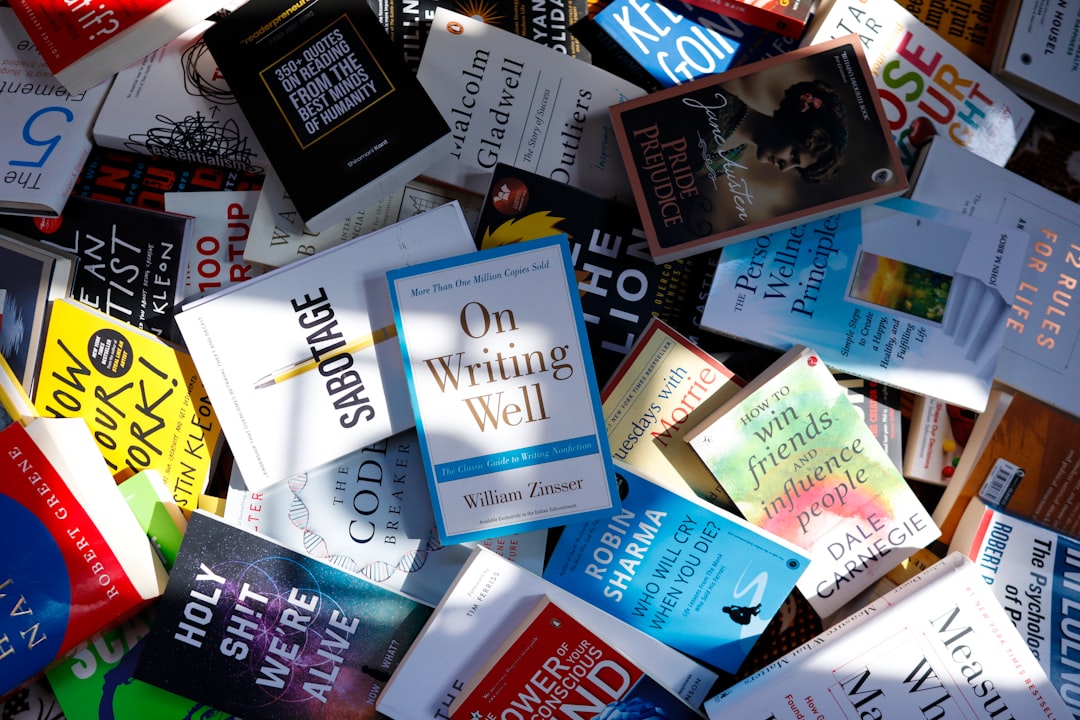
Photo by Shiromani Kant on Unsplash
There's a moment in Sarah's reading group where someone always asks the question: "But what happens next?" It's usually asked about two-thirds of the way through a novel, when the protagonist should be charging toward their climax, and instead, the author has set the entire plot on fire and walked away.
This isn't a bug in modern fiction. It's becoming a feature.
Over the past five years, a peculiar trend has emerged among acclaimed fiction writers—the deliberate dismantling of narrative momentum at the exact point where conventional storytelling demands acceleration. Authors like Hanya Yanagihara, Karl Ove Knausgård, and Sally Rooney have made careers out of subverting second-act expectations, and their readers don't just tolerate it. They're obsessed with it. Book clubs debate it. Literary magazines analyze it. Amazon reviews overflow with passionate arguments about whether this approach is genius or infuriating.
The phenomenon deserves a closer look, because it reveals something fundamental about what contemporary readers actually want from fiction—and it's not what the publishing industry has trained us to expect.
The Architecture of Controlled Collapse
Let's be precise about what we're talking about here. This isn't about open endings or ambiguous conclusions. Those have existed since before anyone was calling them "postmodern." What's different is the timing and intentionality of the rupture.
Consider the structure: a novel establishes characters and conflict for the first section. By the midpoint, we understand the stakes. The machinery is wound up. Then, instead of the release we've been trained to crave—the pursuing, the fighting, the grand resolution—the author pivots. Characters lose momentum. Time dilates. Secondary concerns suddenly become primary. The plot doesn't end; it simply... deflates.
In Knausgård's six-volume "My Struggle" series, readers opened book after book expecting narrative progression and found instead an almost obsessive circling of the same emotional terrain. The "plot" of finding redemption or resolution never arrives in any traditional sense. Yet people read all 3,600 pages. Critics compared him to Proust. Universities added him to syllabi.
This is the paradox that confounds traditional publishing wisdom: fewer people than ever claim to read fiction, yet those who do are increasingly drawn to books that refuse to satisfy conventional narrative hunger. The industry wanted plot-driven thrillers and character arcs. Readers voted with their preorders for something more deliberately unsettling.
What Second-Act Abandonment Actually Delivers
If you ask readers why they stay with these books, they rarely mention plot. Instead, they talk about recognition. Truth. The sensation of experiencing something that doesn't insult their intelligence by tying itself up too neatly.
There's something almost honest about a narrative that refuses the false catharsis of a resolved climax. Real life doesn't follow five-act structure. People don't have clean character arcs. Relationships don't reach definitive conclusions; they peter out, restart, transform into something unrecognizable. When a novel mirrors this messiness, readers often report feeling seen in a way that a properly constructed story doesn't quite achieve.
This connects to the broader appeal of unreliable narrators and untrustworthy storytelling. Readers have grown skeptical of neat narratives. They've absorbed enough cultural criticism to know that plots are constructed, conclusions are imposed, and truth is usually stranger and messier than fiction.
So when an author has the nerve to abandon their own carefully laid plans, something clicks. It feels like honesty. It feels subversive. It feels real.
The Exhaustion Factor and the Rise of Anti-Plot
There's also something to be said about simple exhaustion. The past decade has been relentless. Global uncertainty, political chaos, personal crises—many readers have reported that they no longer have the emotional bandwidth for tightly wound plots that demand investment in resolution. A novel that commits to its own incompleteness feels easier. Less demanding. Even restful.
Publishers have noticed. Literary fiction imprints that once demanded "strong narrative arcs" now actively seek manuscripts that subvert those expectations. Debut authors understand that the fastest route to critical acclaim and book club ubiquity isn't tight plotting—it's the willingness to disappoint readers' expectations in ways that feel intellectually justified.
But here's where it gets interesting: this isn't purely intellectual affectation. Real human beings are choosing these books, often over faster-paced alternatives. Something about the rejection of narrative satisfaction is resonating with genuine emotional needs.
The Backlash and the Fracture
Of course, not everyone is here for it. Online reviews for deliberately unresolved literary fiction often split sharply. Five stars from someone who felt profoundly moved by the author's refusal to provide neat answers. One star from someone who felt punished for investing hundreds of pages in a character's journey.
This fracture is healthy, actually. It suggests that readers are becoming more conscious consumers, less willing to accept what they're handed. They're either buying into the author's rejection of traditional structure, or they're explicitly rejecting it. Either way, they're thinking about *why* they're reading and what they want from the experience.
What's not happening much anymore is the middle ground of passive entertainment consumption. You either understand why the author abandoned the plot in act two, or you feel robbed. There's rarely neutral ground.
What This Means for Fiction's Future
If this trend continues—and there's every indication it will—we're looking at a publishing landscape that increasingly validates formal experimentation and narrative risk. The commercial success of deliberately unresolved stories suggests that the audience for "difficult" fiction is larger and more devoted than anyone expected.
For writers, this is either liberation or paralysis, depending on your temperament. You can abandon plot without it being read as incompetence. You can choose atmosphere over action, digression over direction. But you have to commit to it fully. Readers can spot half-hearted anti-plot as easily as they can spot a forced climax.
The trend also challenges a fundamental assumption about narrative: that it exists to resolve tension. Maybe it exists to examine it. To inhabit it. To show us that not all problems have solutions, and sometimes the human experience is just a series of second acts that never quite reach their climaxes.
If that sounds depressing, it's only because we've been trained to expect different. To a growing number of readers, it sounds like coming home.
Comments (0)
No comments yet. Be the first to share your thoughts!
Sign in to join the conversation.