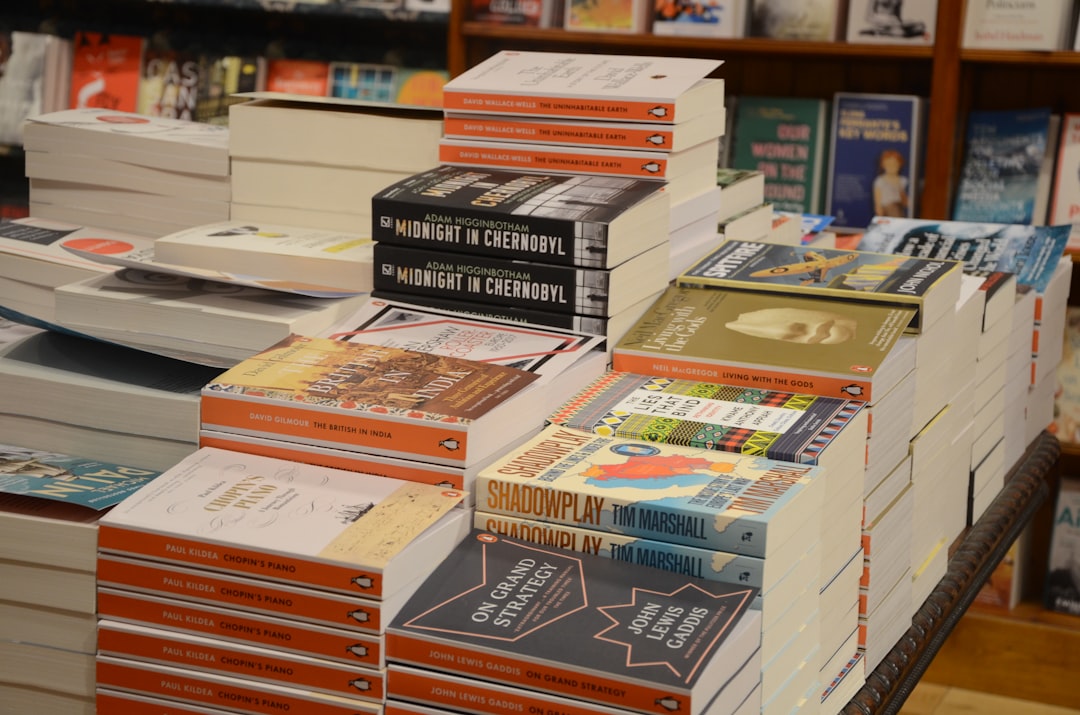
Photo by Geilan Malet-Bates on Unsplash
Margaret Atwood's The Edible Woman doesn't feature Marian as a passive bystander in her own story—but readers spent decades fascinated by what the men around her were thinking. We've been trained to follow the protagonist, the chosen one, the person whose name appears on the dust jacket. But somewhere between Wide Sargasso Sea and Wicked, something shifted. Writers started asking: what if the story belongs to someone else entirely?
The secondary character elevation isn't new, exactly. Rosencrantz and Guildenstern Are Dead premiered in 1966. But the frequency and intensity with which contemporary authors are mining the peripheral has become something closer to a revolution. Publishers are greenlighting novels told entirely from the perspective of Frankenstein's creature, Dracula's servants, and Sherlock's forgotten ex-lovers. And readers? They're devouring them.
Why We're Suddenly Fascinated by the Forgotten
There's a specific magic in reading a story you think you know from someone else's vantage point. When you encounter the "main character" filtered through the eyes of someone they barely noticed, something breaks open. That person becomes three-dimensional in a way they never were before. They reveal weaknesses. They contradict the narrative you were told. They become human.
Consider the numbers: since 2018, at least forty major publishing houses have released retellings or alternative perspectives from secondary characters. Wide Sargasso Sea, Jean Rhys's 1966 novel told from the perspective of Rochester's first wife, has sold over 3 million copies—mostly in the last ten years. That's not accident. That's hunger.
Part of this hunger stems from fatigue with the traditional hero's journey. We've read it. We've watched it adapted into seventeen streaming series. The white male protagonist discovering his special powers? The chosen girl learning to love herself while saving the world? The scrappy underdog who was actually noble all along? These narratives have become so familiar they've fossilized. Secondary characters offer escape routes from tired patterns.
But there's something deeper happening too. We're living through a moment of historical reclamation. Marginalized communities are reclaiming narratives that centered everyone but them. The people who were footnotes, props, and plot devices are stepping into the foreground. This isn't just literary fashion. It's a philosophical repositioning of whose story matters.
The Technical Genius of Telling It Sideways
Writing from a secondary character's perspective is genuinely harder than it appears. The author must maintain the original story's architecture while completely reframing its meaning. They need to know where the protagonist is at every moment, what they're doing, what they believe—but the reader experiences all of this second-hand, filtered through someone else's perception, interpretation, and resentment.
This creates a fascinating tension. When you read Ahab's obsession from Ishmael's perspective, you understand it. When you read it from Starbuck's viewpoint, you suddenly see it as madness. Neither version is "true." Both are. And that multiplicity is what hooks readers. It's the literary equivalent of watching someone you thought you knew pull off a rubber mask.
The best secondary character narratives do something even trickier: they make you question whether the original protagonist was ever the hero. Take Marion Zimmer Bradley's The Mists of Avalon, which retold Arthurian legend from Morgaine's perspective. The novel didn't just change whose story we heard—it fundamentally altered our moral judgment of every character involved. Arthur wasn't noble anymore. He was ambitious. Guinevere wasn't a tragic lover—she was trapped. Mordred wasn't a villain. He was a victim.
These narratives require writers to think architecturally about what their audience knows and when they know it. A character meeting someone "important" for the first time doesn't know their legend. They just see a person. That immediacy, that loss of context, paradoxically creates more context. We understand things differently when we're not primed with mythic importance.
The Unreliable Margin: What Secondary Characters Get Wrong
Here's where it gets delicious: secondary characters are often unreliable narrators. They misunderstand motivations. They fill gaps with assumption. They're jealous, resentful, ashamed, or simply absent when crucial moments happen. They tell us stories based on incomplete information, and we have to figure out what's true.
This is precisely why unreliable narrators have become fiction's most compelling phenomenon. A secondary character narrating gives us unreliability with automatic built-in credibility. They seem like witnesses to the "real" story, not architects of it. That trustworthiness makes their deceptions more impactful.
When you read Rosencrantz and Guildenstern Are Dead, you're experiencing a story told by two people who genuinely don't understand what's happening around them. They're outside the machinery of Hamlet. They see the play unfold, but they misinterpret constantly. The philosophical weight of that confusion—the genuine existential uncertainty they're living in—becomes the entire point. The secondary characters aren't trying to untangle the mystery. They're trying to survive it.
What This Means for Fiction's Future
Secondary character narratives have moved from curiosity to convention. They're teaching writers something crucial: the story you thought you were telling might not be the story worth telling. The person you made important might not be the person readers care about most.
This shift has practical implications. It's making publishing more diverse because marginalized characters are finally getting to narrate their own experiences rather than existing as supporting cast in someone else's story. It's making fiction more psychologically complex because secondary perspectives force writers to consider multiple truths simultaneously. And it's making readers more skeptical—in a good way—about whose version of events they're believing.
The secondary character revolution isn't replacing traditional narratives. It's just finally admitting something we've always known: the person standing at the edge of the frame usually has a much better view than the person in the center, blinded by their own spotlight.
The most interesting stories have always belonged to the people we almost forgot to notice. We're just now getting around to asking them to tell their own.
Comments (0)
No comments yet. Be the first to share your thoughts!
Sign in to join the conversation.