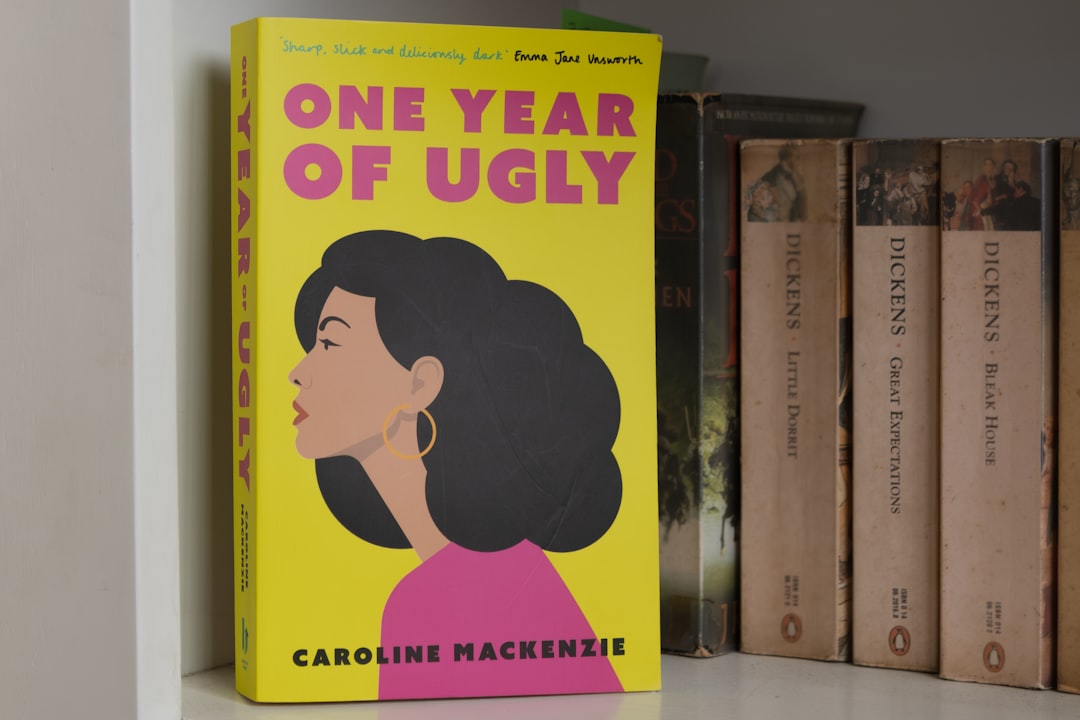
There's something delightfully absurd about curling up with a novel where someone gets poisoned at the village bake sale, and you genuinely cannot wait to find out who did it. Not because you're morbidly fascinated by murder itself, but because the killer is probably someone's well-meaning aunt who was tired of the town gossip. Welcome to the cozy mystery genre—where violent crime happens in the most civilized way possible.
The cozy mystery has exploded over the last decade. According to Publishing Perspectives, cozy mystery sales grew by 32% between 2019 and 2023, with established franchises like Louise Penny's Inspector Gamache series and Donna Andrews's Meg Langslow books consistently topping bestseller lists. But here's the twist: readers aren't flocking to these books because they've suddenly developed a taste for serial killers. They're reading them because cozy mysteries offer something increasingly rare in modern fiction—control, community, and the promise that justice will be served before dessert.
The Illusion of Safety in a Chaotic World
Let's be honest. The real world is terrifying. Political polarization, economic anxiety, health crises—it all piles up. Enter the cozy mystery, where the worst thing that can happen is contained, solvable, and usually funny. The victim is already dead before page ten, so you're never waiting for catastrophe. You're looking backward, piecing together a puzzle where every clue matters and nothing is random.
The best cozy mysteries create enclosed worlds. Consider Agatha Christie's St. Mary Mead—a village so self-contained that problems rarely seep in from the outside. Miss Marple solves crimes with the gentle confidence of someone who understands human nature because she's watched it play out in her garden for seventy years. The murders might be shocking, but the village itself? That's steady. That's home. Contemporary cozy mysteries have adapted this formula brilliantly. In Jill Churchill's "Donna Domestic" series or Stephanie Barron's Jane Austen mysteries, the settings—a suburban house, an English countryside estate—feel like places you'd want to live, even if someone occasionally drops dead in the conservatory.
This creates what psychologists might call "contained chaos." Your real life might be spinning out of control, but within these pages, disorder follows rules. The detective has agency. Clues accumulate in meaningful ways. By the final chapter, everything makes sense. That's therapeutic in a way that literary fiction—with its ambiguous endings and unresolved character arcs—deliberately avoids.
The Detective as Your Highly Competent Friend
Here's something cozy mystery readers don't always admit but deeply appreciate: the protagonist is almost always extremely competent, but in a way that doesn't require superhuman abilities. Miss Marple doesn't need a forensic lab. Trixie Beldon runs the Bob-Whites of Glen Road with military precision but also laughs about their mishaps. These aren't action heroes rappelling down buildings. They're people who notice things, ask the right questions, and apply logic.
In an era where we're constantly reminded of our inadequacies—you should be earning more, exercising more, optimizing more—there's genuine comfort in following someone who's simply good at what they do. Betty White's Molly Murphy in Jennifer McMahon's cozy mysteries is poor and working-class, but she solves crimes through persistence and brainpower. She doesn't need a trust fund or special training. She just needs to be clever and stubborn, qualities that feel accessible to readers.
This is particularly significant for cozy mystery's demographic. Studies suggest that roughly 80% of cozy mystery readers are women, many of them over forty. This audience has spent decades being told they're past their cultural prime, their bodies wrong, their opinions less valuable than younger people's. A cozy mystery hands them protagonists who are older women, single women, widowed women, working women—and these women are the ones solving the crime. They're the ones who matter.
Community Over Competition
Unlike thriller novels built on paranoia and isolation, cozy mysteries emphasize community. Someone commits murder, but it's someone the detective knows. The investigation brings people together. In Agatha Christie's "Murder on the Orient Express," the entire cast becomes a kind of extended family working toward resolution. Modern cozies do this too—think of all the secondary characters in Louise Penny's Montreal-based series, how they form an ecosystem of relationships that sustain the books.
This collaborative spirit extends to readers themselves. The cozy mystery community is notably social. BookTok has discovered cozy mysteries in a big way, with creators sharing theories and spoiler-filled rants. Book clubs gravitate toward cozies because they're discussions starters without being emotionally devastating. You can chat about the detective's romantic prospects or debate which suspect seemed most guilty without needing grief counseling afterward.
If you want to understand how characters function as the true center of a story, The Villain Who Stole the Spotlight explores secondary characters who become the heart of narratives—a concept that cozy mysteries have mastered, where the victim or suspect might tell you more about the story than the detective.
The Puzzle as Permission to Relax
Here's what no one tells you about cozy mysteries: they're inherently fair. The best ones follow mystery protocol. You get the same information the detective gets. If you pay attention, you can solve the crime yourself. This fairness is radical. It means you're not being manipulated by the author's desire to surprise you at all costs. You're invited into collaboration.
That structure is permission to relax. You don't need to worry about psychological manipulation, graphic violence, or the author deciding that every character deserves to suffer. The genre has an implicit contract with readers: mysteries will be solved. Justice—imperfect as it might be—will happen. Characters you've come to care about will probably survive to the next book.
In a world that feels increasingly out of control, that contract matters more than we typically admit. A cozy mystery isn't escapism exactly. It's an alternate world built on the assumption that problems are solvable, that paying attention matters, and that community—for all its messiness—is where meaning lives.
That's why someone will always be murdered at the village bake sale, and thousands of readers will thank the author for it.
Comments (0)
No comments yet. Be the first to share your thoughts!
Sign in to join the conversation.