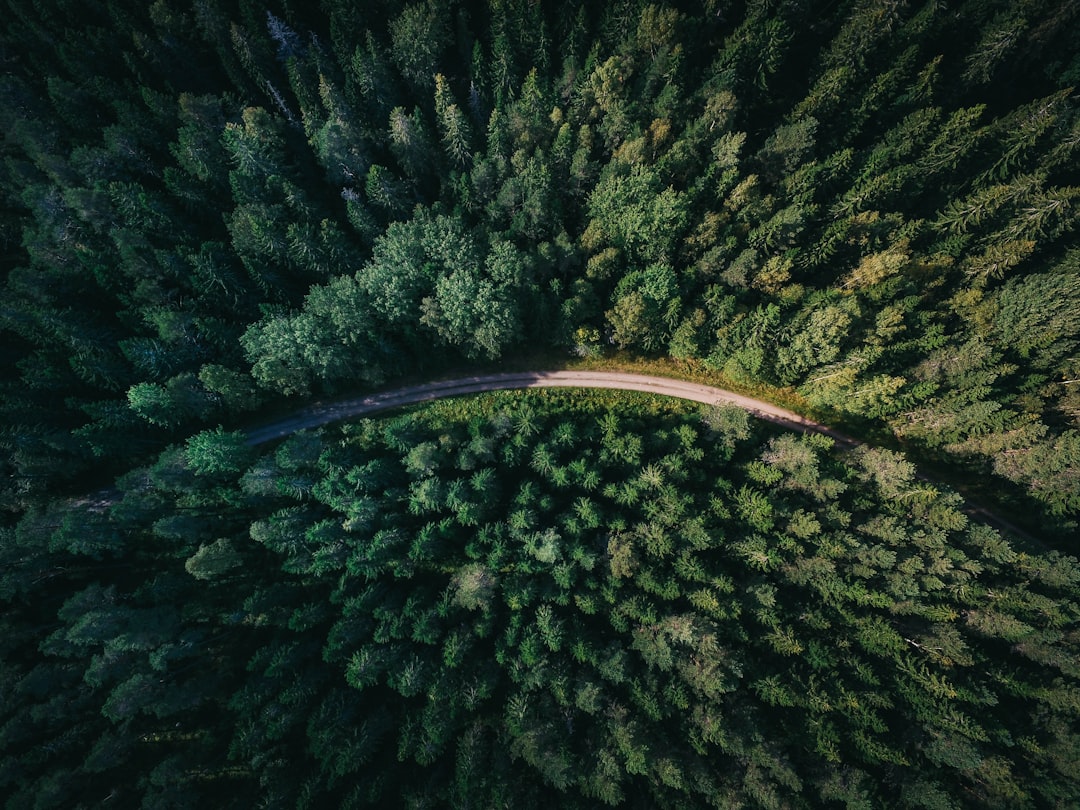
Every morning, roughly 2.25 billion cups of coffee get consumed worldwide. That number sounds abstract until you realize what's actually happening on the ground: bulldozers leveling ancient forests in Vietnam, Indonesia, and Laos to plant endless rows of coffee plants. The industry has already cleared an area roughly the size of Germany, and it's accelerating.
I spent time researching this after my friend Sarah switched to "ethical" coffee beans. She felt good about her choice. Then she sent me a photo from her own research trip to Ethiopia—it showed a hillside completely stripped bare, with only stumps remaining. "But the label said it was sustainable," she said, confused. That's when I realized the coffee crisis is far more complicated than marketing claims.
The Hidden Cost of Your Morning Ritual
Coffee farming ranks among the world's most deforestation-intensive crops. According to recent data, coffee production directly caused approximately 9.3 million hectares of forest loss between 2000 and 2020. That's roughly 14 million football fields worth of trees gone. The problem intensifies because coffee grows best in tropical regions—exactly where the most biodiverse forests exist.
Here's what happens: A farming company identifies a forested area with ideal elevation, rainfall, and soil conditions. They secure land rights (sometimes legitimately, often not). The forest comes down. Coffee plants go in. For about 20-30 years, the land produces beans. Then soil degradation forces farmers to move to new forest areas and repeat the cycle. It's an endless strip-mining operation disguised as agriculture.
Vietnam alone produces roughly 20% of the world's coffee supply. Most of it comes from the Central Highlands region, which had its forest cover reduced from 60% in 1990 to just 30% by 2020. That's not gradual decline—that's ecological collapse happening in real-time.
Why "Fair Trade" and "Sustainable" Labels Often Miss the Point
You've probably seen those certifications on coffee bags: Fair Trade, Rainforest Alliance, UTZ Certified, Bird Friendly. They exist for good reasons—workers in coffee regions genuinely deserve fair wages and safe conditions. But here's the uncomfortable truth: most certification programs focus heavily on worker welfare and economic sustainability, not forest preservation.
A Fair Trade label confirms that a farmer paid decent wages to their workers. It doesn't necessarily mean the forest is still there. Rainforest Alliance certification has environmental components, but an audit might occur once every three years, allowing plenty of time for deforestation between checks. Some certified farms still clear new forest areas to expand production—they just follow better labor practices while doing it.
The most rigorous certification for actual forest protection is Bird Friendly, operated by the Smithsonian Institution. It requires shade-grown coffee under native forest canopy, explicitly protecting ecosystem structure. But Bird Friendly certified beans represent less than 1% of global coffee production and cost 20-40% more than regular coffee.
The Real Culprit: Commodity Market Economics
Understanding why deforestation persists requires looking at coffee prices. Right now, farmers receive roughly $1.50-$2.00 per pound of raw coffee beans. Processing and shipping costs eat most of that margin. A farmer who clears forest and plants at maximum density generates more volume, but barely makes rent. The math forces expansion into new forest areas.
Meanwhile, coffee companies like Nestlé, JAB Holding, and Starbucks control roughly 50% of the global market. They set purchasing prices, which means they control farmer incentives. A farmer struggling to break even on $1.75 per pound can't afford to implement forest-friendly practices that reduce yields. They need volume or they fail.
This creates a perverse incentive structure: the most profitable short-term strategy for farmers is clearing more forest. Individual farmer choices, even good ones, get crushed by system-wide economics that reward deforestation.
What Actually Works (And What Doesn't)
So what's the solution? Buying premium ethical coffee helps, but it's not sufficient. Here are approaches with actual evidence behind them:
Agroforestry systems matter. Some farms successfully integrate coffee under shade trees native to each region. This maintains forest structure, supports wildlife corridors, and produces reasonable yields. Indonesian researchers found shade-grown coffee farms supported 40% more bird species than sun plantations while maintaining 70% of sun plantation yields. The economics work when consumers pay fair prices and companies commit to purchasing at sustainable volumes.
Supporting forest protection organizations directly often accomplishes more than buying labeled coffee. Groups like the Rainforest Foundation and The Nature Conservancy actively purchase land and prevent deforestation through direct conservation. A $30 donation prevents more forest loss than switching to premium coffee for several months. The math is counterintuitive but real.
Consuming less, better coffee creates better incentives. This sounds preachy, but the data supports it. If coffee consumption in developed countries drops 15% while prices paid to farmers increase 25%, you've fundamentally altered the economic calculation. Suddenly, a farmer makes reasonable money from sustainable practices instead of barely surviving on volume.
Supporting certification programs with real enforcement works. Rainforest Alliance recently restructured their standards to strengthen environmental requirements. Bird Friendly, despite its premium price, maintains rigorous auditing. These programs aren't perfect, but they create measurable difference compared to uncertified alternatives.
The Uncomfortable Truth
The best decision might be reducing coffee consumption and allocating that money to direct forest conservation in coffee-producing regions. I know that's not what coffee companies want you to hear, and it's not the satisfying answer of finding the "right" label and feeling virtuous.
But Sarah, after learning more, cut her coffee consumption by half and donated the money she saved to a land protection program in Ethiopia. She says the coffee tastes better now—knowing fewer forests died for it probably helps.
If you're interested in how other consumption choices affect your body and the environment, learn about the microplastic invasion that's ending up inside your body—another hidden cost of modern habits worth understanding.
Comments (0)
No comments yet. Be the first to share your thoughts!
Sign in to join the conversation.