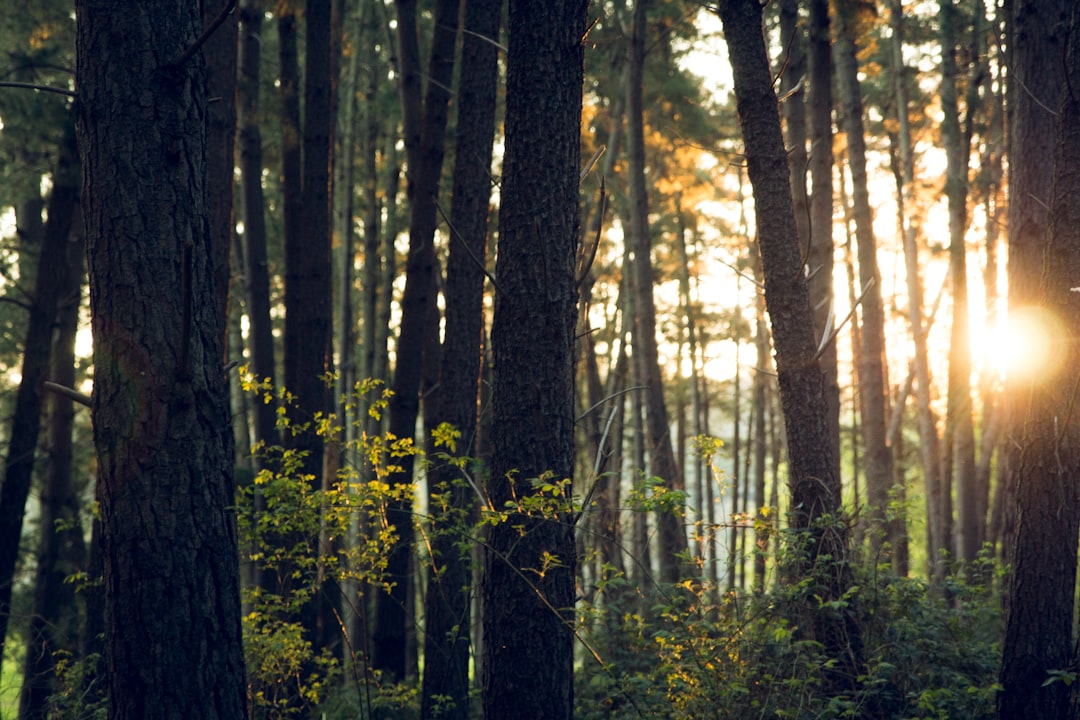
Photo by Dan Stark on Unsplash
Every morning, about 2 billion cups of coffee get consumed worldwide. It's the second-most traded commodity on Earth, right behind oil. But here's what most people don't realize while they're scrolling through their phone at the café: that dark roast sitting in front of them represents a direct connection to bulldozers clearing ancient rainforests.
The Hidden Cost Hidden in Your Cup
Coffee doesn't grow in factories. It grows in the tropics—places like Colombia, Ethiopia, Vietnam, and Indonesia where some of the planet's most biodiverse ecosystems exist. And for the past 40 years, coffee production has been one of the leading causes of tropical deforestation.
Let me give you specific numbers, because they matter. Between 1990 and 2010, coffee farming was responsible for clearing approximately 2.7 million hectares of forest—that's roughly the size of New Jersey, completely gone. In Colombia alone, coffee production has destroyed over 1.2 million hectares of rainforest. Ethiopia, which is literally the birthplace of coffee and home to the most genetically diverse coffee forests on the planet, has lost 65% of its forest cover in the past 40 years. Much of that loss connects directly to coffee cultivation.
What makes this particularly tragic is that coffee actually grows best in shade. Traditionally, smallholder farmers in places like Ethiopia would cultivate coffee under the canopy of native trees. These shade-grown systems supported wildlife, protected soil, and created a genuinely sustainable farming method. But when industrial-scale production moved in, everything changed. Shade trees got removed. Native forests were cleared entirely. Single-species plantations replaced complex ecosystems.
The Animals Paying the Price
When you clear tropical forest for coffee, you're not just removing trees. You're erasing entire worlds. The Atlantic Forest of Brazil, where much coffee was historically grown, once housed jaguars, giant anteaters, and hundreds of bird species that existed nowhere else on Earth. Much of it is now gone.
Colombia's cloud forests, the misty mountain regions where specialty coffee thrives, are home to the Andean condor, poison dart frogs, and the world's smallest hummingbird—the bee hummingbird, which weighs less than a penny. As coffee farms expand into these fragile areas, these species have nowhere left to go.
Bird populations have been hit especially hard. Studies show that birds in sun-grown coffee plantations (where all shade trees are removed) number roughly one-tenth of what they would be in natural forest. We're talking about a 90% reduction in bird biodiversity. Migratory songbirds that breed in North America spend their winters in these coffee regions, so when the forests disappear, the birds disappear with them.
And then there's the soil itself. When you remove the forest canopy and underlying vegetation, you lose the natural protection that prevents erosion. Coffee plantations on steep slopes turn into mudslides during heavy rains. The soil that remains becomes depleted—all that rich organic matter just washes away—forcing farmers to use more and more chemical fertilizers and pesticides to maintain productivity.
Why Big Coffee Doesn't Want You Knowing This
The coffee industry generates about $200 billion annually in global sales. Three companies—Nestlé, Kraft Heinz, and JAB Holding—control roughly 50% of the world's coffee market. These are not companies typically motivated by environmental concerns when there's money to be made through expansion and efficiency.
Shade-grown coffee produces lower yields. It requires more skilled labor. It takes longer to establish. From a pure profit standpoint, clear-cutting forests and planting sun-grown coffee makes economic sense to shareholders. The environmental destruction and the fact that it's literally unsustainable in the long term? That's someone else's problem to worry about.
This is also why fair trade and rainforest alliance certifications exist—they're attempts to create market incentives that favor sustainable practices. But these certifications only cover about 15% of global coffee production. The vast majority of your coffee comes from conventional industrial farms.
What Actually Makes a Difference
Here's what's interesting: you have more power in this equation than you probably think. Shade-grown coffee tastes genuinely better. It's richer, more complex, and has higher quality overall. Once your taste buds adjust to better coffee, the mass-market stuff tastes like burnt dirt by comparison.
Look for certifications that actually mean something: Rainforest Alliance, Fair Trade USA, or Smithsonian Bird Friendly (which specifically requires 40% shade cover). Better yet, find a local roaster who sources directly from small farms and can tell you exactly where their coffee comes from. These roasters exist in pretty much every city now.
Buying shade-grown coffee costs maybe 20-30% more per bag. For most people, that's the price of two specialty coffee drinks per week. The math is simple: stop buying two fancy coffees out, buy one really good shade-grown bag from a local roaster instead. Your palate improves, the forest stays standing, and the farmers actually get paid fairly.
If you want to understand how consumer choices ripple through ecosystems in ways that seem completely invisible to us, coffee is the perfect case study. The Ghost Forests Rising from Our Coasts explores another way humans are destroying forests—this time through climate change and sea level rise—but the coffee story shows how our daily habits fuel the chainsaws directly.
Your morning coffee doesn't have to mean a rainforest dies. It just requires you to care enough to check the label and maybe spend a few extra dollars. The forests are literally counting on it.
Comments (0)
No comments yet. Be the first to share your thoughts!
Sign in to join the conversation.