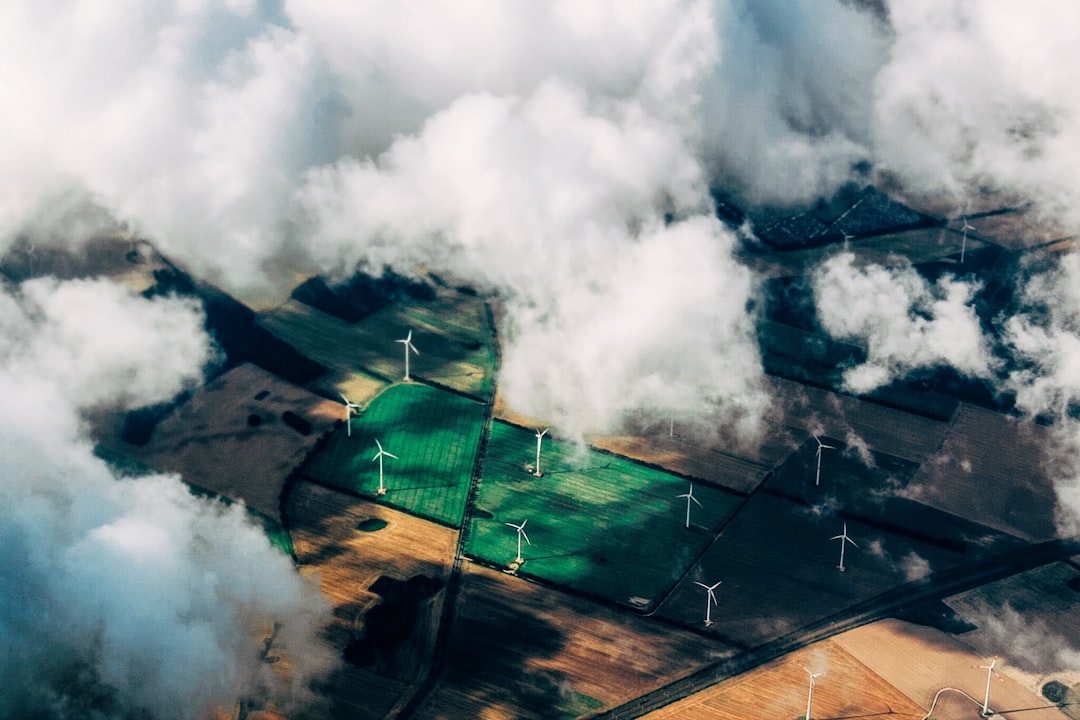
Photo by Thomas Richter on Unsplash
Last spring, I watched my neighbor spend three weekends obsessively aerating his lawn. When I finally asked him why he was torturing himself in the Alabama heat, he shrugged and said, "Just trying to keep things alive." He had no idea that each time his fork pierced the earth, he was potentially unlocking one of our planet's most powerful climate weapons: the ability of soil to trap and store carbon dioxide.
We've spent decades fixating on solar panels and electric vehicles—important, yes—but we've almost entirely overlooked what scientists now recognize as a critical piece of the climate puzzle. Healthy soil doesn't just grow food. It stores carbon at a scale that's genuinely staggering. In fact, soil contains more carbon than the atmosphere and all plants combined. When managed correctly, it can be replenished, rebuilt, and weaponized against climate change.
The Soil Carbon Crisis We Didn't Know We Had
Here's where things get uncomfortable. Modern agriculture has spent the last 70 years systematically destroying the very thing that could save us. When farmers till the soil, plow it repeatedly, and leave it bare between seasons, they're doing what sounds logical—preparing it for crops. But they're actually cracking open a carbon vault and letting millions of tons of CO2 escape into the atmosphere.
According to research from McGill University, agricultural soils have lost between 50-70% of their original carbon content since industrialization began. That's not a typo. We've hemorrhaged carbon from the ground at a staggering rate. A single hectare of conventionally farmed soil might have lost 20-30 tons of carbon per year for decades.
But here's what makes this simultaneously devastating and hopeful: unlike solar panel manufacturing or wind turbine installation, reversing soil degradation doesn't require massive infrastructure overhauls or wealthy nations subsidizing poorer ones. It requires changing how we think about dirt.
How Healthy Soil Actually Works (And Why It Matters More Than You Think)
Soil isn't just dirt. It's a living ecosystem containing more organisms than there are humans on Earth. A single teaspoon of healthy soil can contain a billion microorganisms. These creatures—bacteria, fungi, protozoa, nematodes—form an intricate network that binds soil particles together and traps carbon in stable compounds that can remain sequestered for centuries.
When you practice regenerative agriculture—leaving fields unplowed, planting cover crops, rotating livestock through pastures—you're essentially giving this underground city the resources it needs to thrive. The plants produce sugars through photosynthesis and transfer them to fungi through their roots. The fungi break down carbon and incorporate it into the soil structure. Carbon that was in the air suddenly becomes fixed in the ground.
The numbers are extraordinary. Some estimates suggest that if we converted just 25% of global agricultural land to regenerative practices, we could sequester enough carbon to offset a decade of current emissions. Not solve the problem entirely, but offset a decade. That's not nothing.
And unlike most climate solutions, this one actually improves farmers' livelihoods. Regenerative soil holds more water, requires fewer fertilizer inputs, and produces more resilient crops. Farmers see lower costs and better yields. It's one of the rare cases where environmental restoration and economic benefit align perfectly.
The Regenerative Agriculture Movement Is Actually Happening
This isn't theoretical anymore. Across the United States, Europe, and parts of Africa, a quiet revolution is unfolding. Farmers like Gabe Brown in North Dakota have transformed their operations by eliminating tillage, planting diverse cover crops, and integrating livestock. Brown's operation has gone from barely surviving in the 1980s to thriving, with soil carbon levels that have more than doubled.
Major companies are starting to pay attention. General Mills has committed to advancing regenerative agriculture across its supply chain. Patagonia invests heavily in regenerative farming initiatives. Even Monsanto's parent company Bayer has launched programs supporting soil carbon sequestration. The market is beginning to price carbon in soil.
Some countries are getting it too. France has launched its "4 per 1000" initiative—the goal is simple but ambitious: increase soil organic matter by 0.4% annually to offset global greenhouse gas emissions. Argentina, Australia, and Morocco have joined the effort.
Yet the movement remains massively underfunded compared to other climate solutions. While billions flow toward clean energy research, soil carbon initiatives struggle for funding and policy support. This is partly because soil carbon is harder to measure than a solar panel's output. You can't see carbon sequestration happening. You have to measure it through soil testing and modeling, which is technically complex and requires patience.
What You Can Actually Do About This
The encouraging part? You don't need to own a farm to participate. Every garden, every lawn, every patch of green space matters.
Stop tilling your garden beds. Leave them undisturbed except for planting. Add compost annually—you're literally feeding the microbial community. Plant cover crops in winter or between seasons. Leave leaf litter on the ground rather than raking it all away. If you have space, let a small section go wild. These actions might sound insignificant, but they're not.
If you eat, you can support regenerative agriculture by buying from farmers who practice it. Yes, it's often more expensive. But you're paying for something real—soil health, carbon sequestration, and agricultural resilience.
At a policy level, we need carbon pricing mechanisms that account for sequestration in soil. We need agricultural subsidies that reward regenerative practices instead of penalizing them. We need research funding that gives soil scientists the resources to understand how to maximize carbon storage.
The Dirt Beneath Your Feet Is Literally the Future
My neighbor eventually stopped aerating his lawn and started letting it grow wild with clover and native plants. He still thinks it looks messy. But he's unknowingly participating in something bigger—slowly, incrementally, restoring his soil's ability to store carbon.
This is what climate action looks like when it works. Not a dramatic pivot to some shiny new technology, but a return to understanding that the solution was beneath our feet the whole time. Soil carbon sequestration won't solve climate change alone, but paired with renewable energy adoption and emissions reduction, it could be the difference between catastrophic warming and a managed transition.
The dirt isn't boring. It's the most important battlefield we're not paying attention to. And unlike many climate problems, this is one where we actually have straightforward solutions that improve human welfare simultaneously. We just need to act on them.
For more on how natural systems store carbon and fight climate change, check out The Forgotten Carbon Sink: Why Seagrass Meadows Are Your Ocean's Most Underrated Hero.
Comments (0)
No comments yet. Be the first to share your thoughts!
Sign in to join the conversation.