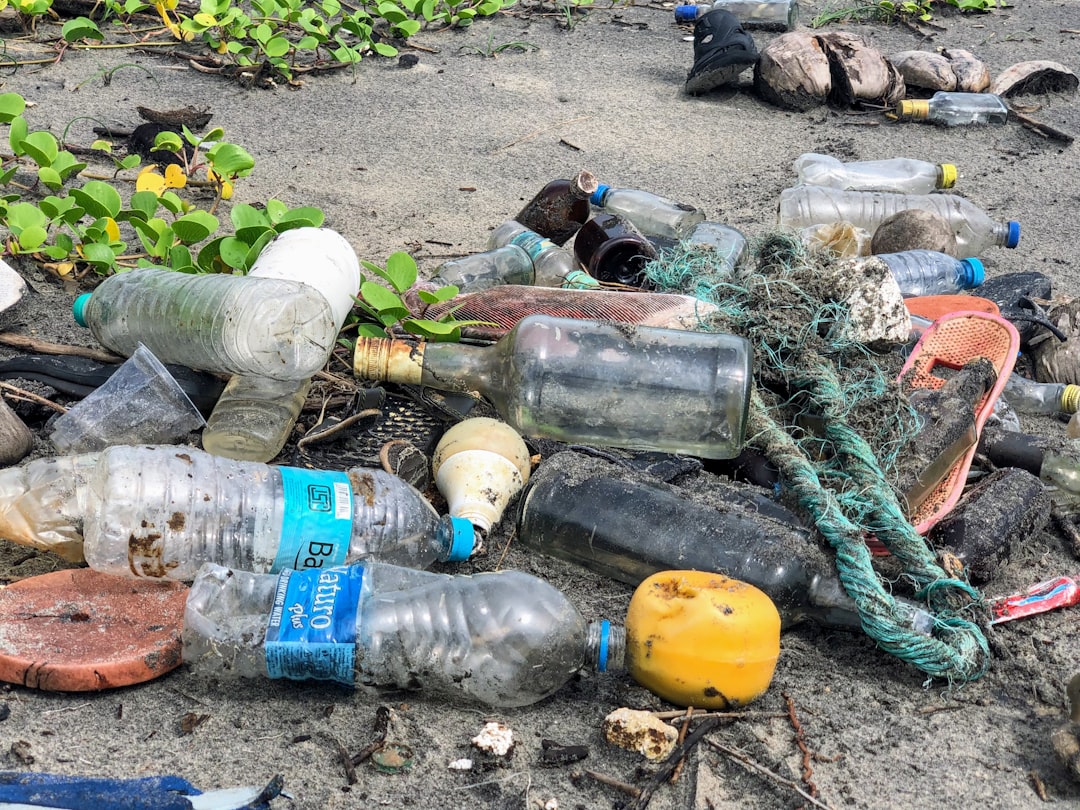
Photo by John Cameron on Unsplash
Most of us don't think about soil. We walk on it, plant gardens in it, and generally ignore it unless something goes wrong. But right now, beneath our feet, a quiet catastrophe is unfolding. Every single day, the world loses an area of productive soil roughly the size of 27 football fields. Not to construction or urban sprawl—to degradation. To erosion, compaction, chemical pollution, and depletion. And almost nobody's talking about it.
The Numbers That Should Terrify Us
Let's start with the hard data, because the situation is genuinely alarming. According to research from the UN's Food and Agriculture Organization, one-third of the world's soils are already degraded. That's not hyperbole—it's the conservative estimate. We're losing soil at a rate of 24 billion tons per year, which sounds abstract until you realize it takes nature roughly 500 years to generate one inch of topsoil naturally.
The economics are brutal. Soil degradation costs the global economy approximately $400 billion annually in lost productivity. In places like sub-Saharan Africa, where agricultural soils have been depleted for decades, the economic impact is devastating. Farmers trying to grow crops in exhausted soil are fighting a battle they can't win. Yields drop. Poverty deepens. Migration accelerates.
Here's the really unsettling part: we're not talking about distant deserts or inaccessible regions. This is happening in the breadbasket regions of the world. The American Midwest, the pampas of Argentina, the agricultural heartlands of Europe and Asia. The places that feed humanity are literally crumbling.
How Industrial Agriculture Became Soil's Enemy
The problem didn't appear overnight. It's the direct result of how we've chosen to farm for the last 70 years.
After World War II, agriculture transformed. Mechanical tillage replaced hand-plowing. Synthetic fertilizers replaced crop rotation and animal manure. Monoculture replaced diverse farming. The goal was simple and seductive: produce more food with fewer people. And it worked. For a while.
But there's a cost that nobody calculated into the equation. Traditional farming practices—leaving fields fallow, rotating crops, integrating livestock—did something crucial: they maintained soil structure and health. When you till soil repeatedly, you expose organic matter to oxidation and kill the microbial communities that hold soil together. Those microbes are essential. A single gram of healthy soil contains more organisms than there are people on Earth. These creatures form networks that improve water retention, nutrient cycling, and disease suppression.
Synthetic fertilizers accelerated the problem. They're like giving someone a sugar rush instead of a balanced meal. Crops get the nitrogen and phosphorus they need immediately, but the soil itself becomes sterile. The microbes starve. The structure collapses. Farmers respond by applying more fertilizer next season. It becomes a treadmill.
Then there's monoculture—planting the same crop year after year on the same land. It's like asking a restaurant to serve the same meal to the same customer every single day. Eventually, something's going to break. Specific pests thrive. Specific nutrients get depleted. Disease builds up in the soil.
The Domino Effect We Didn't See Coming
Degraded soil doesn't just affect farmers. It creates a cascade of problems that touches nearly everything.
First, there's the food security issue. As soils degrade, yields decline. We're going to need to feed 10 billion people by 2050. Degraded soil makes that mathematically harder. Some estimates suggest we'll need 70% more food production in the next 25 years, but we're doing it with soils that are becoming less productive every year. The math doesn't work.
Then there's climate change. Healthy soil sequesters carbon. It's one of the largest carbon stores on the planet—more carbon is stored in soil than in the atmosphere and all plant life combined. Degraded soil releases that carbon as CO2. Industrial agriculture, through soil degradation, contributes significantly to climate change. We're unintentionally engineering a feedback loop.
Water quality suffers too. When soil erodes, it carries fertilizer runoff into rivers and streams, creating dead zones. The Gulf of Mexico's dead zone is largely caused by agricultural runoff from the Mississippi River basin. Fish can't live there. Nothing can.
And biodiversity collapses. Similar to how warming oceans are starving puffins and other seabirds, degraded soils eliminate the habitat and food sources that countless organisms depend on. Earthworms, beetles, fungi, bacteria—entire ecosystems vanish.
What Actually Works: The Regenerative Revolution
The good news is that soil can recover. It's slow—slower than we'd like—but it's possible. Regenerative agriculture is proving it works.
Regenerative practices sound almost old-fashioned: cover crops, crop rotation, reduced tillage, integrated livestock management, compost application. But they're being executed with modern precision and data. Farmers using these methods are seeing remarkable results. Soil organic matter increases. Water retention improves. Yields stabilize or increase. Carbon sequestration accelerates.
Some farmers are already seeing returns on investment within three to five years. In India, farmers practicing natural farming—zero synthetic inputs, heavy focus on soil health—are reporting increased yields and dramatically reduced costs. In the United States, regenerative farms are commanding premium prices for their products, creating economic incentives for the transition.
But here's the challenge: transitioning from industrial agriculture to regenerative agriculture requires upfront investment, takes years to show returns, and demands knowledge that many farmers don't have. Without policy support, subsidy restructuring, and market incentives, it won't happen at the scale and speed we need.
The Path Forward
Soil might seem unglamorous. It doesn't have a charismatic megafauna or photogenic coral reefs. But it's the foundation of human civilization. Every apple you eat, every grain of rice, every piece of clothing made from cotton—it all comes from soil.
The next decade will determine whether we treat soil as a renewable resource or continue mining it like we're extracting coal. We know what works. We know the cost of inaction. Now it's a question of whether we'll act before it's too late.
Your backyard soil matters. The farmer's field three states over matters. The soil in every agricultural region on Earth matters. And right now, it's desperate for us to notice.
Comments (0)
No comments yet. Be the first to share your thoughts!
Sign in to join the conversation.