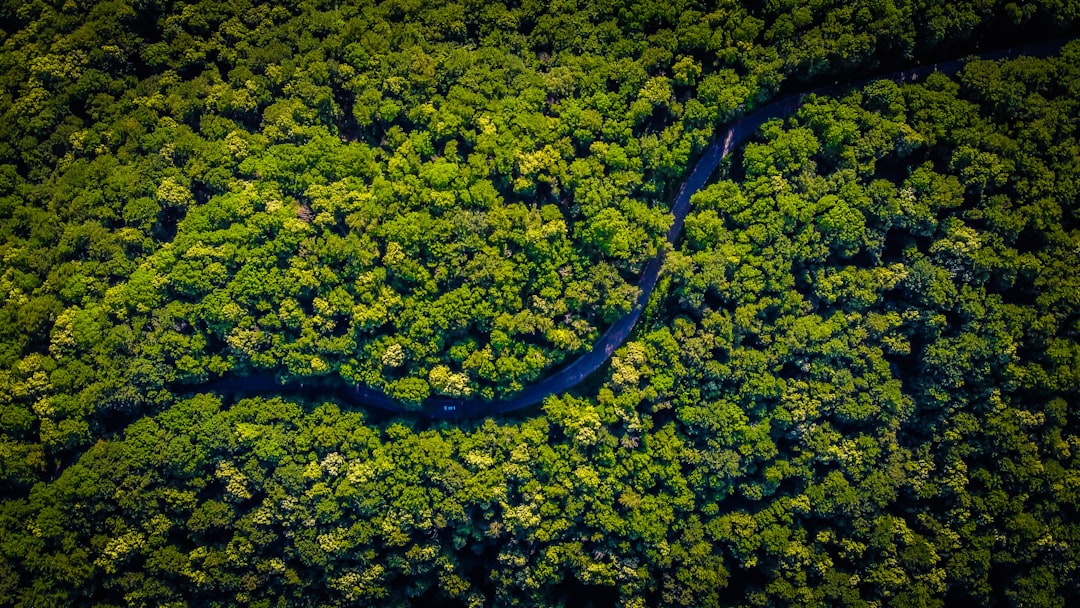
Photo by Vlad Hilitanu on Unsplash
Stand in your backyard and grab a handful of soil. What you're holding isn't just dirt. It's a living, breathing universe containing more microorganisms than there are stars in the galaxy. A single teaspoon of healthy soil contains roughly 6 billion bacteria, fungi, and other organisms working in concert to support all life on Earth. Yet despite this staggering complexity and importance, we treat soil like it's worthless—or worse, like it's an inconvenient medium for growing crops as quickly and cheaply as possible.
The numbers are staggering. According to the United Nations, we're losing fertile soil at a rate of 24 billion tons per year. That's not hyperbole. That's the equivalent of losing an area of productive land the size of France every single year, just gone. And unlike oil or mineral deposits, soil can't be recovered on any timescale that matters to human civilization. It takes roughly 500 years for nature to build an inch of topsoil. We're destroying it in decades.
The Invisible Empire Underground
Most people think of soil as inert—just the medium between rocks and plants. In reality, soil is where the action happens. It's where dead leaves become nutrients. It's where carbon gets locked away from the atmosphere. It's where water filters into underground aquifers. And it's all orchestrated by an invisible network of creatures so small we can't see them without a microscope.
Mycorrhizal fungi deserve special attention here. These organisms form partnerships with plant roots, extending their reach and exchanging nutrients in return for sugars produced by photosynthesis. A single fungal network can connect multiple plants, creating what scientists call a "wood wide web" that allows plants to share resources and even chemical warnings about pest attacks. Paul Stamets, a mycologist who's spent decades studying these networks, estimates that a single cubic inch of forest soil can contain several miles of fungal filament. That's not metaphorical. That's literal length.
When we destroy this fungal network through intensive agriculture, we don't just kill fungi. We sever the communication lines that have connected plants to their ecosystem for millions of years. We create isolated plants that can't defend themselves properly, communicate with neighbors, or access the full spectrum of nutrients that healthy soil provides.
How Industrial Agriculture Wages War on Soil
The culprit isn't farmers themselves—most are doing their best within a broken system. The real problem is monoculture agriculture combined with heavy pesticide and fertilizer use. Picture a conventional corn field: the same crop planted year after year, rows treated with herbicides that kill everything except the target plant, soil repeatedly tilled to remove weeds.
Each of these practices is a direct assault on soil health. Monocultures eliminate the diversity that soil organisms depend on. Different plants feed different microbial communities. When you grow only corn, you're starving entire ecological networks that thrive on the chemical signals from beans, clover, or native plants. Tilling is equally destructive—it tears apart the fungal networks, exposes carbon to oxidation, and physically destroys the soil structure that took generations to develop.
Then there are the chemicals. Glyphosate, the active ingredient in Roundup (the world's most widely used herbicide), doesn't just kill plants. Recent research suggests it disrupts the microbial communities in soil by interfering with the shikimate pathway—a biochemical process that many bacteria and fungi depend on for survival. We're essentially poisoning the foundation of agriculture in the name of controlling weeds.
The result? Soil that becomes increasingly dependent on external inputs. Chemical fertilizers provide quick nutrient fixes, but they don't feed the soil organisms that would naturally build soil structure and fertility. It's like feeding someone processed food while they're malnourished—it keeps them alive but doesn't build health. Over time, soil loses its ability to hold water, support diverse organisms, or produce nutrient-dense crops. The farmer needs more chemicals just to maintain productivity.
The Carbon Crisis Beneath Our Feet
Here's something most climate discussions ignore: soil contains more carbon than the atmosphere and all vegetation combined. Healthy soils are carbon sinks. Degraded soils are carbon sources. Agriculture accounts for roughly 10-12% of global greenhouse gas emissions, and a huge chunk of that comes from the loss of soil carbon. When you till soil, you oxidize the organic matter, converting it from stored carbon into CO₂ released into the atmosphere.
This creates a vicious cycle. Industrial agriculture degrades soil, which releases carbon, which accelerates climate change, which creates worse weather conditions for agriculture, which drives farmers to use more intensive practices to compensate. We're essentially mining carbon out of the ground in pursuit of short-term agricultural gains.
Conversely, regenerative agriculture—farming practices that rebuild soil health—can actually reverse this trend. Farmers who use cover crops, reduce tilling, integrate livestock, and practice crop rotation are rebuilding soil carbon. Some studies suggest that if we converted just the world's agricultural land to regenerative practices, we could offset decades of carbon emissions. This isn't speculation; it's based on soil science and real-world demonstrations from farms around the world.
The Path Forward Isn't Complicated
The good news is that soil is resilient. Unlike biodiversity loss or climate change, soil can be restored relatively quickly—in years or decades rather than centuries. Farms that transition to regenerative agriculture typically see measurable improvements in soil health within 3-5 years. Farmers report using fewer inputs, achieving better yields during wet or dry years, and producing more nutrient-dense crops.
This transformation doesn't require turning back the clock to 19th-century agriculture. It requires using modern knowledge of soil ecology to work with natural systems instead of against them. It means cover crops instead of bare earth in winter. It means diverse rotations instead of monocultures. It means occasionally letting livestock graze fields instead of spraying them with herbicides. These aren't radical ideas—they're just common sense based on how ecosystems actually work.
If you want to understand the full picture of agricultural pollution, you should also explore how microplastics are colonizing the food we eat, since industrial agriculture contributes to this problem as well through plastic mulches and degrading synthetic inputs.
That handful of soil you grabbed? It's worth protecting. Not for sentimental reasons, though there are plenty of those. It's worth protecting because your next meal depends on it. Your drinking water depends on it. The climate depends on it. Every organism on Earth depends on soil that we've treated as worthless. The moment we recognize its true value, everything changes.
Comments (0)
No comments yet. Be the first to share your thoughts!
Sign in to join the conversation.