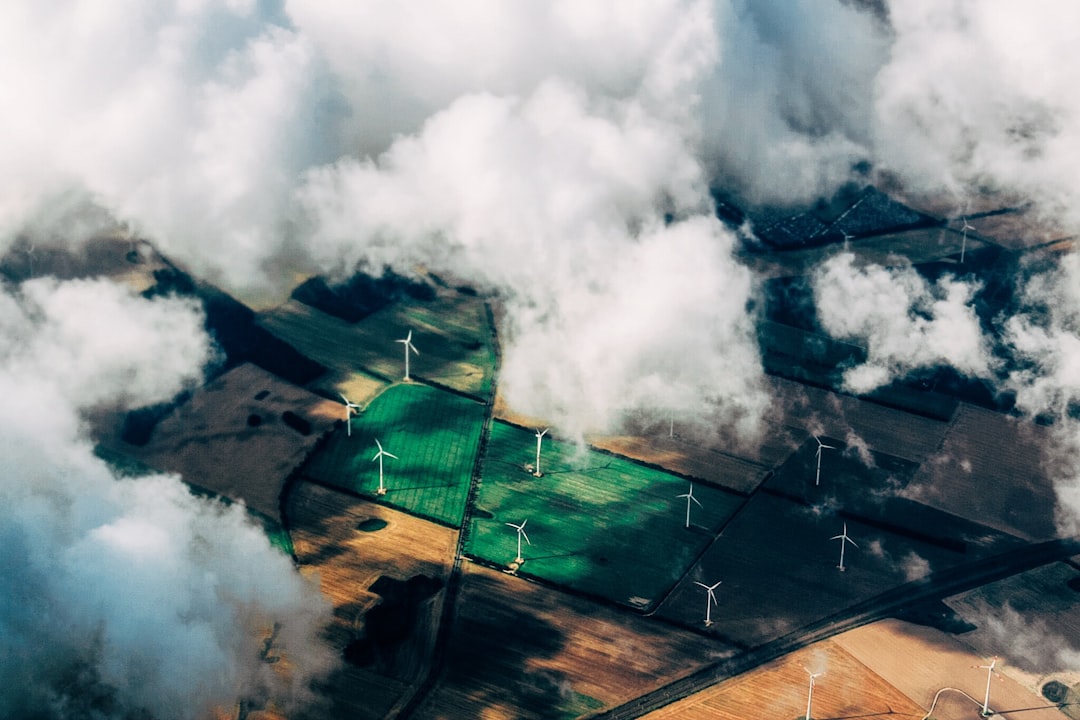
Photo by Thomas Richter on Unsplash
Last spring, I visited a regenerative farm in Iowa where the owner, Mark, grabbed a handful of dark, crumbly earth and held it up to the light. "This right here," he said, letting it fall through his fingers, "is worth more than anything you'll find underground." At first, I thought he was being poetic. He wasn't.
That handful of soil contained billions of microorganisms, an intricate web of fungi connecting plant roots together, and decades of accumulated organic matter. But conventional agriculture has spent the last seventy years treating soil like an inert growing medium—a place to anchor roots and dump chemicals. The result? We're losing roughly 24 billion tons of fertile topsoil annually. That's equivalent to losing the entire state of Iowa's farmland productivity every year, gone in an avalanche of erosion and degradation.
The Hidden Carbon Vault We Keep Ransacking
Here's what most people don't realize: soil holds more carbon than the atmosphere and all vegetation combined. According to research from UC Davis, the top meter of soil globally contains about 1,500 gigatons of carbon. When we plow, till, and compact soil through industrial farming practices, we're essentially opening a giant carbon vault and letting its contents escape as CO2.
Every time a farmer plows a field, they're disrupting the microbial networks and breaking apart soil aggregates—those tiny clumps that hold carbon stable underground. Within hours, carbon-hungry bacteria wake up and start respiring, releasing carbon dioxide into the atmosphere. A single conventional farm can release as much carbon in a season as a small town does in a year.
But here's where it gets worse. We're not just losing stored carbon; we're losing the soil's ability to store carbon in the future. Degraded soil, stripped of its organic matter and microbial life, becomes chemically dependent on synthetic inputs. Farmers apply more fertilizers, which require more fossil fuel energy to produce, which creates more emissions. It's a vicious cycle that's been building for decades, and it's nearly invisible because it happens beneath our feet.
The Organisms We Can't See Are Fighting Back for Us
The good news? Living soil fights back. When soil is left undisturbed or minimally disturbed, something remarkable happens. Fungi form vast underground networks called mycorrhizal networks—sometimes called the "wood wide web." These threadlike structures connect different plants, allowing them to share nutrients and even warning signals about pests and diseases.
A fungal network under just one square meter of forest floor can stretch for kilometers. One Oregon researcher found a single organism—an armillaria fungus—sprawling across 2,400 acres of forest in the Blue Mountains, making it one of the largest organisms on Earth. This organism doesn't make the news because it does its work entirely underground. But it's performing essential functions: breaking down dead matter, sequestering carbon, and making nutrients available to plants.
When farmers adopt regenerative practices—cover cropping, reduced tillage, diverse rotations—they're essentially stepping out of the way and letting soil biology do what it's been designed to do for millions of years. The results are striking. Farms that have transitioned to regenerative practices show increases in soil carbon content of 0.5 to 1% annually. That might sound small until you realize that means the soil is absorbing more carbon from the atmosphere than it's releasing.
The Economic Wake-Up Call
What's fascinating is that regenerative agriculture isn't just good for the climate—it's becoming economically competitive. Patagonia, the outdoor clothing company, invested heavily in regenerative agriculture because they realized that cotton grown on healthy soils required fewer pesticides and water inputs. A study published in the Journal of Sustainable Agriculture found that regenerative farms had 30% lower input costs within five years of transition, plus increased yields by year three.
Companies like General Mills and Nestlé have begun partnering with farmers to transition millions of acres to regenerative practices. They're not doing this out of pure altruism—they're doing it because supply chain stability depends on healthy soil. When soil erodes, crop yields crash. When crops become dependent on chemical inputs, costs become unpredictable.
Some innovative companies are even creating markets for soil carbon. Nori, a startup, operates a blockchain platform where farmers can earn credits by building soil carbon and sequestering atmospheric CO2. A farmer in Montana who increases their soil carbon from 2% to 3% can generate income from carbon credits while simultaneously producing crops that require fewer synthetic inputs.
What You Can Do (Yes, You)
You don't need to own a farm to participate in soil regeneration. Every piece of organic matter you keep out of the landfill becomes potential compost. If you have a yard, leaving grass clippings on the lawn instead of bagging them returns carbon and nitrogen to your soil. Planting native perennials instead of annuals means your soil's microbiome can develop stable, long-term relationships with plant roots.
Even your food choices matter. Buying from farmers who practice regenerative agriculture signals market demand. These farmers are still a small percentage of agriculture globally, but they're growing. Supporting them—even if their produce costs slightly more—creates economic incentive for others to transition.
For more context on how natural systems store carbon, check out our article on seagrass meadows and their role as carbon sinks, which explores similar principles in ocean ecosystems.
Mark, the farmer I visited, told me something I haven't forgotten. "People talk about fighting climate change like it's this abstract battle happening somewhere else," he said. "But it's happening right here, in every handful of soil. We're either building it or destroying it with every farming decision we make." The next time you're walking barefoot on healthy earth, or when you feel rich soil between your fingers, remember: you're touching the foundation of our climate future. And unlike most environmental problems, this one actually gets better the more you disturb it—as long as you disturb it the right way.
Comments (0)
No comments yet. Be the first to share your thoughts!
Sign in to join the conversation.