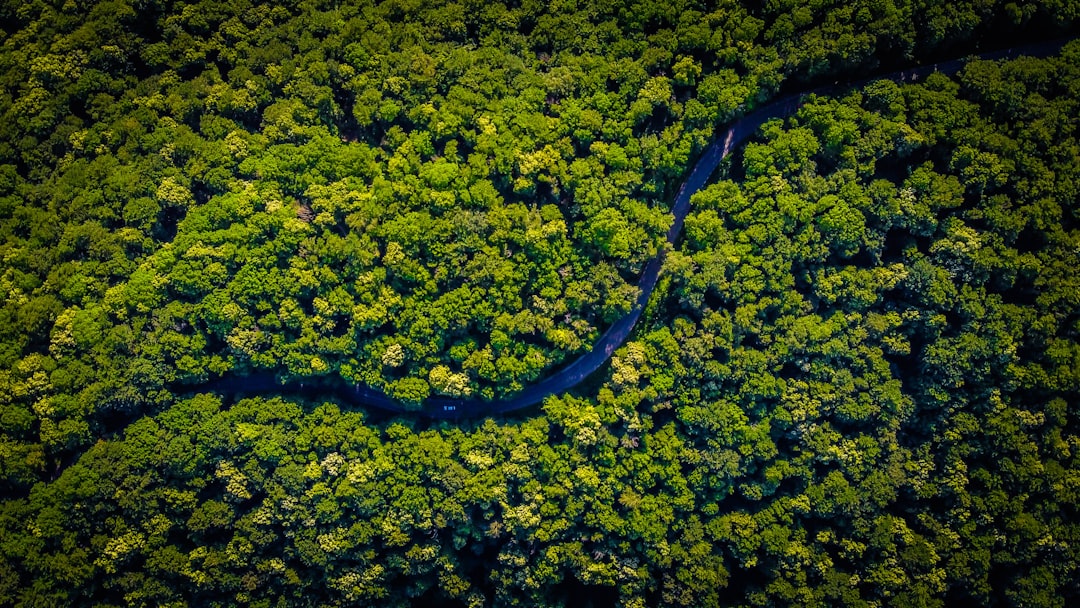
Photo by Vlad Hilitanu on Unsplash
Last spring, a cougar walked across the Golden Gate Bridge for the first time in a century. Not metaphorically—an actual mountain lion, captured on wildlife cameras, traversed one of the world's most iconic structures in broad daylight. Wildlife biologists weren't surprised. They were relieved. That single sighting represented something they've been quietly working toward for years: a connected network of wild spaces that allows animals to move freely across fractured habitats.
This is the promise of rewilding corridors. Not the trendy eco-tourism version you've probably heard about, but the genuine, unglamorous work of stitching together broken ecosystems so that animals can actually survive.
The Fragmentation Crisis Nobody Talks About
Here's the uncomfortable truth: most animals on Earth aren't starving to death or being hunted to extinction. They're being trapped. Roads, suburbs, agricultural zones, and industrial complexes have sliced up habitats into isolated patches, creating what ecologists call "fragmentation."
Imagine living in a beautiful apartment with everything you need—except you can't leave it. You can't meet potential mates. You can't escape disease outbreaks. You can't find seasonal food sources. Genetic diversity collapses, inbreeding accelerates, and populations simply blink out of existence. This is happening right now to thousands of species.
The Florida panther provides a stark example. By the 1970s, only 20 individuals remained alive, isolated in the southern tip of Florida. They suffered from genetic disorders visible to the naked eye—kinked tails, heart defects, cryptorchidism. The population was literally dying because there were too few of them, and they couldn't move to find new territories or mates. Scientists had to manually relocate panthers from Texas to introduce genetic diversity. Without that intervention, the species would have vanished.
Fragmentation isn't just a problem for charismatic megafauna. Insects, amphibians, and small mammals are equally affected—they just don't make documentary headlines.
What Exactly Is a Rewilding Corridor?
A rewilding corridor is essentially a wildlife highway. It's a connected strip of protected or restored habitat that allows animals to move between separated populations. These corridors can be anything from a riparian zone along a river to a series of green spaces cutting through urban areas.
The Yellowstone to Yukon Conservation Initiative is perhaps the most ambitious example. This project spans 2,000 kilometers across North America, connecting the Greater Yellowstone Ecosystem all the way to the Canadian Arctic. The goal? Enable grizzly bears, wolves, lynx, and elk to move freely across an entire continent instead of existing in isolated pockets.
What makes this different from traditional "protected areas" is the emphasis on connectivity. You can have perfect wilderness reserves, but if they're surrounded by impassable terrain or human development, they become elaborate wildlife cages.
Smaller-scale corridors are proving equally valuable. The Carnivore Corridor in Colorado—a collaborative project involving ranchers, conservationists, and government agencies—creates passageways for mountain lions, black bears, and other predators to move between the Rocky Mountains and surrounding regions. Instead of fencing off land completely, landowners voluntarily maintain certain passages as wildlife-friendly routes.
Real Animals, Real Results
The impact isn't theoretical. In 2020, wildlife researchers tracked a collared female cougar as she traveled 140 miles from the Santa Cruz Mountains into San Francisco Bay Area suburbs, crossed multiple highways, and eventually reached the Diablo Range. She was following a corridor that had been gradually restored and protected through local conservation efforts. Without it, she would have been dead within a year—hit by a car, poisoned, or simply starved in fragmented habitat.
European examples show similar promise. The Emerald Network, connecting protected areas across Europe, has enabled wolves to naturally recolonize regions where they've been absent for centuries. The first wild wolves to enter Germany in over a century arrived in 2000, walking naturally through restored corridors rather than being reintroduced by humans.
Even urban corridors work. Cities like Melbourne and Los Angeles have begun installing wildlife passages—underpasses beneath highways, green bridges over roadways—that allow animals to move through urban areas safely. It seems obvious in retrospect, but it took decades to shift the thinking that cities and nature were incompatible.
The Complications (Because Nothing Is Simple)
Rewilding corridors aren't a magic bullet, and they come with real complications. Large predators moving through new territories can conflict with livestock operations. Local communities worry about safety. Conservation priorities sometimes clash with economic development. And frankly, many corridors exist on paper but not on the ground due to funding shortages and political disagreement.
There's also the question of what happens at the other end of the corridor. Restoring a passageway means little if the destination habitat is destroyed.
Yet despite these challenges, the momentum is building. A 2021 analysis found that corridor conservation has become one of the fastest-growing strategies in biodiversity protection, with investments increasing 300% over the past decade.
Why This Matters Beyond the Animals
Rewilding corridors benefit humans too, though that's rarely discussed. Connected ecosystems are more resilient to climate change, disease, and other stressors. They support pollination networks that agriculture depends on. They filter water and clean air. They store carbon.
There's also something harder to quantify: psychological wellness. When people interact with healthy, functional ecosystems—where animals are actually moving, breeding, and thriving naturally—something shifts. Environmental protection stops feeling abstract.
The work happening right now across the globe is unglamorous. It involves endless community meetings, careful diplomacy with landowners, messy political compromises, and constant fundraising. No single corridor will "save" a species. But collectively, they're beginning to stitch our broken world back together, one passage at a time.
If you want to understand how interconnected our environmental challenges truly are, check out how fragmented freshwater and agricultural systems are creating dead zones in our oceans—it's the same core problem manifesting in different ways.
Comments (0)
No comments yet. Be the first to share your thoughts!
Sign in to join the conversation.