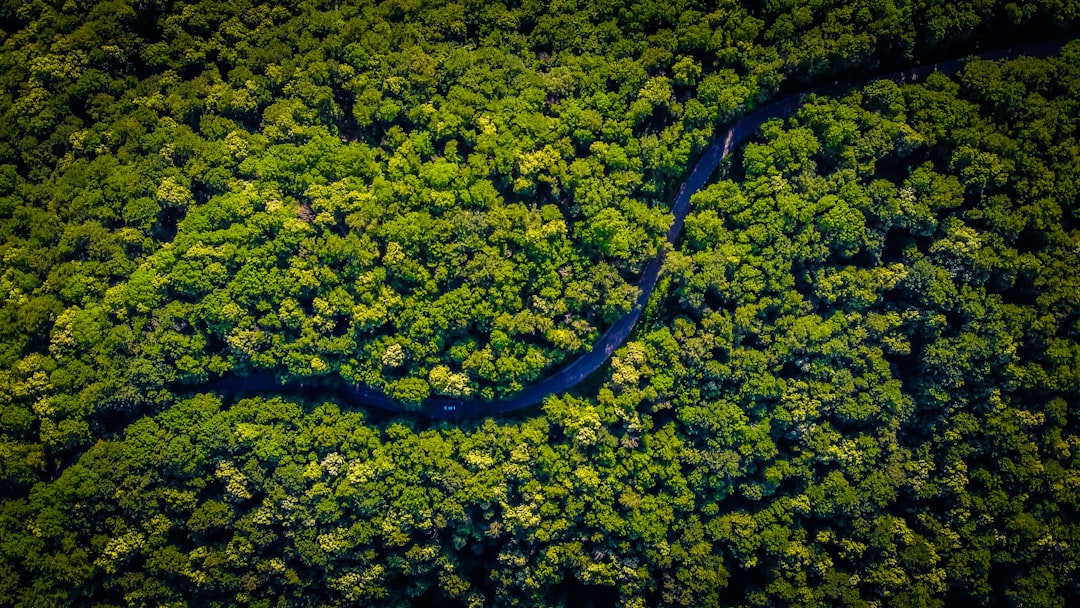
Photo by Vlad Hilitanu on Unsplash
Every summer, a massive dead zone spreads across the Gulf of Mexico like an invisible plague. Stretching across roughly 6,000 to 7,000 square miles—about the size of New Jersey—this region contains almost no oxygen. Fish flee. Crustaceans suffocate. The ecosystem essentially shuts down.
What's terrifying is that the Gulf isn't alone. Dead zones now exist in over 400 locations worldwide, from the Baltic Sea to the coast of China. These underwater wastelands have quadrupled since 1950, and the primary culprit isn't industrial pollution or oil spills. It's something far more insidious: nitrogen and phosphorus from agricultural fertilizer washing into our waterways.
How Fertilizer Becomes a Dead Zone
The mechanism is actually straightforward, which makes it all the more frustrating. Farmers spray millions of tons of nitrogen-based fertilizers on crops each year to boost yields. When heavy rains fall, these chemicals don't stay put. They wash into nearby streams, rivers, and eventually reach the ocean.
Once in the water, nitrogen acts like steroids for algae. These single-celled organisms explode in population, turning the water into a thick green soup. Then comes the catastrophic part: when the algae dies and sinks to the bottom, bacteria decompose it. This decomposition process consumes oxygen at an alarming rate, creating hypoxic conditions where dissolved oxygen drops below 2 milligrams per liter. Nothing with gills can survive that.
The numbers are staggering. According to the U.S. Geological Survey, American farmers apply roughly 27 million tons of nitrogen fertilizer annually. About 20 percent of that ends up in waterways. That's 5.4 million tons of a compound specifically engineered to trigger this destructive chain reaction.
Who Gets Hit Hardest?
Dead zones don't discriminate between rich and poor nations, but their impacts certainly do. In the Gulf of Mexico, the dead zone directly threatens a fishing industry worth $2.4 billion annually. Louisiana's shrimp boats can't operate in hypoxic waters. The catch drops. Fishermen lose income. Communities that depend on seafood commerce begin to crumble.
Developing countries face even steeper challenges. Bangladesh's coastal communities, already vulnerable to sea-level rise and typhoons, now contend with a growing dead zone in the Bay of Bengal. These aren't abstract environmental statistics—they're threats to people's ability to feed their families and earn a living.
The human cost extends beyond economics. Coastal communities in places like Vietnam and India that depend entirely on fishing have watched their catch plummet by 30 to 50 percent over the past two decades. When your livelihood depends on fish, and the fish are suffocating, you have a crisis.
The Solutions Already Being Tested
Here's where things get interesting. Unlike climate change, which requires transforming global energy systems, dead zones have concrete, actionable solutions. Several regions are already proving this works.
The Danube River Basin in Europe, which feeds into the Black Sea, has implemented strict nutrient management policies. Countries adopted the Nitrates Directive, which limits when and how much fertilizer farmers can apply. The results? Nitrogen loading decreased by roughly 20 percent between 1992 and 2012. The dead zone in the Black Sea actually shrunk.
In the U.S., the Mississippi River Basin Initiative encourages farmers to adopt cover crops—plants grown specifically to capture excess nitrogen before it runs off. When a farmer plants winter rye or hairy vetch after harvesting their main crop, these plants absorb nitrogen that would otherwise leach into groundwater. Studies show cover crops can reduce nitrogen runoff by 30 to 50 percent.
Some farmers are also experimenting with precision agriculture. Using GPS-guided tractors and soil sensors, they apply fertilizer only where and when crops need it, rather than blanket-spraying entire fields. This reduces waste and cuts runoff dramatically.
Iowa farmer and conservation advocate Todd Lookingbill has implemented a multi-pronged approach on his own land: cover crops, reduced tillage (which prevents soil erosion), and constructed wetlands that filter water before it enters streams. His nitrogen runoff dropped by 60 percent. He's not getting rich from these practices, but he's sleeping better knowing his operation isn't poisoning downstream ecosystems.
Why This Hasn't Already Been Fixed
If solutions exist, you might wonder why dead zones keep expanding. The answer is complicated but boils down to economics and politics.
Fertilizer is cheap. A farmer can buy it, apply it liberally, and know their yield will likely increase. The costs of that runoff—fish kills, lost tourism revenue, water treatment expenses—are borne by everyone downstream. Economists call this a negative externality: the polluter doesn't pay the full price of their pollution.
Additionally, fixing the problem requires coordination across multiple states or nations. The Mississippi River flows through Iowa, Illinois, Missouri, and a dozen other states before reaching Louisiana. A farmer in Minnesota makes fertilizer decisions that affect fishermen in Louisiana. Coordinating policy across state lines, let alone national borders, is brutally difficult.
Also worth noting: the fertilizer industry is profitable and politically connected. It doesn't have financial incentive to promote conservation practices that reduce fertilizer consumption. These economic pressures create inertia that's hard to overcome.
What Comes Next
Some momentum is building. The Biden administration allocated $1.65 billion toward water quality improvement in the Mississippi River Basin as part of the Inflation Reduction Act. That funding supports farmers transitioning to conservation practices. The European Union is strengthening nutrient management regulations. Even some fertilizer companies are beginning to invest in controlled-release formulations that reduce runoff.
But individual efforts matter too. If you're interested in broader environmental restoration, check out The Rewilding Revolution: How Abandoned Farms Are Becoming Wildlife Sanctuaries, which explores how land use changes can restore ecosystems.
The dead zones spreading across our oceans aren't inevitable. They're the result of specific agricultural practices that can be changed. Some farmers are already changing them. The question is whether policy and economics will catch up before more marine ecosystems suffocate.
Comments (0)
No comments yet. Be the first to share your thoughts!
Sign in to join the conversation.