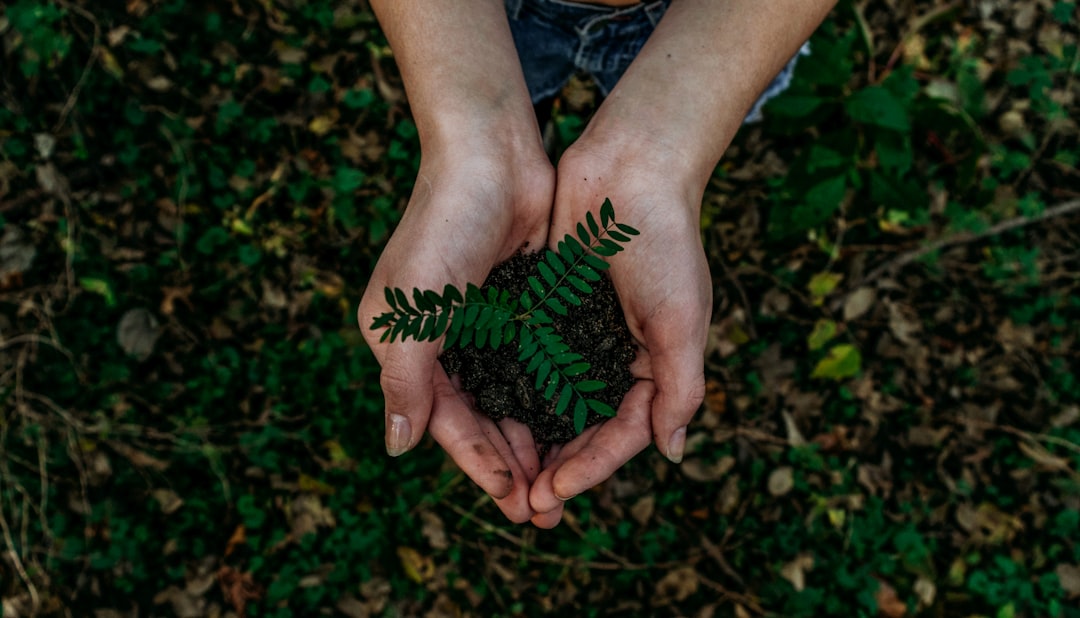
Photo by Noah Buscher on Unsplash
Every summer, a ghost ocean emerges in the Gulf of Mexico. It's not visible from satellite images, and most people will never know it exists. But this dead zone—a sprawling region where almost nothing can survive—has been growing for decades, fed by something as seemingly innocent as nitrogen fertilizer spread across American cornfields.
The dead zone in the Gulf of Mexico covers an area roughly the size of New Jersey. Fish flee it. Crustaceans suffocate in it. Bacteria thrive in it. And each year, we're watching similar oxygen-starved regions expand in coastal waters around the world, from the Baltic Sea to the Bay of Bengal. The cause? Nutrient pollution, primarily from agricultural runoff. It's a problem so interconnected that understanding it requires tracing the journey from farmland to kitchen table to ocean floor.
The Invisible Journey: From Field to Sea
Here's how it works. A farmer in Iowa applies nitrogen fertilizer to boost corn yields. When rain falls—or when irrigation water runs off—that fertilizer doesn't stay put. It dissolves and flows into streams, then rivers, eventually reaching the Mississippi River system. The Mississippi funnels an enormous nutrient load directly into the Gulf of Mexico.
But it's not just American agriculture. Similar patterns play out globally. The Danube River carries excessive nutrients into the Black Sea. Chinese agricultural runoff fuels dead zones in the Bohai Sea. According to the United Nations, there are now over 400 identified dead zones worldwide, compared to just 49 in 1995. That's not a coincidence—it's the direct result of how we've industrialized food production.
The mechanics are straightforward but devastating. When nutrient-rich water enters coastal areas, it triggers algal blooms. These algae multiply rapidly, feeding on the excess nitrogen and phosphorus. Then they die and sink to the bottom. Bacteria decompose this organic matter, consuming oxygen in the process. Fish need oxygen to breathe. When oxygen levels drop below what they can tolerate—typically around 2 milligrams per liter—they either leave or die. The resulting zone becomes virtually lifeless except for bacteria and a few hardy species.
Economic Ripples: When Dead Zones Hit the Wallet
You might assume dead zones only matter to marine biologists and environmental activists. But they directly affect your grocery bill and the livelihoods of thousands of commercial fishermen.
Louisiana's fishing industry—particularly shrimp harvesting—loses an estimated $200 to $400 million annually due to the Gulf dead zone. When shrimp nurseries disappear or become unsuitable habitat, fewer shrimp reach market size. Fewer shrimp means higher prices for consumers and devastated fishing communities that have practiced their trade for generations.
The economic impact extends far beyond seafood. Tourism suffers when beaches are closed due to harmful algal blooms. Property values drop in affected coastal areas. Communities have to spend millions treating drinking water contaminated with algal toxins. And here's the kicker: taxpayers foot much of the bill for the agricultural subsidies that make excessive fertilizer use economically rational in the first place. We're essentially paying twice—once at the supermarket and once through our taxes—for a system that's slowly suffocating our oceans.
The Mississippi's Burden: America's Nutrient Problem
The Mississippi River system deserves special attention because it's North America's largest river and a global hotspot for dead zone formation. Every year, the river delivers approximately 1.7 million metric tons of nitrogen into the Gulf of Mexico. That's not a natural baseline—it's roughly double what flowed there a century ago.
Corn cultivation accounts for roughly 40% of nitrogen lost to waterways in the Mississippi basin. We grow corn on about 90 million acres in the Corn Belt, and a significant portion requires intensive nitrogen fertilization. Modern corn hybrids can't absorb all the fertilizer we apply, so the excess runs off. Combine that with subsurface drainage systems that farmers installed to grow crops on previously waterlogged land, and you've created a highway for nutrients to reach rivers.
Some farmers are experimenting with alternatives. Cover crops planted during winter can absorb excess nitrogen. Reduced tillage practices help prevent soil erosion and nutrient loss. Wetland restoration filters runoff before it reaches rivers. But these approaches require changing decades of established farming practices, and they often come with short-term economic costs that risk-averse farmers are reluctant to accept.
What Happens When Oxygen Disappears
Life without oxygen is possible in the ocean—bacteria do it all the time. But the creatures we eat and care about? They're in trouble. Benthic communities that live on the seafloor are eliminated. Young fish that depend on nursery grounds in coastal areas must abandon them. Even migratory fish like grouper and red snapper have fewer places to feed and spawn.
The Gulf of Mexico dead zone shows seasonal variation. Each summer it expands, and each winter it shrinks as the nutrient influx decreases and storm mixing re-oxygenates the water. But the trend line points upward. Management efforts have led to modest improvements in some years, but we haven't solved the fundamental problem: too much nitrogen and phosphorus entering coastal waters.
For a broader perspective on how our food systems affect ocean life, check out our investigation into how salmon populations are collapsing, revealing another dimension of aquatic ecosystem collapse.
Finding Solutions: It's Not Impossible
The frustrating reality is that we largely understand what needs to happen. Reduce excess nitrogen fertilizer use. Implement better farming practices. Restore wetlands and riparian buffers that filter runoff. Invest in technologies that help farmers apply fertilizer more precisely. Adjust agricultural subsidies to reward sustainable practices rather than incentivize maximum production.
Some places are making progress. The European Union's Agricultural Policy is shifting toward sustainability requirements. Denmark has invested in wetland restoration and cover crop adoption. The Upper Mississippi River basin has launched initiatives to reduce nutrient loading, though progress remains slow.
The challenge isn't scientific or technical—it's economic and political. Changing agricultural practices requires upfront investment, and the benefits of reduced nutrient pollution accrue to society broadly rather than to individual farmers. That disconnect creates a tragedy of the commons scenario where rational individual decisions lead to collectively destructive outcomes.
But here's what matters: dead zones aren't inevitable. They're the result of choices we make about how to produce food. Understanding that connection—from the fertilizer bag to the ocean to your dinner plate—is the first step toward demanding better. Because unlike many environmental crises, this one has solutions we could implement today if we actually decided to.
Comments (0)
No comments yet. Be the first to share your thoughts!
Sign in to join the conversation.