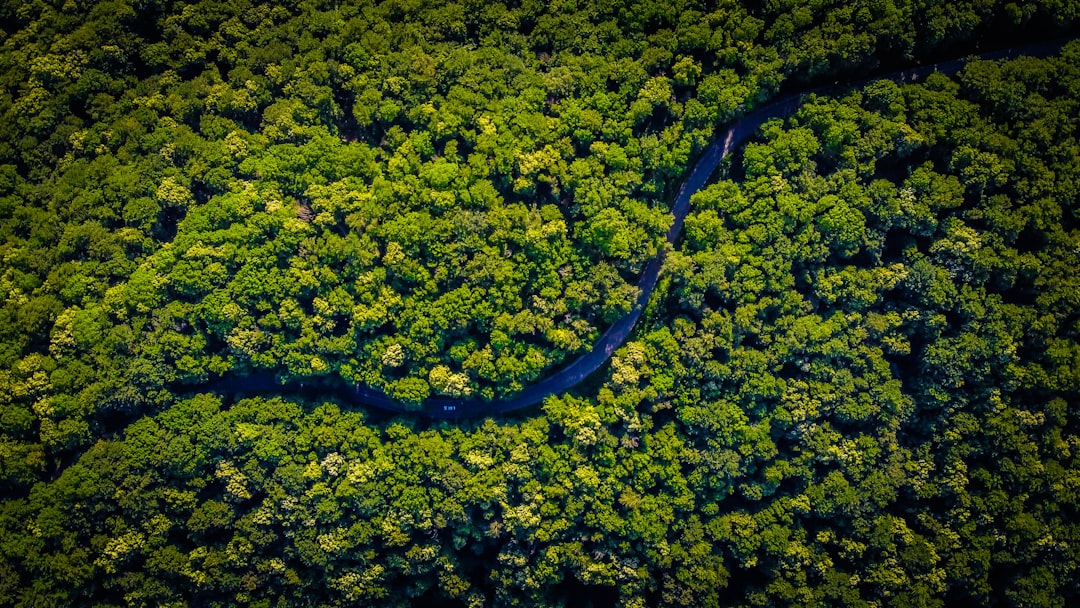
Photo by Vlad Hilitanu on Unsplash
Last spring, I stood in a regenerative farm outside Portland, Oregon, watching a farmer hold up a handful of dark, crumbly soil like it was gold. In a way, it was. What made this soil special wasn't visible to the naked eye—it was what lived inside it. Mycorrhizal fungi, those threadlike organisms that form partnerships with plant roots, had transformed degraded farmland into a thriving ecosystem capable of sequestering carbon at rates that would impress any climate scientist.
This wasn't some Instagram-ready farm with perfect rows and a gift shop. It was real agricultural work, and it hinged almost entirely on understanding and nurturing relationships between plants and fungi. Most environmental conversations focus on what's happening above ground: deforestation, wildlife extinction, pollution. But the most important environmental revolution happening right now is happening in the dirt.
The Underground Internet We Ignored
Mycorrhizal networks are often called the "wood wide web"—a term that stuck because it's accurate. Fungi create physical connections between plant roots, allowing them to share nutrients, water, and even chemical signals warning of pests or disease. A single gram of healthy soil can contain several kilometers of fungal filaments. That's approximately the distance from your house to the next neighborhood, compressed into something you could hold in your palm.
But here's what makes this truly wild: these fungi don't just help plants survive. They fundamentally change how plants interact with their environment. A plant with mycorrhizal partners can access nutrients locked in soil minerals that would otherwise remain inaccessible. It can tolerate drought better, resist pathogens more effectively, and sequester more carbon in the soil.
Scientist Suzanne Simard's groundbreaking research in the 1990s proved that trees in a forest could actually "communicate" through fungal networks, sharing carbon and resources. She tagged trees with radioactive carbon isotopes and watched as the isotopes moved between trees connected by fungi. Established trees were supporting younger saplings. Dying trees were transferring their remaining resources to the next generation. These weren't random processes—they were strategic transfers, mediated entirely by the fungal network.
How We Destroyed What We Didn't Understand
Here's the problem: modern agriculture declared war on these networks without even realizing what it was fighting. Tilling soil—the practice of turning it over to prepare fields—physically disrupts fungal filaments. Think of it like taking a fiber optic cable and snapping it into pieces. It works once or twice, but eventually, you destroy the infrastructure.
Chemical fertilizers made things worse. Why would plants bother maintaining expensive partnerships with fungi if nitrogen was being dumped directly on their roots? The plants didn't need the fungi anymore, so the fungal networks starved. Pesticides killed the organisms that fed the fungi. Monocultures meant that fungal partners never evolved—there was only one plant species to support, creating nutritional dead ends.
The result? Soil that looks productive on the surface but is fundamentally dead underneath. It requires more inputs every year just to maintain the same yields. It erodes more easily. It holds less water. And it's releasing carbon rather than storing it.
A 2023 study found that industrial agricultural soils have lost approximately 50% of their fungal diversity over the past 70 years. That's not a small decline. That's the functional equivalent of removing half the neurons from a brain.
The Comeback Nobody Expected
But something surprising is happening. Farmers and land managers are discovering that restoring fungal networks is actually quite straightforward—it just requires patience and a willingness to work with nature rather than against it. No tilling. Cover crops that feed fungi. Reduced chemical inputs. Compost. In many cases, farmers simply needed to get out of the way and let the soil rebuild itself.
Results are coming in from regenerative farms around the world, and they're stunning. Farms in France that switched to fungi-friendly practices increased their soil carbon storage by 3.5 metric tons per hectare over five years. Operations in India using mycorrhizal inoculants reduced fertilizer use by 40% while maintaining crop yields. Australian ranchers using holistic grazing practices—which help fungal networks recover—increased their soil water-holding capacity by 12% in just three years.
The economic math is compelling too. A farmer might invest $30-50 per acre in practices that restore fungal networks. The payoff includes reduced fertilizer costs ($80+ per acre annually), improved drought resilience, and access to premium markets for regenerative products. Break-even happens in roughly two years.
What's particularly exciting is that this isn't requiring expensive technology or breakthrough discoveries. We're not waiting for some future solution. The solution is already here. We just need to stop poisoning it.
Why This Matters Beyond the Farm
The implications extend far beyond agriculture. Mycorrhizal networks affect everything from carbon sequestration rates to flood resilience to the nutritional density of our food. Healthy soils with robust fungal networks store approximately 30% more carbon than degraded soils. Given that soil contains roughly twice as much carbon as the entire atmosphere, rehabilitating fungal networks isn't a nice-to-have environmental project—it's potentially one of our most powerful climate tools.
Urban green spaces, forests, gardens, and parks all benefit from fungal restoration. If you're interested in broader ecosystem recovery, you might also want to read about the great kelp forest comeback and how entire ecosystems can rewild themselves—the principles are surprisingly similar.
The farmer I met in Oregon told me something I haven't stopped thinking about. He said, "When you understand that life underground is doing all the real work, your relationship with the soil changes. You're not trying to control it anymore. You're just trying to keep it alive." That shift in perspective—from domination to partnership—might be the most important environmental realization we can have.
Comments (0)
No comments yet. Be the first to share your thoughts!
Sign in to join the conversation.