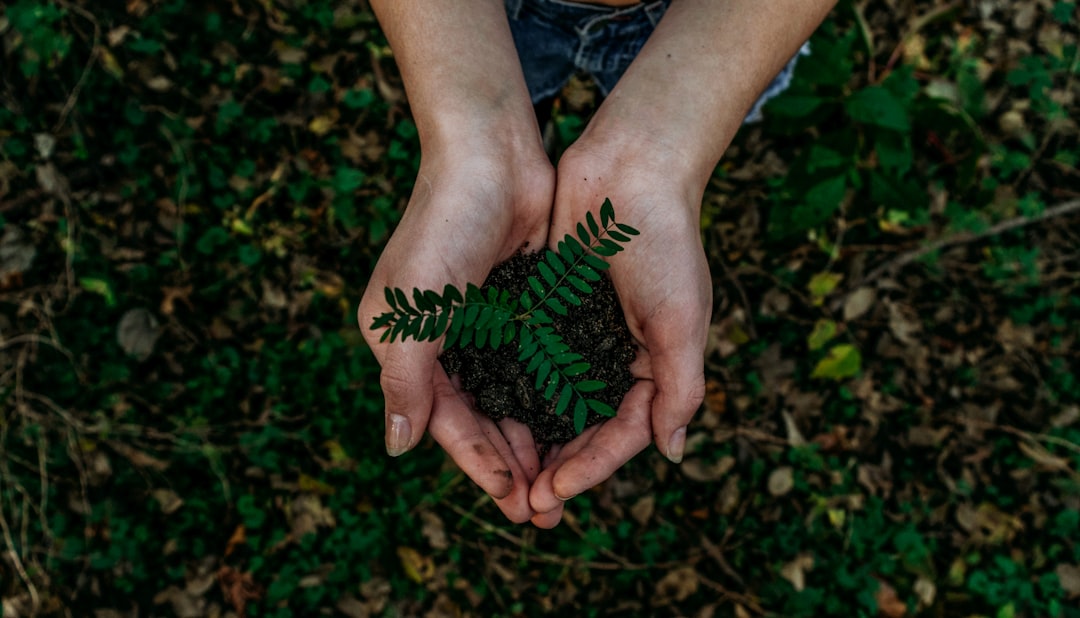
Photo by Noah Buscher on Unsplash
Last year, I bought a pair of jeans for $19.99. They fell apart after four months. I threw them away without thinking twice, like millions of others do every single day. What I didn't realize was that those jeans were beginning a toxic journey that would ultimately contaminate soil in countries I'll probably never visit, poisoning groundwater and destroying agricultural land for decades to come.
The fashion industry moves at breakneck speed, and we've become addicted to it. We consume 92 million tons of textiles annually—enough fabric to bury the entire island of Manhattan knee-deep in clothing. But here's the uncomfortable truth: most of these clothes are manufactured using chemicals so hazardous they'd be illegal in the countries where they're actually worn. Those chemicals end up in the soil, and soil, as it turns out, is the foundation of literally everything we depend on.
The Chemical Cocktail We're Not Talking About
When textile factories dye fabric—and particularly synthetic fabrics like polyester—they use reactive dyes, heavy metals, and industrial solvents. Chromium, lead, copper, and arsenic aren't incidental byproducts. They're essential ingredients in the coloring process. A single t-shirt production facility can use over 200 tons of water daily, and that water exits the facility tainted with these substances.
Bangladesh, which manufactures roughly 10% of the world's clothing, processes approximately 260 million gallons of dye effluent annually. The Buriganga River, which runs through Dhaka and once supported thriving fish populations, now glows with unnatural colors. Local farmers downstream use this same contaminated water to irrigate their fields. Their soil has become a repository for synthetic pollutants.
Research published by the Bangladesh University of Engineering and Technology found chromium concentrations in riverside agricultural soil reaching 147 mg/kg—almost seven times the safe threshold established by the European Union. Farmers who've worked this land for generations are now harvesting vegetables that accumulate these metals in their tissues. When those vegetables enter the food chain, the contamination enters our bodies.
Why Soil Matters More Than You Think
We tend to think of soil as inert—just dirt. In reality, soil is an extraordinarily complex living system. A single tablespoon of healthy soil contains more microorganisms than there are humans on Earth. These microbes break down organic matter, cycle nutrients, filter water, and regulate carbon. Damage soil chemistry, and you don't just destroy farmland. You fundamentally compromise the planet's ability to feed itself.
Heavy metals in soil don't just sit there. They transform. Chromium converts to chromium-6, a known carcinogen that migrates through soil into groundwater. In India's Tiruppur region, famous for textile dyeing, groundwater tests revealed chromium concentrations 20 times higher than the World Health Organization's safe drinking limit. People living in that area have reported unusually high rates of kidney disease and cancer.
The problem compounds because these metals persist. Chromium-6 has a half-life measured in geological timescales. We're not just poisoning current farmland—we're poisoning it for our great-great-grandchildren.
The Numbers Behind Your Wardrobe
Consider the mathematics. The average American throws away 81 pounds of clothing annually. Globally, we discard one garbage truck worth of textiles every single second. That's 2,150 tons per minute, 24 hours a day, year-round.
What makes this particularly insidious is the synthetic fiber component. Polyester—derived from petroleum and now used in roughly 52% of all textiles—doesn't biodegrade. It fragments into microplastics that infiltrate soil ecosystems. These microplastics alter soil structure, reduce water retention capacity, and interfere with nutrient cycling.
Meanwhile, the production of new synthetic fabrics consumes astronomical quantities of resources. Creating one kilogram of polyester generates roughly 6.3 kg of CO2 emissions and requires processing through chemical baths. The factories spill. The transportation pollutes. The extraction of raw materials devastates ecosystems. And at the end of the clothing's usefulness—usually within months—we begin again.
What Actually Happens on the Ground
I visited a textile manufacturing region in Vietnam to understand this firsthand. The factories themselves are architecturally impressive—modern facilities with professional management. But the wastewater treatment systems? Inadequate. Regulations? Loosely enforced. Economic pressure is ruthless. Manufacturers cut corners because the clothing companies that contract them demand prices that make corner-cutting necessary.
I spoke with a farmer named Minh, who's worked the same land his family has owned for three generations. His soil used to be rich and dark. Now it's discolored, tinged with residual dyes. His rice yields have dropped 30% in the last five years. He suspects it's the water. Testing would cost more than he makes in a month.
This situation repeats across textile manufacturing zones in Bangladesh, India, Vietnam, Cambodia, and Pakistan. The environmental burden of our cheap clothes is systematically exported to regions with minimal environmental protections.
Your Closet Isn't Separate From This
I know what you're thinking: I can't personally fix this. But here's what matters—visibility creates pressure, and pressure creates change. Understanding how synthetic materials infiltrate every aspect of our lives is the first step toward making different choices.
Buy less. Buy better quality items that last years, not months. Support brands that publish detailed information about their supply chains and chemical usage. Push for transparency in textile manufacturing. Vote with your wallet because votes in the market actually work.
The soil poisoning happening right now isn't inevitable. It's a choice—the choice to prioritize extreme cheapness over environmental and human health. We have the technology to manufacture textiles safely. We have alternatives. We lack only the collective will to demand them.
That pair of jeans I bought for $19.99? Someone's groundwater paid the real price.
Comments (0)
No comments yet. Be the first to share your thoughts!
Sign in to join the conversation.