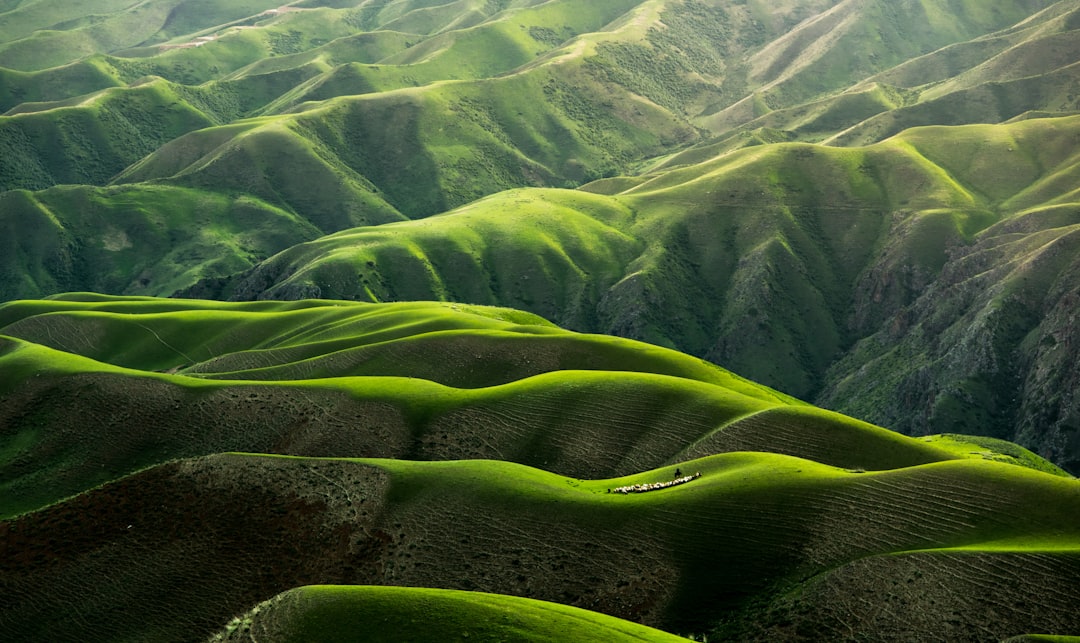
Photo by Qingbao Meng on Unsplash
When most people think about environmental collapse, they picture melting ice caps or burning forests. But the real catastrophe is happening silently, invisibly, right beneath our shoes. Soil—that dark, humble stuff we barely notice—is vanishing three times faster than it's being replenished. And if we don't reverse this, we're looking at a future where food becomes impossibly scarce.
This isn't theoretical doomsdaying. The UN estimates we have just 60 harvests left before global soils become too degraded to grow food. Sixty. That's not centuries. That's roughly the lifespan of a person alive today.
Why Soil is Literally Alive—And Why We're Killing It
Here's what most people don't realize: soil isn't just dirt. It's one of the most complex ecosystems on Earth, teeming with life. A single teaspoon of healthy soil contains more microorganisms than there are humans on the planet. Bacteria, fungi, nematodes, arthropods—they're all working together in an invisible network that's been perfected over millions of years.
These organisms break down organic matter, cycle nutrients, filter water, and stabilize the soil structure itself. Without them, you just have inert powder that blows away in the wind and floods when it rains.
Modern agriculture has declared war on this living system. We spray pesticides that kill the microbes. We till the soil repeatedly, which destroys fungal networks and exposes organic matter to oxidation. We plant monocultures year after year, exhausting specific nutrients and starving the soil food web. We compact it with heavy machinery. We leave it bare between seasons, exposed to erosion.
The result? North America has lost one-third of its topsoil in just 150 years. Africa is losing soil at a rate of 400 million tons per year. India's soil has degraded so severely that farmers in some regions are abandoning agriculture altogether.
The Numbers That Should Keep You Awake
Global soil degradation costs the world economy $400 billion annually in lost productivity. That's not counting the indirect costs: increased food prices, migration crises, conflict over resources, and healthcare expenses from malnutrition.
By 2050, degraded soils could reduce global crop yields by 30 percent, even as we need to feed 10 billion people. The math doesn't work. We'll be producing less food for more mouths.
Certain regions are on the brink already. Parts of the Middle East have soil so depleted that farming is nearly impossible without artificial inputs. Sub-Saharan Africa loses 46 billion tons of fertile soil every year due to erosion alone. Australia has lost 70 percent of its soil carbon over the past century.
What's particularly grim is that this process is self-accelerating. Degraded soil holds less water, so it dries out faster and becomes more prone to erosion. The remaining organic matter breaks down more quickly. Farmers respond by using more fertilizers and pesticides, which further kills the soil biology, which makes the problem worse. It's a downward spiral.
The Places Where Soil is Actually Coming Back
But here's the thing that keeps soil scientists up at night—in a good way: soil can recover. It doesn't take centuries. With the right approach, you can rebuild soil health in 5-10 years.
Regenerative agriculture—a loose umbrella term for practices that rebuild soil—is gaining real traction. Farmers in places like Vermont and New South Wales are seeing dramatic results by adopting cover crops, reducing tillage, rotating livestock strategically, and integrating diverse plant species.
One California farmer, David Johnson, has been experimenting with bringing back soil microbes through compost tea. His degraded pastureland went from supporting a few cattle to producing abundant vegetation in just a few years. His soil carbon levels tripled. The groundwater improved. It's not magic—it's just working with biology instead of against it.
Some developing countries are making progress too. In the Sahel region of Africa, farmers are using ancient techniques like zaï pits—planting holes filled with manure and compost—to restore degraded land. The results are stunning. Within a decade, areas that looked like barren wasteland are producing crops again.
But these successes are still the exception. They require knowledge, upfront investment, and patience—things the industrial food system doesn't offer farmers. It's cheaper and easier to just buy more fertilizer. At least for now.
What Actually Needs to Happen
This isn't a problem that individuals shopping ethically can solve alone. That's not to say your choices don't matter—they do. Buying from regenerative farms, if you can afford it, creates demand. Growing even a small garden means you're building soil instead of destroying it. But the real solutions require policy.
We need governments to stop subsidizing industrial agriculture and start paying farmers for regenerative practices. We need research funding for soil microbiology. We need education programs teaching young farmers that soil isn't just a growing medium—it's a living system worth protecting.
Curiously, fighting soil degradation might be our cheapest solution to climate change. Soil contains more carbon than the atmosphere and all plants combined. Rebuilding soil would sequester gigatons of CO2 while simultaneously increasing food security. It's one of the rare environmental solutions that creates a win-win.
Some countries are starting to get this. France has pledged to increase soil carbon by 4 per thousand annually. India is promoting natural farming. Costa Rica has banned glyphosate. These aren't earth-shattering policies, but they're recognition that the status quo is failing.
The Real Timeline
That UN estimate of 60 harvests sounds abstract until you really think about it. If a farmer plants twice a year, that's 30 years. For someone in their thirties, that's retiring age. For someone younger, it's their working lifetime.
The good news is we know how to fix this. The bad news is we're running out of time to implement the fix at scale. Every year we continue with business as usual, we lose more soil, we make the problem harder to reverse.
The soil beneath your feet isn't just environmental infrastructure. It's the foundation of civilization. And right now, we're letting it crumble in real time. If you want to understand what's really at stake in conversations about food security and climate, stop looking at the sky and start looking down. The crisis is happening at ground level, and it's accelerating.
Related reading: if you're concerned about how our food systems are changing, why your favorite chocolate bar tastes different now reveals another consequence of agricultural stress on global crops.
Comments (0)
No comments yet. Be the first to share your thoughts!
Sign in to join the conversation.