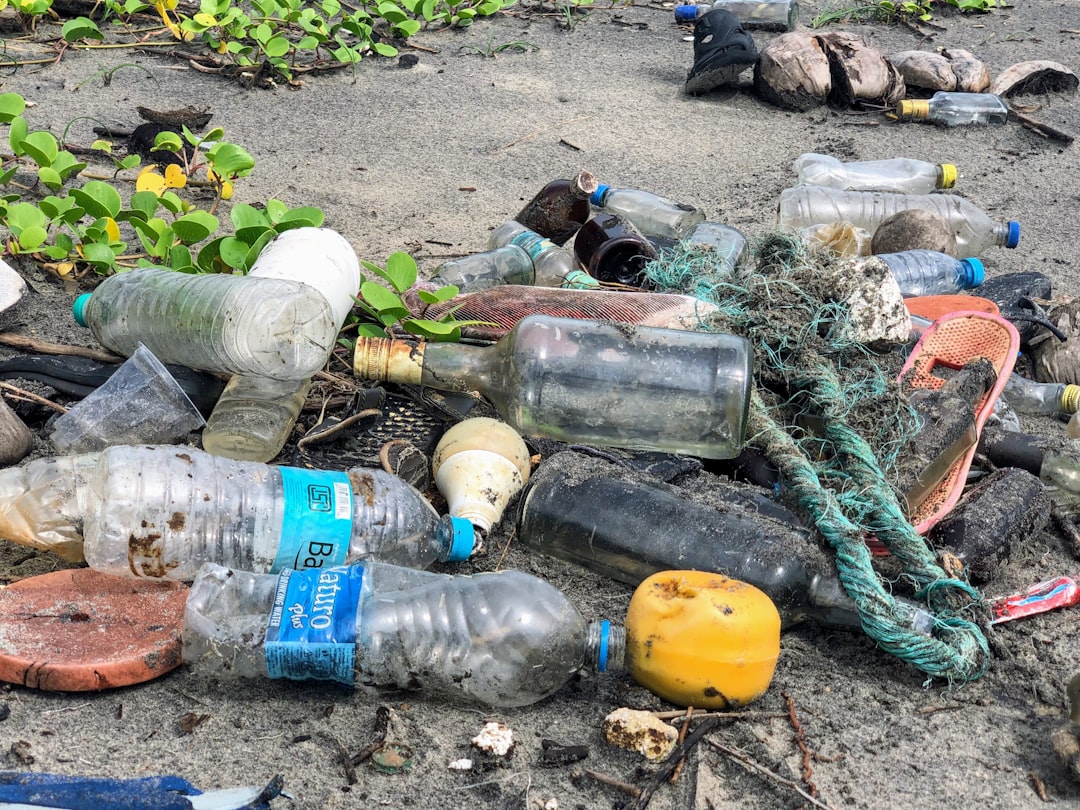
Photo by John Cameron on Unsplash
Every summer, commercial fishermen in Alaska watch their nets come up lighter than the year before. The salmon are there, but they're gaunt. Smaller. Wrong. Marine biologists have known for years that something fundamental is breaking in the North Pacific, but the culprit isn't what you'd expect. It's not pollution or dams or even warming waters, exactly. It's the collapse of the ocean's smallest creatures—the zooplankton that form the base of nearly every marine food web on Earth.
In 2022, the Alaska Department of Fish and Game made a stunning decision: they closed the commercial Chinook salmon fishery for the first time in modern history. Not because there weren't fish to catch, but because the fish were so malnourished that allowing their harvest would have devastated what remained of the population. Fishermen found salmon in their nets that weighed 25 pounds instead of the typical 35 to 40. The fish were essentially starving to death in an ocean that should have been feeding them.
When the Smallest Lives Matter Most
Here's something most of us never think about: the ocean's food web doesn't begin with fish. It begins with creatures so small you can't see them without a microscope. Copepods, krill, larval fish, pteropods—these zooplankton are the bridge between phytoplankton (algae) and everything else that swims. A single copepod might be only one millimeter long, but a single salmon might consume thousands of them daily.
For decades, scientists measured zooplankton populations by towing nets through the water and counting what they caught. The data painted a troubling picture: since the 1990s, zooplankton biomass in certain regions of the North Pacific has declined by as much as 80 percent. Eighty percent. Not of a single species, but of entire communities of organisms that took millions of years to evolve into their current form.
The weird part? We don't completely understand why it's happening. The water temperature has risen, sure. But the relationship between temperature and zooplankton abundance isn't straightforward. Some regions that warmed just as much experienced stable or even increasing zooplankton populations. The answer seems to involve a complicated recipe of factors: ocean currents, nutrient cycling, timing of spring blooms, and possibly even changes in which *type* of zooplankton thrives in different conditions.
The Mismatch That Breaks Everything
Imagine preparing a dinner party for Tuesday night, but your guests show up on Thursday. The food is cold. It's gone bad. That's essentially what's happening in the North Pacific right now, except on an ecological scale with consequences that ripple through entire economies.
Salmon spawn in rivers, and their young spend months in freshwater before heading to the ocean to grow and feed. The timing of when these juvenile salmon arrive in the ocean historically matched perfectly with the spring bloom of plankton—nature's dinner bell. Millions of years of evolution had calibrated this timing to within days. But ocean conditions are shifting. In some years now, the plankton bloom happens earlier or later than when the young salmon arrive. The salmon show up to an empty buffet.
What makes this worse is that juvenile salmon are incredibly vulnerable during this transition from river to ocean. They're small, energetically expensive to maintain, and entirely dependent on finding abundant food immediately. A salmon fry that misses the zooplankton bloom has virtually no chance of surviving to adulthood. And we're seeing this play out in real time: juvenile salmon condition indices (a measure of how well-fed they are) have been steadily declining for years.
Who Actually Pays for This?
The economic numbers are staggering. Alaska's fishing industry generates roughly $5.5 billion annually and supports more than 50,000 jobs. When salmon populations crash, entire communities that have depended on fishing for generations suddenly find themselves without income. The 2022 Chinook closure alone cost fishermen approximately $40 million in direct losses. Canneries shut down. Processors laid off workers. Small towns saw tax revenues disappear.
But the human cost extends far beyond Alaska. Indigenous communities throughout the Pacific Northwest have harvested salmon for thousands of years—it's not just food, it's culture, identity, and spiritual connection. The Tlingit, Haida, and dozens of other nations are watching a cornerstone of their heritage collapse in real time. When you close a salmon fishery, you're not just affecting commercial operations; you're severing ties to ancestral practices and knowledge systems.
The grocery store implications are equally real. Wild salmon prices have been climbing steadily as supplies tighten. Farmed salmon—raised in open ocean pens—is increasingly taking salmon's place in markets, which brings its own environmental nightmares that most consumers never consider.
What Happens Next?
Here's what keeps marine scientists awake at night: we don't have a straightforward solution. We can't simply add zooplankton to the ocean, and we can't dial back ocean temperature changes overnight (though that conversation needs to happen urgently). We can't force salmon to time their migration differently without fundamentally altering their genetics.
Some researchers are studying whether hatcheries can help by releasing juvenile salmon at optimal times to match whatever the new zooplankton bloom timing is. Others are exploring whether we can reduce other stressors on salmon populations—dam removal, pollution reduction, habitat restoration—to at least give them a fighting chance. But these are band-aids on a systemic problem.
The broader truth is that salmon collapse is a warning signal. If the base of the food web is changing this dramatically, everything above it will follow. Seabirds that depend on salmon are already showing signs of starvation. Marine mammals are losing a crucial food source. The Pacific ecosystem is undergoing a transformation that we're only beginning to understand.
If you want to understand how climate change actually works—not in theory, but in gritty, economic, human reality—follow the salmon. They're canaries in the coal mine, except the mine is the entire ocean, and we're still burning coal.
For a deeper understanding of how cascading ecological collapses occur at different scales, read about how microplastics are rewriting evolution itself—another example of how small-scale changes create massive ecosystem-wide consequences.
Comments (0)
No comments yet. Be the first to share your thoughts!
Sign in to join the conversation.