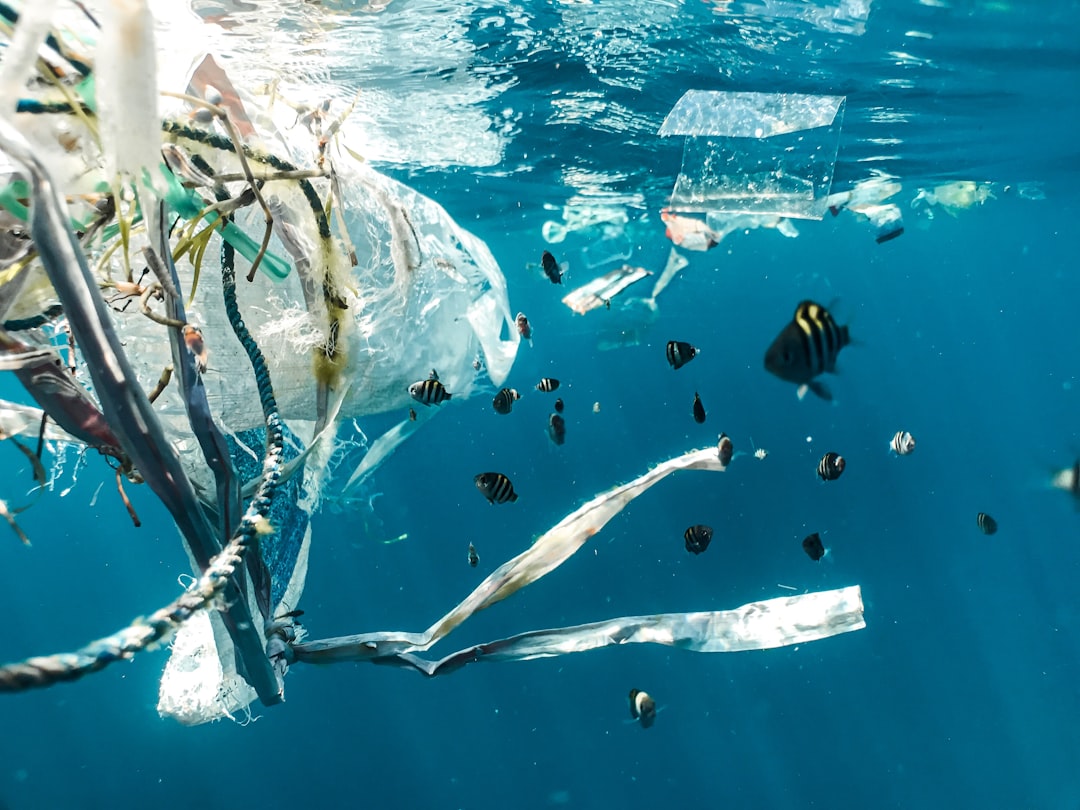
Photo by Naja Bertolt Jensen on Unsplash
Every spring, something magical happens along the rivers of the Pacific Northwest. Salmon that have spent years in the ocean return home to spawn, swimming upstream against currents and leaping up waterfalls in a journey that has remained largely unchanged for millennia. Except it's not unchanged anymore. And that's a problem nobody fully anticipated.
For the first time in recorded history, salmon are showing up to their spawning grounds significantly earlier than they have for thousands of years. Some populations are arriving three to four weeks ahead of schedule. On the surface, this might sound like good news—what's wrong with salmon being eager to get home? Everything. Because when you shift the arrival time of a keystone species by weeks, you're not just moving around one piece of the puzzle. You're risking the collapse of an entire ecological system that has synchronized itself to that salmon's precise timing.
When Evolution Meets a Rapidly Changing Ocean
The salmon's internal clock has been set for thousands of years by water temperature. Cold ocean water equals food abundance and favorable conditions. As the salmon grow fat and strong in the ocean, they're waiting for the water to reach a certain temperature threshold that signals "time to go home." That signal came reliably in late spring and early summer. For generations, this worked perfectly.
But ocean temperatures have shifted dramatically. Since the 1970s, the North Pacific has warmed by roughly 1.5 degrees Celsius. That might not sound like much, but it's enough to trigger salmon to start their migration weeks earlier. A study published in the Canadian Journal of Fisheries and Aquatic Sciences tracked Chinook salmon in British Columbia and found that their return dates have shifted by an average of 10 days per decade over the past 40 years.
Here's where it gets complicated: the salmon are adapting to the changing ocean temperature, but everything else isn't adapting at the same speed. We're watching real-time evolution happen, and it's creating a catastrophic timing mismatch.
The Cascade Effect Nobody Saw Coming
When salmon arrive at their spawning grounds, they become food. Not just for bears and eagles, but for the entire ecosystem. Salmon carcasses after spawning get dragged into forests by bears and scattered across hundreds of acres, fertilizing trees with nitrogen and phosphorus from the ocean. Young bears need salmon to build fat reserves for hibernation. Eagles need them to raise their chicks. The timing of salmon arrival has always coincided with when these predators needed them most.
Now, salmon are arriving when many of those predators are still managing other responsibilities. A bear emerging from hibernation in early spring might find salmon showing up before vegetation has grown enough to sustain it if salmon numbers fail later. Eagles raising chicks later in the season might miss the peak salmon runs entirely. A 2021 study from the University of Washington documented declining survival rates in grizzly bear populations that couldn't adjust their hibernation and feeding cycles fast enough.
The disruption extends underwater too. Insects that serve as food for juvenile salmon are still following their original seasonal cues. If salmon fry arrive at the river before these insects have hatched in sufficient numbers, the young fish face starvation. First Nations communities who have harvested salmon according to traditional calendars for centuries now find their practices misaligned with actual salmon arrival.
The Human Cost of Ecological Desynchronization
Ask any commercial fisherman in Alaska or British Columbia, and they'll tell you the salmon runs feel unpredictable now. Fisheries managers set harvest quotas based on decades of data about when and where salmon will appear. When those arrival patterns shift, entire fishing seasons can collapse economically. In 2019, Bristol Bay in Alaska saw its worst salmon run in modern history—not because salmon disappeared forever, but because they arrived at unexpected times, and the commercial fleet missed them.
Indigenous communities are facing an even more acute crisis. The Tlingit, Haida, and other Pacific Northwest tribes developed sophisticated management systems based on generational knowledge of salmon behavior. That knowledge is becoming obsolete in real time. When elders teach young people that salmon arrive in a certain moon cycle, and then the salmon stop following that cycle, you're not just disrupting a food source. You're disrupting cultural transmission and identity.
The Yurok Tribe in California has watched their salmon runs become increasingly unpredictable over the past decade. Their traditional harvest calendars, refined over thousands of years, have become less reliable guides. As one tribal elder put it in an interview with Oregon Public Broadcasting: "We're trying to teach our young people how to be salmon people, but the salmon aren't cooperating with the lessons anymore."
What We're Doing About It (And Why It's Not Enough)
Scientists and resource managers are scrambling to update their models. Some are proposing earlier fishing seasons to match earlier salmon runs. Others are advocating for more dam removal to allow salmon populations to adapt more flexibly. Regional fisheries agencies are increasing monitoring efforts, trying to catch shifts in migration patterns as early as possible.
But here's the uncomfortable truth: these are bandage solutions for a systemic problem. The underlying cause is ocean warming, which is only expected to accelerate. We're already seeing climate systems destabilize in unexpected ways, and salmon migration shifts are just one symptom among many.
Some researchers are exploring whether salmon populations can genetically adapt fast enough—whether future generations of salmon will evolve to respond to different temperature triggers. Early evidence suggests this is theoretically possible, but the timescale is uncertain. Evolution typically works in centuries. We're changing ocean temperatures in decades.
The Salmon Are Our Canary in the Coal Mine
What makes the salmon crisis so significant isn't just the salmon. It's what they represent. They're one of the most visible, economically important species that depend on precise ecological timing. But they're far from alone. Songbirds are arriving at nesting grounds before trees have sprouted leaves. Butterflies are emerging before milkweed plants are ready. Frogs are breeding in drying ponds because spring comes earlier.
When we see salmon arriving weeks early, we're witnessing the early stages of what ecologists call "phenological mismatch"—the breakdown of synchronized timing across ecosystems. And salmon are just the species where we have good enough data to see it clearly.
The salmon returning to the Pacific Northwest these days are both a marvel and a warning. They're adapting to a changing world in real time, showing the resilience of life. But they're also showing us the limits of that resilience, and the speed at which we're reshaping the natural world faster than nature can keep pace. The salmon know something's wrong. The question is whether we'll listen.
Comments (0)
No comments yet. Be the first to share your thoughts!
Sign in to join the conversation.