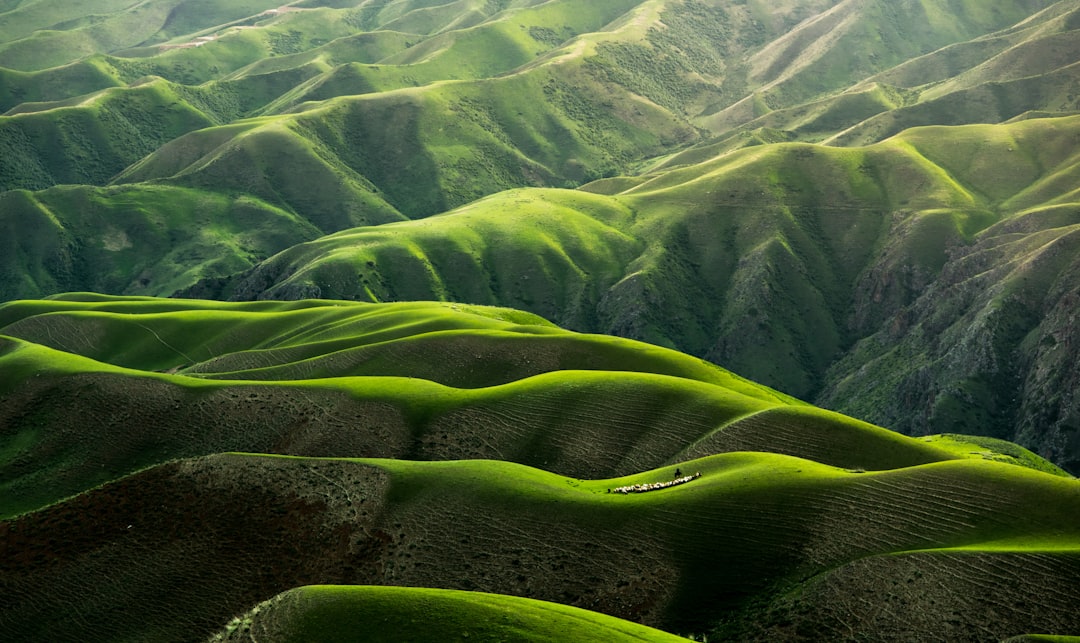
Photo by Qingbao Meng on Unsplash
When Paul Lister inherited 9,400 acres of Scottish moorland in the 1990s, most people thought he'd lost his mind. He wasn't planning to farm it, develop it, or exploit it for profit. Instead, he decided to give it back to nature. Three decades later, Alladale Wilderness Reserve has become a thriving example of rewilding—and it's just one of thousands of projects quietly transforming our planet.
Rewilding isn't about abandoning land or letting it fall apart. It's a strategic, science-backed approach to ecological restoration that's gaining serious momentum. From the Carpathian Mountains to the American Great Plains, land managers are removing fences, reintroducing extinct species, and stepping back to let ecosystems heal themselves. The results? Remarkable.
What Exactly Is Rewilding (And Why It Matters)
Rewilding means restoring ecosystems to a more natural state by removing human interference and, crucially, reintroducing missing species. It's not romantic wilderness fantasy—it's ecological restoration grounded in solid science. The goal is to recreate self-sustaining ecosystems that can function independently, producing their own food webs, managing their own populations, and adapting to environmental changes.
The concept gained serious academic traction in 1998 when conservation biologists Michael Soulé and Reed Noss published their framework for "rewilding." They argued that protected areas alone weren't enough. Species needed room to roam, migrate, and interact naturally. Without apex predators, without herbivores, without the full cast of characters evolution had assembled, ecosystems were essentially hollow shells.
Consider what happens when you remove wolves from an ecosystem. Without their predation, elk populations explode. These deer eat everything—saplings, shrubs, regenerating forests. Birds lose nesting sites. Songbird populations crash. The entire system cascades. By bringing back the top predator, you restore balance throughout the entire food web. Rewilding works on this principle: restore the keystone species, and the rest follows.
The European Experiment: From Farmland to Forest
Europe offers some of the most compelling rewilding stories. In the 1990s, when Eastern European countries transitioned away from communism, thousands of collective farms were abandoned. Nobody stepped in to farm them. Nobody developed them. They were simply left alone. Nature responded with astonishing speed.
These "new" ecosystems became testing grounds for rewilding science. In Romania's Carpathian region, abandoned agricultural land is reverting to forest. European bison—extinct in the wild for centuries—were reintroduced and now roam freely. Their hooves churn the soil, dispersing seeds. Their grazing patterns open up clearings that smaller animals depend on. They're ecosystem engineers, and their presence has catalyzed recovery across thousands of square miles.
The numbers tell a stunning story. Since 2000, European forests have expanded by roughly 500,000 hectares annually—an area roughly the size of Delaware every single year. Much of this regrowth isn't from active replanting programs. It's simply land being left alone to recover. The Iberian Peninsula saw its forest cover increase by nearly 3 million hectares between 2000 and 2020. That's roughly the size of Massachusetts.
But here's what makes this particularly exciting: wildlife is returning to places where it vanished decades ago. European lynx, golden jackals, and white storks are reclaiming territory. In some regions, brown bears are expanding their range northward. These aren't zoo animals or carefully managed populations. They're wild animals recolonizing their ancestral homes.
North America's Big Predator Problem (And Solution)
The Yellowstone wolf reintroduction of 1995 stands as one of the most studied rewilding projects ever undertaken. For 70 years, wolves had been systematically eliminated from the American West. Ranchers, hunters, and government agencies worked together to erase them completely. By 1950, not a single wolf roamed the Greater Yellowstone Ecosystem.
Then, in 1995 and 1996, biologists reintroduced 66 wolves captured from Canada. The initial reaction was fierce. Ranchers protested. Hunters complained. Some illegally shot wolves. But the science was undeniable. The wolves transformed Yellowstone in ways nobody fully anticipated.
Elk populations, which had ballooned to unsustainable levels, were finally controlled. Vegetation that had been stripped bare began recovering. Aspen and willow trees returned. With those plants came beavers. Beaver dams created wetlands. Wetlands supported amphibians, fish, and waterfowl. The ecological recovery rippled outward in unexpected directions.
Scavengers benefited enormously. When wolves kill elk, they don't consume the entire carcass. The leftovers feed ravens, eagles, bears, and smaller scavengers. One study found that the presence of wolf kills increased the survival rates of grizzly bear cubs by 30% during critical spring months when the bears emerge from hibernation hungry and weak.
Today, over 1,700 wolves inhabit the Greater Yellowstone Ecosystem. The reintroduction cost roughly $30 million—a figure that pales compared to the economic benefits from increased tourism (estimated at $35+ million annually) and the immeasurable ecological gains.
The Challenges: Why Not Everywhere?
If rewilding works, why isn't it happening everywhere? The answer involves land ownership, economics, and human psychology. Most land on Earth is either privately owned or has conflicting uses. A farmer might lose livestock to predators. A hunter might lose game to wolves. These are real costs borne by real people.
There's also the question of which version of "wild" we're trying to restore. When you reintroduce a species, you're making assumptions about where it should live and how large its population should grow. These are human decisions dressed up in ecological language.
That said, momentum is building. The European Union has set biodiversity targets that essentially mandate rewilding approaches. Kenya's wildlife corridors allow large predators to move between protected areas. The American Prairie Foundation is assembling a 3.5 million-acre rewilding project across Montana, North Dakota, and South Dakota—larger than Yellowstone.
The skeptics who once thought rewilding was naive idealism are increasingly quiet. The data speaks too loudly. Ghost fishing demonstrates how human neglect of the environment creates ongoing destruction, but rewilding proves the opposite: when humans step back, nature possesses remarkable regenerative power.
The Future: Bigger and Bolder
The next frontier involves connecting rewilding projects across vast distances, creating wildlife corridors that allow gene flow and natural migration. The Yellowstone to Yukon Conservation Initiative stretches across 2,000 miles of mountains, connecting protected areas from the Greater Yellowstone Ecosystem all the way to northern Canada.
Climate change adds urgency to this work. As species ranges shift northward and upward in elevation, they'll need migration corridors. The wildlife corridors being established today might be survival highways tomorrow.
We're learning that you don't need pristine wilderness to make rewilding work. Even heavily modified landscapes can recover. Former coal mines in the UK have been rewilded into thriving nature reserves. Degraded tropical forest in Costa Rica regenerates naturally once hunting pressure is removed. The Earth's capacity for recovery, when given the chance, is humbling.
Rewilding isn't a silver bullet for environmental problems. It won't solve climate change or ocean acidification. But it's one of the most effective tools we have for reversing biodiversity loss—and perhaps more importantly, it reminds us that nature doesn't need perfect management. Sometimes, it just needs space.
Comments (0)
No comments yet. Be the first to share your thoughts!
Sign in to join the conversation.