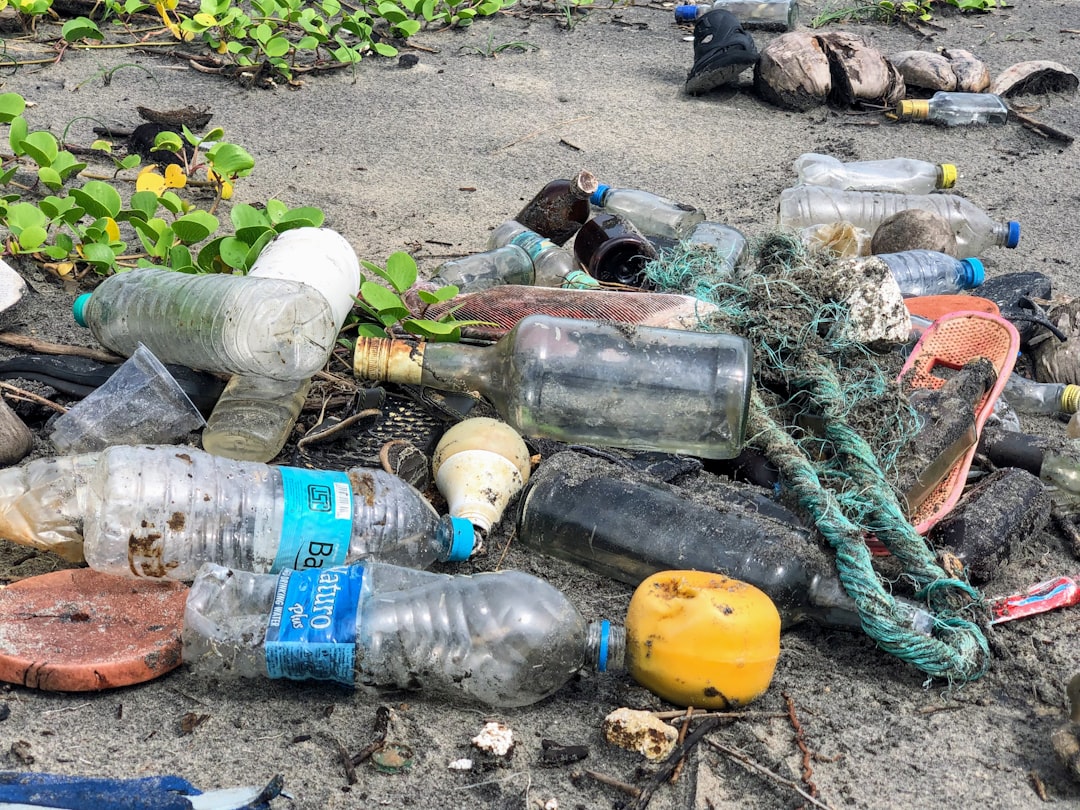
Photo by John Cameron on Unsplash
Every time you shower, thousands of invisible plastic particles wash down your drain. They're so small you can't see them, but they're everywhere—in fish gills, in drinking water, even in the air we breathe. Welcome to the microplastic crisis, one of the most insidious environmental problems most people have never heard of.
The Tiny Invader That Changed Everything
Microplastics are fragments smaller than 5 millimeters, and they've become ubiquitous in our environment. But here's the thing: they didn't always exist in such abundance. The explosion happened relatively recently. In the 1970s, cosmetic companies discovered that tiny plastic beads worked wonderfully in exfoliating products. They were cheap, uniform, and felt luxurious. Consumers loved them. Companies loved them even more. By the early 2000s, microbeads were showing up in toothpastes, face scrubs, body washes, and hand soaps across the globe.
Then in 2015, researchers at the University of Minnesota published a study that should have shocked the world. They found microbeads in nearly all water treatment plants they tested, and crucially, many of these particles were slipping right through into rivers and lakes. The plastic was escaping the system that was supposed to catch it.
But microbeads from cosmetics tell only part of the story. The real volume comes from somewhere much more mundane: synthetic clothing. Every time you wash your polyester shirt, nylon jacket, or fleece blanket, you're releasing hundreds of thousands of microfibers into the water system. A single synthetic garment can shed 2,000 fibers per wash cycle. Consider that Americans alone generate about 17 million tons of textile waste annually, and you start to see the scale of this problem.
Where They End Up (Spoiler: Everywhere)
The journey of a microplastic is a one-way trip into the environment. Once in the water, these particles don't break down like organic matter. They persist. They float. They sink. They accumulate in sediment, on the ocean floor, and in the tissues of living creatures.
Marine animals ingest microplastics thinking they're food. Fish that eat the particles develop inflammation and reduced growth rates. Whales have been found with stomachs full of plastic. Zooplankton, the microscopic organisms at the base of ocean food webs, are consuming microplastics in alarming quantities. And here's the escalating horror: when small fish eat contaminated zooplankton and larger fish eat those small fish, the plastics accumulate up the food chain. By the time the plastic reaches your dinner plate as salmon or shrimp, it's traveled through multiple organisms.
In 2018, researchers found microplastics in human blood for the first time. Since then, we've discovered them in lung tissue, in placentas of pregnant women, and in human breast milk. A 2023 study published in Environmental Health Perspectives found that people who drink bottled water consume nearly 130,000 microplastics per year, compared to about 4,000 for tap water drinkers. The average person now ingests somewhere between 39,000 and 52,000 microplastic particles annually, depending on whether they drink bottled water.
We still don't fully understand the health implications. But the fact that these foreign particles are penetrating deep into human bodies should concern everyone. Initial research suggests microplastics can trigger inflammation and immune responses, though long-term effects remain largely unknown.
The Response (And Why It's Not Enough)
Some progress has been made. The United States banned microbeads from cosmetics in 2015 under the Microbead-Free Waters Act of 2015. The European Union followed suit in 2018. Several other countries implemented similar bans. Companies scrambled to find alternatives, mostly replacing plastic beads with walnut shell powder or other natural exfoliants.
That's genuinely good news. But it's also like treating a symptom while ignoring the disease. Microbeads from old products are still present in the environment and will remain there for decades. More importantly, the ban did nothing to address synthetic textiles, which generate far more microplastics than cosmetics ever did.
Some companies are developing technological solutions. Guppyfriend, a washing bag, claims to catch microfibers before they enter the water system. Patagonia developed a synthetic fabric designed to shed fewer fibers. But these are niche products. The vast majority of synthetic clothing still enters the wash without any filtration technology.
There's also a broader recognition that we need to rethink material science itself. Researchers are experimenting with biodegradable plastics and investigating how to engineer synthetic materials that break down naturally. But these innovations are years away from mainstream adoption, and they won't help with the billions of synthetic garments already in circulation.
What You Can Actually Do About It
Personal action isn't a substitute for systemic change, but it matters. Wash synthetic clothing less frequently. When you do wash, use cold water, which causes less fiber shedding. Buy a washing machine filter like Cora Ball or install a filtration system that catches microfibers before they reach treatment plants. Avoid single-use synthetic items. Choose natural fibers like cotton, wool, and linen when possible, though even these require consideration of pesticides and water use.
Most importantly, support policies that mandate microfiber filtration in washing machines and that regulate the textile industry's environmental footprint. Several countries are exploring mandatory filtration technology, and consumer demand accelerates adoption.
The microplastic crisis feels overwhelming because it is overwhelming. We've engineered convenience into our daily lives without fully understanding the consequences. But understanding the problem is the first step toward fixing it. Every shower matters. Every wash cycle matters. Every purchase of synthetic clothing carries weight. The particles are small, but our collective responsibility isn't. By connecting the dots between personal consumption and environmental contamination, we can become part of the solution. For more on how household items affect our water systems, check out our article on how drain cleaners are poisoning our waters—another invisible threat hiding under our sinks.
Comments (0)
No comments yet. Be the first to share your thoughts!
Sign in to join the conversation.