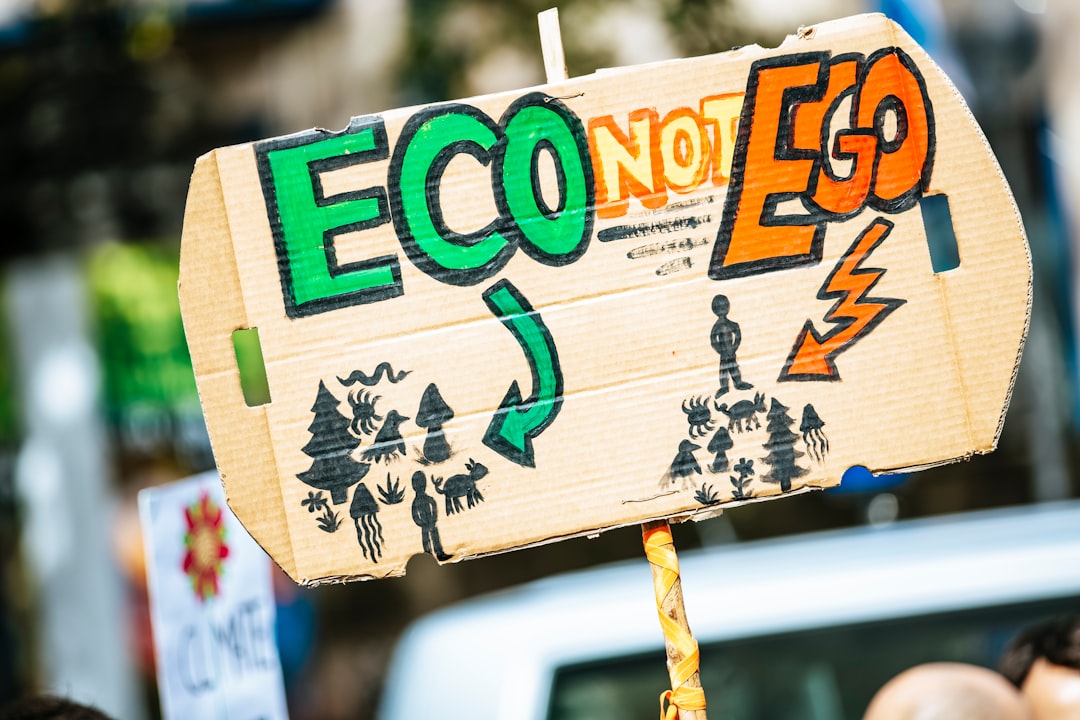
Photo by Markus Spiske on Unsplash
Last spring, Maria Chen decided to start composting. She'd read all the right articles about reducing waste, building rich soil for her vegetable garden, and doing her part for the planet. Six months later, when she sent a sample of her finished compost to a local lab—just curious, really—the results made her stomach drop. High levels of PFAS. "Forever chemicals" that never degrade, that bioaccumulate in living tissue, that researchers now suspect are linked to everything from thyroid disease to decreased vaccine effectiveness.
She'd been spreading poison on her carrots.
What Are Forever Chemicals, and Why Should You Care?
PFAS stands for per- and polyfluoroalkyl substances. There are thousands of them. What they all share is a carbon-fluorine bond so strong that nothing in nature can break it down—not bacteria, not heat, not time. Once PFAS enters the environment, it stays there. Forever.
These chemicals were invented in the 1940s and became wildly useful. They make nonstick cookware nonstick. They repel water and oil on food packaging, furniture, and clothing. They're in firefighting foam used at airports and military bases. They're in some dental floss, some makeup, some sunscreens. For decades, manufacturers loved them because they worked perfectly and nobody really understood the consequences.
The consequences, it turns out, are severe. A 2022 study found PFAS in the blood of 97% of Americans tested. The CDC has known about dangerous levels in drinking water for years. In 2023, the EPA finally proposed strict drinking water standards for six types of PFAS—a move that came roughly 30 years too late for communities already poisoned by industrial dumping.
Here's the part that should genuinely terrify you: the EPA estimates that 42% of American tap water contains detectable levels of PFAS. We're not talking about trace amounts in some industrial zone. We're talking about your kitchen sink in suburban Ohio. Your tap in rural Maine. Your shower in Denver.
How Compost Became a Contamination Highway
Now we get to the compost problem, which is essentially a perfect storm of good intentions meeting chemical physics.
When you throw food waste and yard waste into a compost bin, you're not just breaking down organic matter. You're creating an environment where water moves and microbes thrive. And PFAS? PFAS is incredibly mobile in water. It doesn't stick to soil particles. It doesn't break down. It just moves with the moisture, getting more concentrated as organic matter decomposes.
The source of PFAS in compost comes from multiple places. Food packaging, especially anything coated to be waterproof. Cardboard boxes lined with plastic. Biodegradable food containers that aren't actually biodegradable—they just break into smaller pieces while the PFAS remains intact. Some industrial compost facilities accept materials from manufacturers, meaning PFAS-laden wastewater gets mixed in. Even "natural" materials can be contaminated if they've been grown in PFAS-polluted soil or water.
A 2023 study from the University of Rhode Island found PFAS in 19 out of 20 compost samples from commercial facilities in the Northeast. The concentrations were sometimes higher than in the original food waste. When researchers applied this compost to soil in a lab setting, PFAS leached into the groundwater. Not eventually. Immediately.
Think about what this means. Millions of people across North America are intentionally spreading PFAS throughout their gardens while genuinely believing they're helping the environment.
The Cascade of Toxicity
PFAS accumulates in plants. Spinach grown in contaminated soil shows elevated PFAS levels. Lettuce. Carrots. Potatoes absorb it through their roots and keep it throughout their tissues. Eat the vegetables, and PFAS enters your bloodstream where it can persist for decades. The human half-life of some PFAS compounds is around 27 years, meaning if you consume PFAS today, half of it will still be in your body in 27 years. A quarter will still be there in 54 years.
If you have livestock eating contaminated pasture grass or feed grown in contaminated soil, the PFAS moves up another level in the food chain. Dairy cows concentrate PFAS in their milk. Chickens deposit it in their eggs. This is why people who drink raw milk from certain regions are showing higher PFAS levels in their blood.
The health impacts are still being catalogued by researchers, but the picture isn't pretty. PFAS interferes with liver function. It's associated with high cholesterol, kidney disease, and thyroid problems. Studies suggest it suppresses immune function, which is why researchers worry about reduced vaccine effectiveness. Some studies link it to testicular cancer and kidney cancer, though the epidemiology is still evolving.
For pregnant women and developing children, PFAS exposure appears particularly dangerous. It crosses the placental barrier. Some research suggests it affects fetal development. One study found that higher PFAS exposure in pregnant women was associated with lower birth weights.
What Can You Actually Do?
This is where things get frustrating, because the honest answer is: not much at an individual level, and that's kind of the point.
You could stop composting, but that just shifts the problem elsewhere—your waste ends up in a landfill where PFAS still leaches into groundwater anyway. You could buy compost from certified suppliers who test for PFAS, but most don't. You could avoid certain food packaging, but PFAS is so ubiquitous it's nearly impossible to dodge completely.
What actually needs to happen is regulatory action. Manufacturing restrictions on PFAS. Remediation of contaminated sites. Real enforcement of drinking water standards. Better labeling requirements so people know what's in their food packaging. Investment in PFAS removal technology for water systems.
Some cities and states are starting to move. California banned PFAS in food packaging. The EU restricted PFAS in textiles. Minnesota restricted PFAS in aqueous film-forming foams. But these are drops in an ocean of legacy contamination and ongoing industrial use.
If you garden, you could test your soil. Some university extension programs offer PFAS testing now, though it's not yet standard. You could avoid composting materials you suspect contain PFAS—basically anything processed or packaged. You could support politicians who take PFAS seriously.
But mostly, you have to sit with the uncomfortable truth that this is a problem created by industrial chemistry and sloppy environmental stewardship, and individual actions, while not pointless, are not sufficient to fix it.
The Question We Should Be Asking
Here's what really matters: we created PFAS because we wanted convenience. We wanted nonstick cookware and water-resistant clothing and packaging that keeps food fresh. We got all of that. We just also got permanent environmental contamination and a chemical in 97% of human blood.
We knew it was possible that PFAS didn't break down—that was kind of the point. We chose not to care about what that meant for the long term. For decades, manufacturers and regulators acted as if "the environment can absorb anything" was an acceptable philosophy.
As you're standing in your backyard looking at your compost bin, remember that Maria Chen isn't alone. Thousands of people across North America are discovering PFAS in their soil, their vegetables, their drinking water. And they did everything right. They composted. They gardened. They tried to live sustainably. The system that's supposed to support that choice failed them.
This is what environmental contamination looks like when it's invisible. No dramatic spill. No obvious culprit. Just a slow, persistent accumulation of chemicals that were convenient to use and impossible to eliminate. And the question of whether that trade-off was worth it is a question we should have asked 80 years ago, instead of now.
If you want to understand more about how environmental systems fail us despite good intentions, you might find our analysis of why rewilding projects keep failing illuminating—it's another case where the science community gets things critically wrong.
Comments (0)
No comments yet. Be the first to share your thoughts!
Sign in to join the conversation.