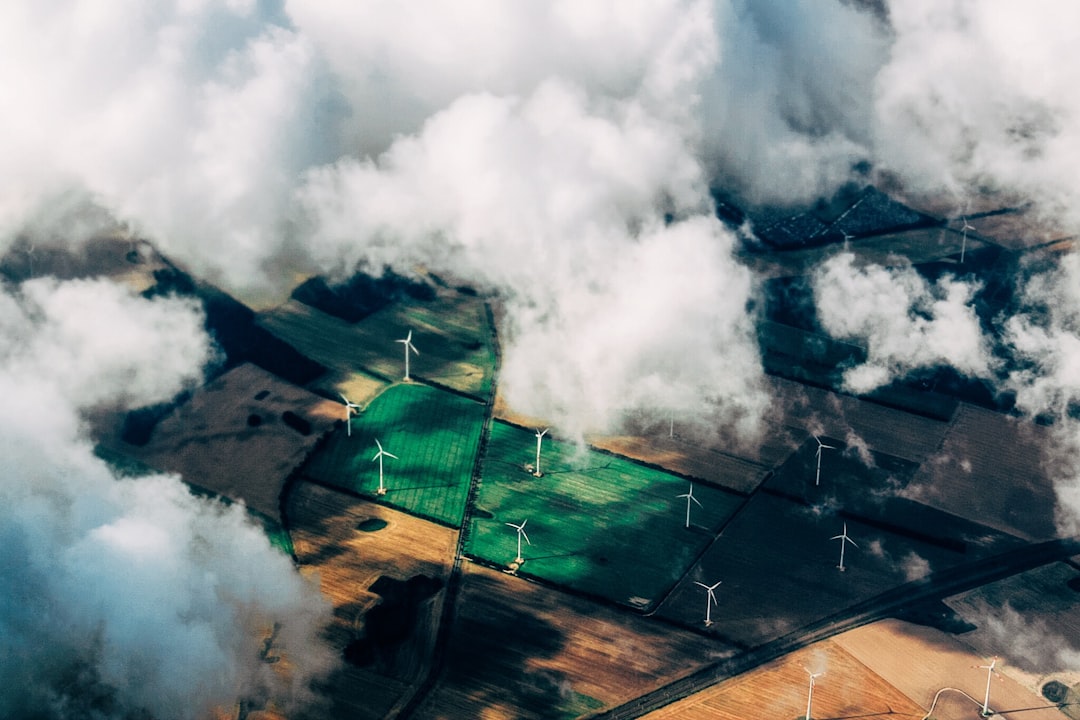
Photo by Thomas Richter on Unsplash
Last summer, a research team in the Swiss Alps made a discovery that should have made headlines worldwide but somehow slipped past most news cycles. At an elevation of 3,000 meters, in pristine-looking alpine soil that hadn't been directly touched by humans in decades, they found microplastics. Not just a few particles—concentrations comparable to those found on city beaches. The particles had traveled there through the air, carried by wind currents from industrial centers hundreds of kilometers away.
This finding captures the surreal reality of our plastic crisis. We've spent years focused on the visible garbage—the island of plastic swirling in the Pacific, the bags choking sea turtles, the bottles piling up in landfills. But while we've been looking at the big picture, something far more pervasive and sinister has been unfolding at a microscopic scale. Microplastics—fragments smaller than 5 millimeters—have become what some scientists now call the defining pollutant of our age.
The Journey of a Plastic Fragment
To understand how microplastics became ubiquitous, you need to understand where they come from. Some are intentionally manufactured tiny, like the microbeads once found in toothpaste and exfoliating scrubs (largely banned now, though still present in some products). But the majority result from the breakdown of larger plastic items: a water bottle left in the sun, a fishing net abandoned at sea, synthetic clothing shed during a washing cycle, tire rubber worn away on roads.
Consider the journey of a plastic shopping bag. It escapes from a landfill, gets caught in a storm, and ends up in a river. Sunlight and wave action begin fragmenting it. Within a few years, what was once a recognizable bag has become thousands of microscopic particles. These particles don't biodegrade—plastic is essentially forever. Instead, they're carried by currents, absorbed into the bodies of filter-feeding organisms, and worked up the food chain.
The scale is almost incomprehensible. A 2019 study published in Science suggested that humans produce roughly 400 million tons of plastic annually, with a significant portion ending up in the environment. Once there, that plastic doesn't vanish—it accumulates. Researchers estimate that by 2050, there could be more plastic than fish (by weight) in our oceans.
An Unexpected Guest in Your Bloodstream
For years, the concern with microplastics was primarily focused on marine life. We documented fish with stomachs full of plastic, whales washing ashore with dozens of kilograms of plastic in their digestive systems, seabirds with plastic wrapped around their organs. These images were sobering, but they felt somewhat distant to those of us living on land.
Then came the research that changed everything. In 2018, a pilot study found microplastics in human blood samples. In 2022, another study found them in human lung tissue from living people. Most unsettling of all: in 2023, researchers detected microplastics in human placentas for the first time, meaning the particles are crossing biological barriers we thought would protect developing fetuses.
We're breathing them in. We're consuming them in contaminated seafood, table salt, and drinking water. A 2023 study from the University of Newcastle estimated that people eating seafood might be ingesting up to 11,000 microplastic particles annually. Those on a diet heavy in processed foods could be consuming even more.
The health implications remain murky because we simply don't know yet what these particles do once inside our bodies. Are they inert, simply passing through? Do they accumulate in organs? Can they trigger inflammatory responses? The honest answer is: we don't know, and that uncertainty is perhaps more troubling than a definitive answer would be.
The Ecosystem Takeover
While we were debating the human health angle, microplastics were quietly reorganizing ecosystems. In the ocean, zooplankton and small fish consume these particles, mistaking them for food. The animals suffer reduced feeding, immune system suppression, and behavioral changes. Since these tiny organisms form the base of most ocean food webs, the impact cascades upward.
On land, the problem manifests differently but with equal consequences. Soil organisms—earthworms, beetles, fungi—are ingesting microplastics. Studies show that earthworms exposed to microplastics exhibit reduced mobility and altered soil structure management. Since earthworms are critical for soil health, nutrient cycling, and water infiltration, their disruption has implications for agriculture and carbon storage.
Plants are affected too. Recent research shows that microplastics can accumulate in plant tissues and potentially be transported within the plant's vascular system. A 2022 study found microplastics in lettuce and wheat grown in contaminated soil, suggesting another pathway for human exposure through crops.
Even more surprising: microplastics are showing up in unexpected organisms. Scientists have found them in cloud water collected from mountains, suggesting they may be affecting precipitation patterns and cloud formation. In the Arctic, researchers discovered microplastics in sea ice, which could impact light penetration and the foundational productivity of polar food webs.
What Actually Happens Now?
The grim reality is that we can't remove microplastics from the environment. There's no filter large enough, no technology sufficient to extract trillions of particles from oceans and soil. We've created a problem at a scale that doesn't have a cleanup solution—only a prevention solution.
Some initiatives show promise. Several countries have banned microbeads in personal care products. The EU has restricted single-use plastics. Companies are developing alternatives to synthetic fabrics that shed fewer particles. But these are drops in an ocean of plastic.
The uncomfortable truth is that preventing microplastics requires addressing the fundamental issue: we produce too much plastic, and too much of it ends up in the environment. This means systemic change—reducing plastic consumption, improving waste management, developing genuinely biodegradable alternatives, and redesigning industrial processes.
Interestingly, this challenge connects to broader ecosystem disruption. If you've read about how fragmented habitats affect wildlife populations, you'll recognize that microplastics represent another form of habitat degradation—a chemical and physical contamination that affects every ecosystem simultaneously.
The microplastic problem won't be solved in our lifetimes. But recognition is the first step. Every time you choose a glass water bottle over plastic, wash clothes less frequently, or support policies that reduce single-use plastic, you're preventing a particle from eventually ending up in soil, oceans, or perhaps your own body. It's not a solution, but in a world drowning in plastic, prevention is the only viable response we have.
Comments (0)
No comments yet. Be the first to share your thoughts!
Sign in to join the conversation.