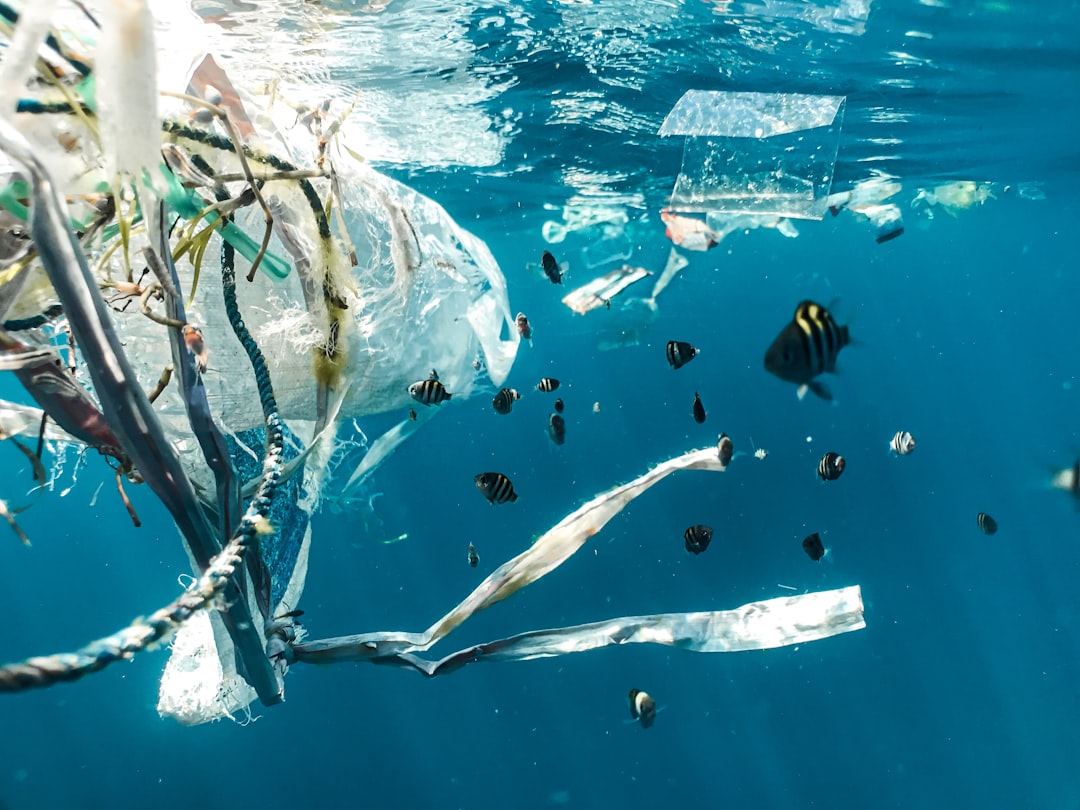
Photo by Naja Bertolt Jensen on Unsplash
Last spring, I watched a farmer named Marcus kneel down in a muddy field and run his hands through the soil like he was looking for buried treasure. In a way, he was. "Count them," he said, pointing at the writhing bodies of earthworms clustered in a handful of dirt. "I've got maybe three here. Five years ago, I'd find fifty." That conversation stuck with me, because Marcus wasn't just noticing the absence of worms—he was witnessing the collapse of his soil's ability to sustain life.
Earthworms might be the most underrated environmental heroes on the planet. They don't have the charisma of pandas or the advocacy network of whales. They're not exactly Instagram-famous. But these humble invertebrates are doing something remarkable: they're literally rebuilding the ground beneath our feet, sequestering carbon, and creating the conditions for food security in an increasingly unstable climate.
The Worm Economy: What Earthworms Actually Do
Here's what most people don't realize: earthworms are ecosystem engineers. When they burrow through soil, they create air pockets that allow water to penetrate deeper, reducing erosion and flooding. They consume dead organic matter and transform it into nutrient-rich castings—essentially fertilizer—that feeds plants. A single earthworm can process its body weight in soil every single day.
But the climate story is even more compelling. Soil contains roughly twice as much carbon as the entire atmosphere and all plants combined. When earthworms are active and abundant, they're promoting biological processes that keep carbon locked safely in the ground rather than released into the air as carbon dioxide. Agricultural scientist Olaf Christen from Martin Luther University estimates that healthy earthworm populations can increase soil carbon storage by up to 0.5 tons per hectare annually.
Think about that number for a moment. If we could restore earthworm populations across the world's agricultural lands—roughly 1.5 billion hectares—we're talking about a carbon sequestration potential equivalent to removing hundreds of millions of cars from the road. Not through some expensive technology or government mandate. Just by letting worms do their job.
Why We're Losing Them: The Quiet Apocalypse
The problem is that we've spent the last seventy years systematically eliminating earthworms from our soils without really noticing. Industrial agriculture relies on practices that are fundamentally hostile to worm life. Heavy tillage—repeatedly churning up the soil with machinery—disrupts their burrows and exposes them to predators and drying conditions. Synthetic pesticides and fungicides don't just kill pests; they obliterate the soil food web that earthworms depend on.
Monoculture farming, where the same crop is planted year after year in the same field, creates an impoverished environment for soil organisms. There's no diversity of plant roots, no varied organic matter breaking down throughout the seasons. It's like asking a chef to create gourmet meals with access to only one ingredient.
The numbers are stark. A 2021 study published in Global Change Biology found that earthworm biomass has declined by approximately 4% per decade since the 1980s in industrialized nations. Some regions have seen losses of 50% or more. In conventionally managed agricultural soils, populations can drop from thousands of individuals per square meter to just dozens.
And here's where it gets genuinely concerning: younger farmers often inherit depleted soils with minimal earthworm populations. They've never known what healthy soil feels like in their hands. They don't have a baseline for comparison. It's like showing someone a faded photograph and telling them it's a vivid landscape.
The Regeneration Movement: Fighting Back
The good news? We can reverse this. Farmers and scientists around the world are discovering that restoring earthworm populations is entirely possible—and it doesn't require abandoning agriculture or accepting lower yields. It requires changing how we work with the soil rather than against it.
Regenerative agriculture practices are making a measurable difference. No-till or reduced-till farming leaves soil structure intact, providing stable homes for worms. Crop rotation and diverse planting create the varied food sources that worms and their associated organisms need. Cover cropping—planting crops like clover or hairy vetch specifically to nourish the soil—can increase earthworm populations by 300% within just a few years.
I visited a farm in Iowa run by a woman named Jennifer who switched to regenerative practices a decade ago. "The first year, I was honestly worried," she admitted. "Everyone told me I'd lose money, that I was being sentimental." But her yield didn't drop. In fact, as her soil biology recovered—including a thriving earthworm population—her crops became more resilient. During a brutal drought that devastated conventional farms in her region, her fields held moisture far better. Her worms, quite literally, had saved her farm.
Similar successes are happening globally. In Tanzania, smallholder farmers have increased earthworm populations through composting and mulching, improving soil fertility and reducing their dependency on expensive imported fertilizers. In Australia, researchers are studying how earthworm restoration can help rehabilitate degraded rangelands.
The Climate Connection You Haven't Heard About
This is where the story intersects with our collective climate crisis. Soil restoration through earthworm recovery represents a climate solution that's already proven, scalable, and economically beneficial to the people implementing it. Unlike some environmental interventions that require sacrifice or cost, regenerative agriculture actually improves farmer livelihoods while sequestering carbon.
If you're worried about climate change—and statistically, you probably are—supporting agricultural practices that rebuild earthworm populations is one of the most tangible things that can happen. It affects what gets grown and how, which directly influences what ends up in grocery stores and on dinner tables.
The worms themselves don't need our permission or our pity. They just need us to stop poisoning and pulverizing the soil they live in. They need farmers and gardeners willing to think in decades rather than quarterly earnings reports. They need consumers who care enough about soil health to support the farmers doing this work.
Marcus, the farmer I mentioned at the beginning, switched to regenerative practices three years ago. Last month, he sent me a photo of a handful of soil absolutely teeming with earthworms. He's not going to solve climate change by himself. Neither will any single farmer or gardener. But multiply Marcus by thousands, then millions, and suddenly we're talking about transforming one of our planet's most critical systems from a source of emissions into a sink for carbon.
The solution was beneath our feet all along. We just needed to remember to look.
If you're interested in how other ecosystems are finding their way back to health, check out The Great Kelp Forest Comeback: How One Ecosystem Is Rewilding Itself (And What It Means for Our Oceans)—it's a fascinating look at ocean restoration that mirrors some of these soil recovery principles.
Comments (0)
No comments yet. Be the first to share your thoughts!
Sign in to join the conversation.