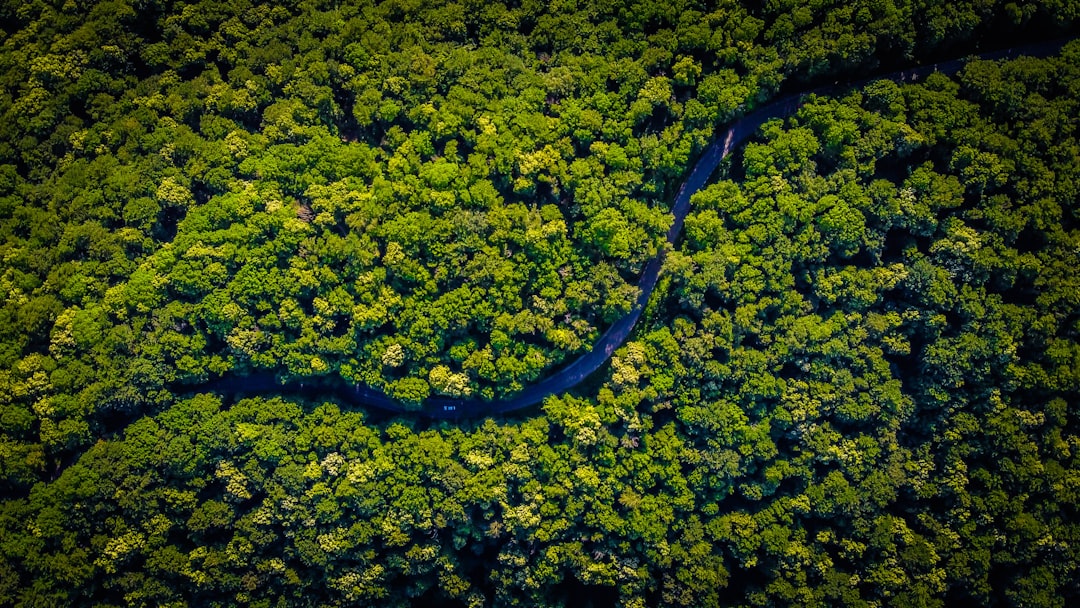
Photo by Vlad Hilitanu on Unsplash
On a misty morning in the Cairngorms, wildlife ecologist Paul Lister watches a golden eagle circle above his 23,000-acre estate. Fifteen years ago, this same land was intensively managed moorland, kept deliberately barren to maximize red grouse hunting. Today, it's a patchwork of regenerating native woodland, wetlands, and open heath—teeming with life that had vanished decades earlier. This isn't a nature reserve run by conservationists. It's a working farm, reimagined.
The UK's rewilding movement has quietly become one of Europe's most ambitious ecological experiments. And unlike romanticized visions of pristine wilderness, this is messy, complicated, and surprisingly practical.
From Monoculture to Mosaic: The Shift Begins
For centuries, British farming followed a simple equation: clear the land, maximize output, control everything else. By the 1990s, this approach had hollowed out rural ecosystems. Farmland bird populations had crashed by over 70% since 1980. Pollinator numbers were in freefall. Soil degradation was accelerating. The system worked brilliantly for commodity production and terribly for everything else.
Then the economics started to crumble. Milk prices crashed. Grain subsidies created perverse incentives. Young farmers looked at £500,000 mortgages for land that might never generate enough profit to justify them. Something had to change.
Enter rewilding—not the romantic "remove all humans" version some imagine, but something far more pragmatic. The idea: use financial incentives (government schemes, conservation grants, private funding) to convert unproductive agricultural land back into biodiverse habitat. For farmers struggling financially, this offered a lifeline.
By 2020, rewilding initiatives had emerged across England, Scotland, and Wales. Organizations like Rewilding Britain began coordinating efforts. Private investors, including the family that owns Patagonia, started funding large-scale projects. The government announced ambitious targets for nature recovery.
What Actually Happens When You Stop Plowing
Here's where the story gets interesting—and messy. When you remove decades of intensive management, you don't get instant wilderness. You get succession.
Take the South Downs. In 2019, a 3,500-acre estate shifted from intensive arable farming to mixed rewilding. Year one saw explosive weed growth—what ecologists call "pioneer species." Teasels, nettles, and wild grasses colonized bare soil. Farmers watching this process often panic. It looks like chaos. It is chaos. But it's productive chaos.
By year three, woody shrubs began establishing. Hawthorn, blackthorn, rowan. The herbaceous layer stabilized. Soil organisms returned—earthworms, beetles, fungi. Predatory insects followed. Then birds. Within five years, farmland bird species richness doubled on several pilot sites.
The data is striking. A study by the University of Sussex monitoring 13 rewilding sites found that plant species diversity increased by an average of 240% within three years of management cessation. Invertebrate biomass—a crucial foundation of the food chain—increased five-fold in some locations.
But here's the complicated part: rewilding doesn't look neat. It doesn't generate immediate economic returns. It requires patience. Some farmers who embraced it early faced local skepticism, even hostility. "People thought we were mad," one rewilding pioneer told me. "They'd drive past and see what looked like overgrown wasteland."
The Livestock Question: Grazing as a Tool
One misconception about rewilding is that it means removing all animals. In reality, carefully managed livestock grazing is often essential.
Across Europe, rewilding projects use cattle, sheep, and horses strategically to prevent any single habitat type from dominating. Wild boar do similar work in continental projects. The animals aren't "natural" in the purist sense—they're tools for maintaining diversity.
On the Knepp Estate in Sussex—perhaps England's most famous rewilding project—longhorn cattle and free-roaming pigs now replace the role of extinct megafauna. The cattle create diverse sward heights through selective grazing, preventing grassland from becoming uniform. The pigs root and disturb soil, creating micro-habitats for insects and plants. Rather than monoculture or complete abandonment, you get dynamic variety.
This hybrid approach has real appeal to farmers. It's not a complete departure from animal husbandry. It's a fundamentally different model of it.
Economics: The Surprising Bottom Line
The question every farmer asks: can you actually make money from rewilding?
The short answer is complex. Government environmental schemes now pay for habitat creation—roughly £3,000 to £5,000 per hectare per year in the UK. Some landowners layer this with carbon credits. Tourism revenue from wildlife watching has emerged as a secondary income stream on several estates. Patagonia's UK rewilding fund explicitly aims for projects that become financially self-sustaining within 10-15 years.
It's not getting-rich-quick. But for a farmer with marginal land—hillsides too steep to cultivate profitably, waterlogged fields, eroded soil—the math works.
What's harder to quantify is the ecosystem service value: water filtration, flood mitigation, pollination, carbon sequestration. One analysis suggested that nature recovery on just 10% of UK agricultural land could generate £10 billion annually in ecosystem services. Those benefits don't flow directly to farmers, but they're real.
The Bigger Picture: From Experiment to Mainstream
Rewilding remains marginal—perhaps 3-5% of UK farmland currently. But momentum is accelerating. Similar restoration efforts globally show that large-scale ecological recovery is possible within a human lifetime.
The real test isn't whether rewilding works—the ecological evidence is overwhelming. It's whether policy and economics can align to make it mainstream before biodiversity collapse becomes irreversible.
On that misty morning in the Cairngorms, the golden eagle descended. In a landscape managed for maximum profit a generation ago, it now has reason to hunt. That shift—from viewed as wasteland to viewed as opportunity—might be the real revolution.
Comments (0)
No comments yet. Be the first to share your thoughts!
Sign in to join the conversation.