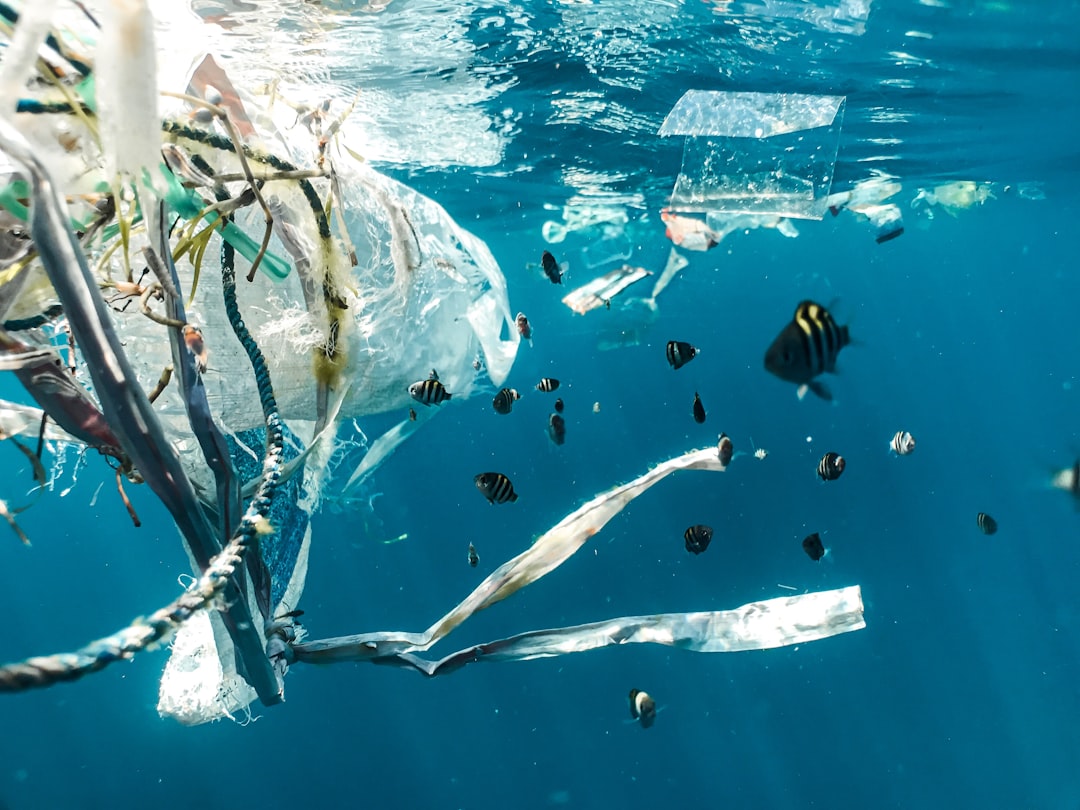
Photo by Naja Bertolt Jensen on Unsplash
Three years ago, I stood in the Sundarbans of Bangladesh knee-deep in brackish water, watching a woman named Nasrin plant what she called "ghost trees." They looked like skeletal sticks poking out of the mud—mangroves, barely two feet tall. She told me she'd planted over 10,000 of them. "They'll be giants when my daughter is my age," she said. Today, satellite imagery shows her district has recovered more than 2,000 hectares of mangrove forest. This isn't a small story. This is the future we're building, one root system at a time.
Why Mangroves Matter More Than You Think
Most people have never heard of mangroves. They can't name them. They can't picture them. And yet, these unremarkable-looking trees are doing something no other forest on Earth does quite as well: they're storing carbon like nature's vault while simultaneously protecting coastal communities from the rising seas we've created.
The numbers are striking. A single hectare of mangrove forest can sequester up to four times more carbon than a tropical rainforest. Let that sink in. Mangroves are quieter than rainforests, less charismatic than pandas, and infinitely more practical for our survival. They occupy only 0.1% of Earth's forest area, yet they store nearly 11% of all carbon locked in global forest ecosystems.
But there's more. Mangrove forests are nurseries. Roughly 80% of fish and crustaceans harvested commercially worldwide depend on mangroves during some phase of their life cycle. In Bangladesh, mangrove fisheries support over 30 million people directly or indirectly. In Indonesia, the number exceeds 100 million. These trees are literally feeding the planet.
The problem? We've been destroying them at a rate that makes other deforestation look leisurely. Between 1980 and 2000, we lost 35% of the world's mangrove cover. The reasons were predictable and depressing: aquaculture farms (shrimp farming alone has decimated mangrove forests across Southeast Asia), coastal development, and the simple fact that mangroves grow in "useless" swampy places that seemed destined for conversion into something more profitable.
The Turning Point: When Money Started Making Sense
Here's where it gets interesting. Around 2010, conservation groups and governments stopped arguing that mangroves were worth saving for moral reasons. They started showing that mangroves were worth more alive than dead. Economically.
The math works like this: a intact mangrove forest provides coastal protection during storms (think hurricane barriers), nursery grounds for commercial fish species, and carbon storage. When you add up the economic value of all these services, a functioning mangrove ecosystem is worth between $25,000 and $100,000 per hectare annually. A shrimp farm? Maybe $5,000 a hectare annually, but with a 20-year lifespan before the soil becomes too contaminated to use. The mangrove? Indefinite.
Once governments and NGOs could translate "mangrove importance" into actual dollars and cents, things started moving. The World Bank began funding restoration projects. Countries like Indonesia, which lost mangroves at a rate of 50,000 hectares per year in the 1990s, started implementing protection policies. By 2020, mangrove loss had slowed to around 6,000 hectares annually—not zero, but a massive improvement.
Vietnam provides the clearest success story. After decades of mangrove destruction, the government established the Mekong Delta Biosphere Reserve and committed to protecting existing mangroves while restoring degraded areas. Since 2000, Vietnam has replanted over 500,000 hectares. The restoration efforts have created jobs, revived fish stocks, and reduced storm damage dramatically.
The Science That Makes Recovery Possible
But restoration isn't just about planting trees and waiting. That approach often fails spectacularly. Mangrove seedlings are fragile. They need specific salinity levels, water depth, sediment composition, and tidal patterns. Plant them in the wrong place, and they'll simply die.
Modern mangrove restoration uses sophisticated monitoring technology. Researchers deploy drone imagery to assess soil conditions before planting. They analyze sediment cores to determine historical composition. They study tidal patterns and salinity gradients with instruments that would have seemed impossible fifteen years ago.
This scientific approach has transformed success rates. Projects using traditional methods achieved about 20-30% survival rates for replanted seedlings. Projects using data-driven site selection and adaptive management techniques now regularly exceed 70-80% survival rates. In some cases, they're hitting 90%.
What's equally important is that scientists now understand mangrove ecosystems well enough to help them recover naturally in some cases. By removing barriers to water flow or eliminating invasive species, degraded areas can self-restore. It's cheaper than active planting, and the results are often more resilient.
The Ripple Effect: What Restored Mangroves Actually Do
When mangrove forests return, things change quickly. Fish populations rebound within 3-5 years. Storm surge protection improves measurably. But there's something else happening that's harder to quantify: communities reconnect with their environment.
In Thailand, fishing communities partnered with researchers to restore mangrove areas they'd previously cleared. Within seven years, fish yields increased by 40%. Employment in sustainable fishing expanded. Young people who'd left for cities to find work began returning. The restoration became not just environmental recovery, but economic and social renewal.
The connection to broader ocean health matters too. Mangrove forests filter runoff before it reaches the ocean, reducing nutrient pollution and the dead zones that plague our coastal waters. They trap sediments and heavy metals. They function as the ocean's kidneys.
What's Left to Do
We're at a critical inflection point. Mangrove restoration is working. The science is solid. The economics make sense. But funding remains insufficient, and awareness is still shockingly low. Most people living in wealthy countries have no idea that mangroves exist, let alone that their existence is non-negotiable for human survival.
The targets are ambitious but achievable. Various conservation organizations are working toward restoring two million hectares of mangrove forest by 2030. That's 5% of what we destroyed, but it's a start. Every hectare restored is carbon locked away, fish spawning grounds protected, and coastal communities fortified.
Back in Bangladesh, Nasrin is still planting. Her ghost trees are becoming visible now, their roots spreading through the mud, their leaves catching sunlight. She won't see them become the mature forests they'll eventually be. But her granddaughter will live in a more stable world because of the work she's doing today. That's not environmental philosophy. That's environmental mathematics. And for once, the equation actually works.
Comments (0)
No comments yet. Be the first to share your thoughts!
Sign in to join the conversation.