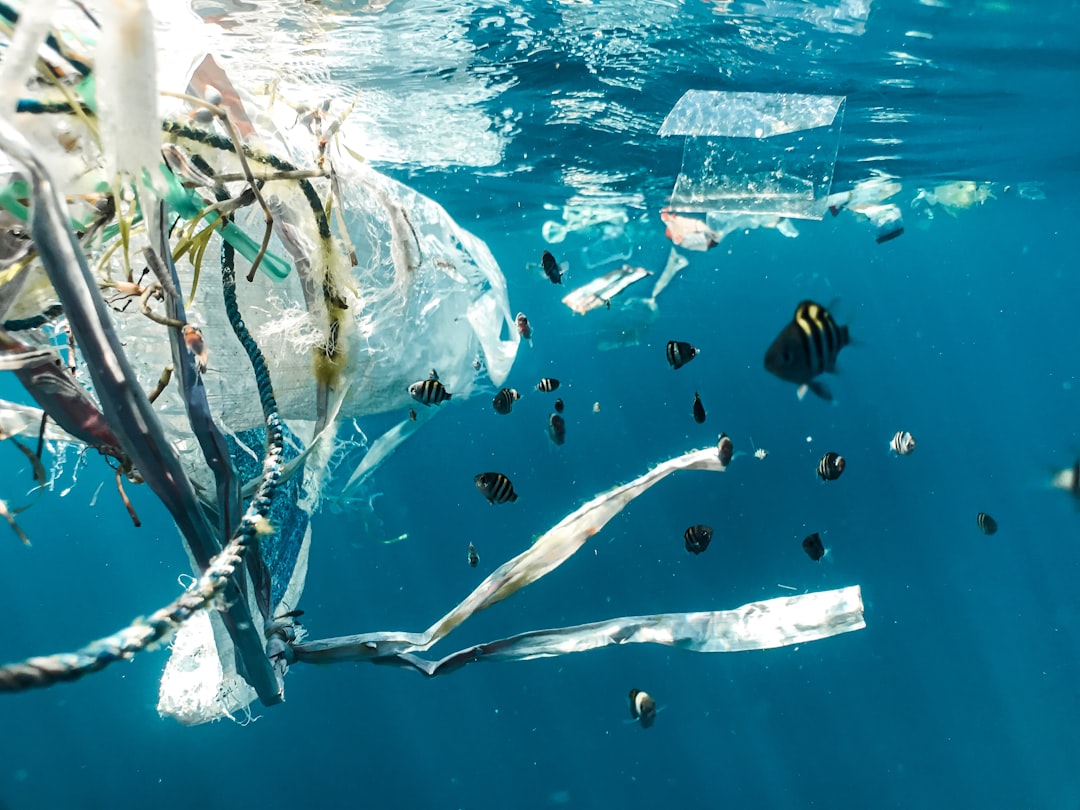
Photo by Naja Bertolt Jensen on Unsplash
Drive along the North Carolina coast on a foggy morning, and you'll see something that looks pulled from a horror film. Skeletal trees, stripped of bark and bleached white by salt and sun, jut from murky water like the fingers of drowning giants. These aren't dead forests that fell into water—they're living forests that the water came to claim. Welcome to the world of ghost forests, one of the most visible and unsettling consequences of sea level rise.
Ghost forests are expanding at an alarming rate across the Atlantic coast, from Maine to South Carolina, and they're appearing in other regions too. Scientists estimate that thousands of acres of living pine and hardwood forests have already transitioned to these eerie graveyards, and the process is accelerating. What makes this phenomenon so striking isn't just its visual impact—it's what it reveals about how quickly our climate crisis is reshaping our world in real time.
How Rising Seas Murder a Forest
The mechanism behind ghost forests is deceptively simple, yet devastating. As sea levels rise—currently climbing about 3.4 millimeters per year on the U.S. East Coast—saltwater gradually intrudes into freshwater aquifers and soil systems. Trees that evolved over millennia to thrive in freshwater environments simply cannot tolerate this saline assault. Their roots, designed to absorb fresh water, struggle as salt accumulates in the soil. The trees don't die overnight. Instead, they experience a slow, agonizing decline.
First, the needles thin. Then growth slows dramatically. Within a few years, the tree is functionally dead, though it may stand for decades more. What's particularly cruel about this process is that the trees remain rooted in place, unable to migrate inland like animals can. They're prisoners of geography, forced to watch their ecosystem transform around them.
A 2018 study published in Nature Climate Change tracked ghost forest expansion in the Alligator River National Wildlife Refuge in North Carolina. Researchers found that between 1987 and 2017, approximately 7,000 acres of forest had converted to ghostly, degraded woodland. More chilling: they projected that another 23,500 acres could be lost by 2050—an area roughly the size of Washington, D.C.
The Unexpected Ecological Consequences
Ghost forests aren't just aesthetic disasters. They represent a catastrophic shift in entire ecosystems. The loss of these forests means the disappearance of crucial habitat for wildlife. Migratory songbirds that depend on these trees for nesting lose critical stopover points. Black bears, white-tailed deer, and countless other species lose both shelter and food sources. The ecological web that took centuries to weave unravels in decades.
But the impact goes deeper than individual species loss. These forests also serve as crucial carbon sinks. Living trees absorb carbon dioxide and store it. When they die and decay—or are harvested in desperation—that stored carbon is released back into the atmosphere. One study estimated that the conversion of just one acre of forest to ghost forest represents the loss of roughly 60 tons of carbon storage capacity. Multiply that by thousands of acres, and you're looking at a feedback loop that accelerates climate change itself.
Then there's the soil problem. As forests disappear, the exposed ground becomes vulnerable to erosion. Without root systems to hold soil in place, coastal lands literally wash away faster. This accelerates water intrusion even more, creating a vicious cycle where land loss enables more saltwater penetration, which kills more trees, which causes more land loss.
Communities on the Front Lines
While scientists publish papers about ghost forests, real people are living with the consequences. In rural North Carolina, communities that have depended on timber harvesting for generations watched their livelihoods vanish. Families living in areas threatened by saltwater intrusion face impossible choices: invest in property that may become uninhabitable, or abandon homes and heritage that stretch back generations.
The Pocosin Lakes National Wildlife Refuge, which encompasses much of North Carolina's most affected forest region, employed hundreds in forestry jobs. As ghost forests spread, those jobs evaporated. The economic pain hasn't generated national headlines, but it's real and immediate for the people experiencing it.
What's particularly frustrating is the timing. Many of these communities had nothing to do with causing climate change, yet they're bearing the first and heaviest costs. A coastal farmer in Delaware today is paying the price for industrial carbon emissions that primarily benefited wealthy urban centers over the past 150 years.
Is There Any Hope?
The honest answer is complicated. You cannot stop sea level rise that's already in motion—inertia in the climate system means decades of warming are locked in regardless of what we do today. But we can slow further acceleration, and we can help communities adapt.
Some researchers are exploring assisted migration, deliberately moving tree species suited to saltier conditions into affected areas. Others are studying which native species might naturally adapt. Coastal protection measures—both natural and engineered—can slow water intrusion in some locations, buying time. And there's growing interest in restoration ecology, attempting to reestablish forests in areas where ghost forests are just beginning to form.
The truth is that ghost forests will likely expand significantly regardless of aggressive climate action today. But without that action, the expansion will be far more catastrophic. And if we want to protect vulnerable communities, we need to invest in adaptation strategies and support systems now, rather than waiting until entire regions are economically devastated.
Ghost forests remind us that climate change isn't some abstract future problem discussed in academic papers. It's transforming the natural world we depend on, and the transformation is happening faster than we anticipated. The skeletal trees along America's coasts aren't just a haunting sight—they're a warning that we're running out of time to prevent even worse changes ahead.
Comments (0)
No comments yet. Be the first to share your thoughts!
Sign in to join the conversation.