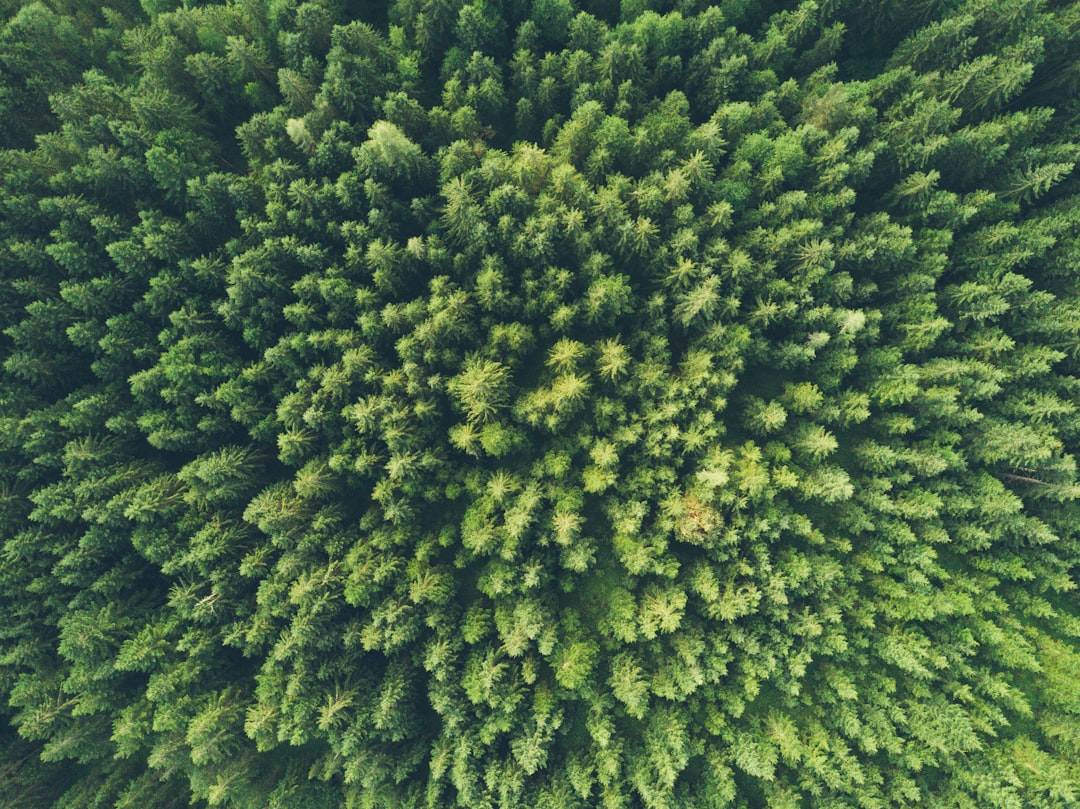
Photo by John O'Nolan on Unsplash
Drive along the backroads of eastern North Carolina, and you'll find something that looks like it belongs in a post-apocalyptic film. Thousands of dead trees stand in shallow water, their bleached trunks stripped of bark and branches, stretching across entire swaths of what used to be thriving freshwater forests. Locals call them "ghost forests." Scientists call them a warning we're not heeding fast enough.
These aren't natural die-offs from disease or insect infestations. They're the direct result of sea level rise pushing saltwater further inland than it has in centuries, transforming freshwater ecosystems into salt marshes in the span of just a few decades. And the phenomenon isn't limited to North Carolina—it's happening from Massachusetts to Texas, wherever coastal freshwater forests meet the encroaching Atlantic.
How Salt Water Kills a Forest Overnight
Here's the thing about trees: most of them evolved to drink fresh water, not salt. When saltwater creeps into the soil where trees have their roots, it fundamentally breaks their ability to absorb water. It's not that the trees drown exactly. It's more like they're surrounded by water they can't actually drink. Osmosis works against them—water molecules are pulled out of the roots toward the salty soil, essentially dehydrating the tree from the inside out.
A loblolly pine or a red maple didn't evolve any defense against this. So when sea levels rise and high tides start reaching further into coastal areas, the process accelerates. A forest that survived for 300 years can be dead and ghost-white within 10 to 15 years once the salt intrusion reaches critical levels.
The timeline is shocking. Research from Duke University and East Carolina University found that in some areas of North Carolina's Albemarle Sound region, freshwater forests turned into salt marsh in less than 20 years. Researchers discovered that what had been thriving pine and cypress stands in 1995 were completely dead or dying by 2016. Trees that had weathered centuries of storms, droughts, and hurricanes couldn't survive the slow, invisible creep of saltwater into their root systems.
The Data Is Terrifying, but Nobody's Talking About It
Sea levels along the North Carolina coast are rising about 4.5 millimeters per year. That might sound trivial, but it's roughly double the global average. This isn't just because the ocean is expanding from climate change—though that's definitely happening. It's also because the land is sinking. The Atlantic coast is experiencing significant subsidence, which is a fancy way of saying the ground is literally settling and compacting under its own weight after the last ice age.
Combined, these forces mean the relative sea level rise in places like Norfolk, Virginia, and the North Carolina barrier islands is among the fastest anywhere on Earth. The National Oceanic and Atmospheric Administration (NOAA) projects that sea levels could rise another 1 to 4.5 feet by 2100, depending on emissions scenarios. That's not a distant future problem—that's happening during many readers' lifetimes.
The ghost forests are the canary in the coal mine. They're telling us that the transition isn't gradual. It's happening in discrete jumps. You get a series of unusually high tides, some extra storm surge, a few years of wetter conditions, and suddenly the invisible line where saltwater can reach moves inland another quarter mile. The forest doesn't have time to adapt. It just dies.
What the Ghost Forests Actually Cost Us
When people hear about coastal forest loss, they often think about aesthetics or wildlife habitat—important things, sure, but abstract. Here's why it actually matters in concrete terms: coastal forests are carbon storage facilities. Those trees have been pulling carbon from the atmosphere for centuries and locking it into their wood. When they die and decompose, that carbon gets released right back into the air, accelerating climate change.
A 2020 study published in the journal Nature estimated that ghost forests in the U.S. are converting roughly 6,000 hectares of forested wetland to salt marsh every year. That's an area roughly the size of 8,500 football fields. The carbon release from this transformation is significant—we're looking at hundreds of thousands of tons annually.
Beyond carbon, there's the loss of timber value, the disruption of freshwater aquifers that communities rely on (saltwater intrusion affects groundwater too), and the collapse of fisheries that depend on freshwater-loving species. Coastal economies built on forestry, fishing, and agriculture face genuine threats.
The Uncomfortable Truth: We're Not Really Preparing
So what are we doing about it? Less than you'd hope. Most climate adaptation strategies focus on building seawalls, elevating buildings, and improving stormwater management. These are Band-Aids on a bullet wound.
The real conversation we should be having is about managed retreat—strategically moving human infrastructure away from areas we know will become uninhabitable. We should be planning for the fact that some regions will become unlivable within 50 years. But that's politically toxic. Telling people their property values will plummet and their communities will need to relocate doesn't win elections.
Meanwhile, the ghost forests keep growing. Every year, more acres of living forest convert to dead wood and salt marsh. The ecosystems don't wait for us to get our policy act together. They just respond to the physics of salt, water, and rising sea levels.
If you want to understand what climate change actually looks like—not as computer models or abstract data, but as a living, dying thing—visit a ghost forest. Bring a camera. Bring your kids. And understand that what you're seeing isn't a natural cycle. It's a choice we made, collectively, to keep burning fossil fuels rather than change our energy systems.
The trees are just the first casualties. But if we don't change course, we won't be far behind.
For more on environmental degradation from human activities, check out our article on the microplastic invasion affecting ecosystems and human health.
Comments (0)
No comments yet. Be the first to share your thoughts!
Sign in to join the conversation.