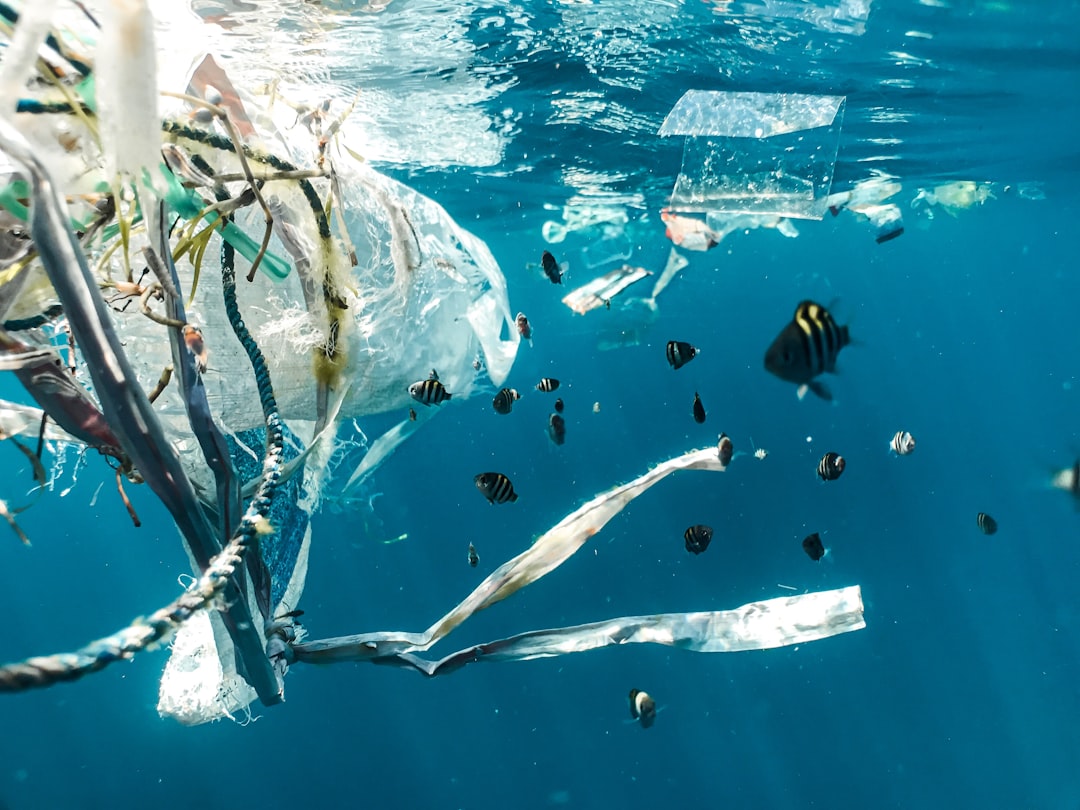
Photo by Naja Bertolt Jensen on Unsplash
Drive along the backroads of North Carolina's Outer Banks, and you'll encounter something that looks like a scene from a post-apocalyptic film. Miles of skeletal trees jut from murky water, their bleached trunks stripped of bark and branches. They're dead. Completely, utterly dead. Yet they stand, ghostly sentinels marking the transformation of freshwater forests into brackish marshes. These are ghost forests—and they're expanding rapidly across America's Atlantic and Gulf coasts.
When Saltwater Invades the Treeline
Ghost forests aren't a natural phenomenon we've simply overlooked until now. They're a direct consequence of sea level rise, which has accelerated dramatically over the past few decades. As oceans creep inland, they transform the soil chemistry in ways that trees simply cannot tolerate. Freshwater-dependent species like loblolly pines, tupelo, and bald cypress have no defense against the salt intrusion that poisons their root systems.
The numbers are striking. Research from East Carolina University found that sea levels in parts of North Carolina are rising faster than anywhere else on the continental U.S.—roughly 3.5 to 4.5 millimeters per year. That's nearly double the global average. While it might sound insignificant, compound that rate over decades, and you get massive coastal retreat. In some areas, the saltwater line moves inland by 100 feet or more each year.
What makes this particularly unsettling is the speed. These forests didn't die from a single hurricane or storm surge. Instead, they succumbed gradually to chronic, creeping saltwater intrusion. Trees that survived centuries of Atlantic storms are now capitulating to something invisible—the slow, relentless rise of the ocean itself. A pine that germinates today might live 30 or 40 years before the advancing salt line reaches it. Then it simply stops growing, its needles turn reddish-brown, and within a few years, it's dead.
The Invisible Culprits Behind the Rise
Why is sea level rising so aggressively? The primary cause is climate change, operating through multiple mechanisms. Warming temperatures cause ocean water to expand—a phenomenon called thermal expansion. But that's only part of the story. The real acceleration comes from melting ice sheets in Greenland and Antarctica. As these colossal frozen reservoirs shed water into the ocean at an unprecedented rate, coastal communities face a kind of hydrological reckoning.
There's a secondary culprit that complicates matters further: land subsidence. Many coastal regions are sinking due to groundwater extraction, oil and gas drilling, and natural geological processes. North Carolina's coast sits on the Atlantic continental margin, where the land is naturally subsiding. This means the relative sea level rise—what residents actually experience—is even more dramatic than global averages suggest. The land is dropping as the water rises, creating a double squeeze.
Scientists estimate that ghost forests will continue expanding across millions of acres over the coming decades. A study published in Nature Communications projected that by 2050, vast swaths of the mid-Atlantic coastline could experience similar transformations if current trends persist.
The Ecological Cascade
You might think a dead forest is simply lost space. The reality is far more complicated—and troubling. Ghost forests represent a fundamental reorganization of coastal ecosystems, with consequences that ripple through food webs and habitat structures.
Freshwater forests are biodiversity hotspots. They shelter migratory birds, support populations of terrestrial insects, and provide breeding grounds for amphibians. When these forests transition to salt marshes, some species find opportunity. Salt marshes support their own rich ecology—fiddler crabs, salt marsh grasses, and fish nurseries. But the transition itself is violent. Many species dependent on freshwater forests have nowhere to go. The timing is catastrophically poor for migratory species that return year after year to nesting sites that no longer exist.
The carbon sequestration capacity also shifts dramatically. Mature forests act as carbon sinks, storing atmospheric carbon in wood and soil. As trees die and decompose, they release that stored carbon back into the atmosphere. Salt marshes, while valuable, sequester carbon differently and less effectively per unit area. Over the long term, the conversion could represent a net loss in the region's ability to mitigate climate change.
For a deeper understanding of how interconnected forest systems truly are, check out our article on the mycorrhizal network and how fungi create underground communication systems in forests. The forest's hidden infrastructure—which ghost forests are destroying—is far more complex than the trees themselves.
What Happens to the Communities Living Here?
Ghost forests aren't just an environmental abstraction. They're changing the economic and cultural reality of coastal towns. Families with generations-deep roots in these areas are watching their surroundings transform. The timber industry is facing pressure as merchantable forests give way to dead zones. Hunting and fishing—cornerstones of rural coastal culture—become increasingly difficult as habitats shift.
Real estate values fluctuate wildly as people attempt to assess their long-term safety and investment security. Some communities are beginning managed retreats, relocating inland. Others are experimenting with adaptation strategies—building living shorelines with native vegetation, installing oyster reef structures, or elevating buildings. These solutions help, but they're expensive and only partially effective against the underlying problem: the ocean is rising, and it's not stopping.
A Warning Written in Dead Wood
Ghost forests serve as visceral, undeniable evidence that climate change isn't some distant, abstract threat. It's here, and it's altering the physical structure of our coast in ways we can see and quantify. The skeletal trees standing in saltwater aren't just markers of ecological loss. They're warnings written in dead wood, visible reminders that the systems we depend on are more fragile than we'd like to believe.
The question now is whether we'll heed what these forests are telling us. Reducing greenhouse gas emissions remains the only path toward stabilizing sea levels. Everything else—adaptation, migration, new technology—is triage. The ghost forests will continue spreading unless and until we fundamentally change how we power our civilization. Until then, more trees will die, more forests will fall silent, and more communities will face impossible choices about their futures.
Comments (0)
No comments yet. Be the first to share your thoughts!
Sign in to join the conversation.