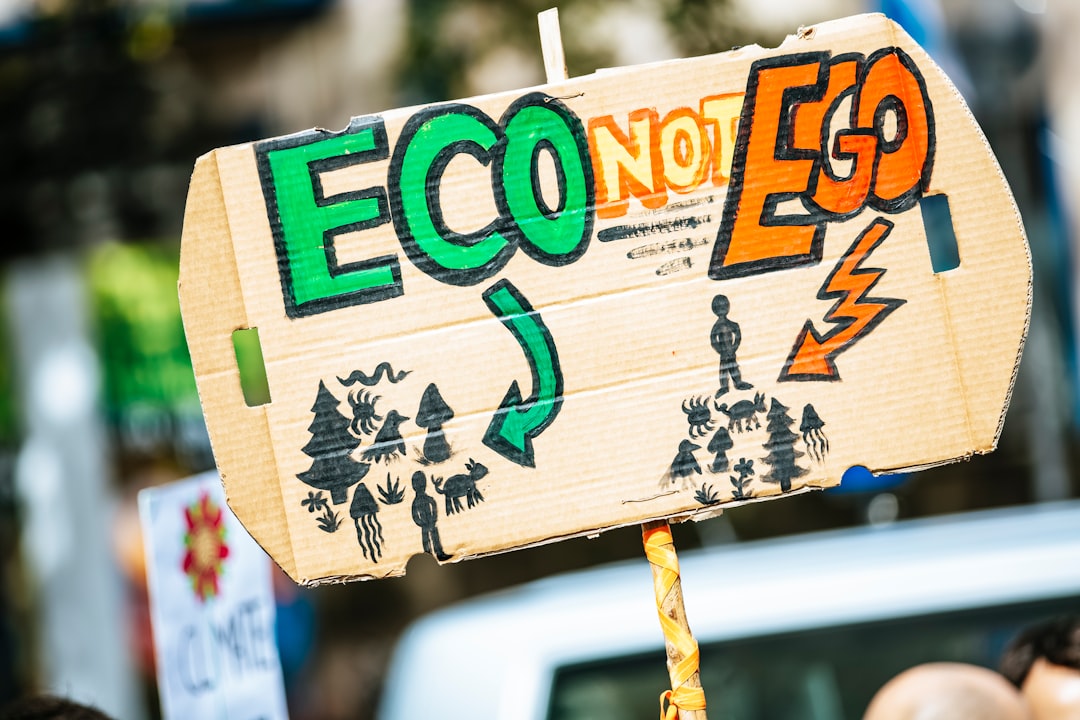
Photo by Markus Spiske on Unsplash
When climate scientists talk about carbon storage, most people think of dense rainforests or sprawling wind farms. Nobody pictures dirt. Yet soil—that humble, overlooked substance we walk across without a second thought—holds nearly twice as much carbon as the entire atmosphere. A single teaspoon of healthy soil contains more microorganisms than there are people on Earth. These aren't random facts meant to impress at dinner parties. They're a wake-up call about where our real climate solutions hide.
The Hidden Carbon Bank Beneath Our Feet
Soil is essentially fossilized sunlight. Plants pull carbon dioxide from the air through photosynthesis, and when they die, much of that carbon gets locked underground. Over centuries and millennia, this creates an enormous carbon reservoir. The world's soils contain approximately 2,344 gigatons of carbon—more than three times what's in the atmosphere and all living plants combined. This isn't theoretical or distant. This is happening in gardens, farms, and forests everywhere.
Here's where it gets troubling. Modern agriculture has become a carbon release machine. When we plow fields, we expose soil carbon to oxygen, triggering decomposition and releasing stored carbon as CO2. Monoculture farming depletes the organic matter that makes soil rich and carbon-dense. Chemical fertilizers kill the microbial communities that build soil structure. The result? Agricultural soils globally have lost about 50-70% of their original carbon content since industrialization began. We've essentially been mining carbon from the ground and sending it into the atmosphere while simultaneously destroying our ability to store more.
The numbers are staggering. Agriculture accounts for roughly 24% of global greenhouse gas emissions. A significant portion of that comes from degraded soils simply exhaling carbon they've held for thousands of years. One hectare of depleted soil might release 5-10 tons of CO2 equivalent annually—the same as driving a car for a year. Multiply that across the billions of hectares under cultivation worldwide, and you're looking at a climate bomb we've been quietly detonating.
Regeneration: Putting Carbon Back Where It Belongs
The good news? This process isn't irreversible. Regenerative agriculture—farming practices designed to rebuild soil rather than deplete it—can actually reverse carbon losses and turn farms into carbon sinks. Farmers using these methods report improvements so dramatic they read like science fiction.
Consider what happens when you stop plowing. No-till farming leaves soil structure intact, preserves microbial communities, and dramatically reduces carbon release. Cover crops and crop rotation feed soil microbes and add organic matter. Composting and manure application rebuild carbon stores. Diverse polyculture systems create more complex ecosystems that store carbon more efficiently than monocultures. In a study by the Rodale Institute, regeneratively managed fields sequestered 1-2 tons of additional carbon per hectare annually. That's not just stopping emissions—that's actively pulling carbon from the atmosphere.
Several farms across North America have already made the transition. Gabe Brown's ranch in North Dakota, which practices intensive rotational grazing and diverse cropping, has increased soil organic matter from less than 2% to over 5% in just two decades. His soil now holds vastly more water, requires fewer inputs, and produces higher yields. He's become a visible example of what regeneration looks like at scale. Other farmers report similar successes: improved drought resilience, better nutrient density in crops, reduced need for chemical inputs, and enhanced biodiversity.
Why This Matters—And Why We're Moving Slowly
If soil regeneration is so effective, why haven't we transformed agriculture already? The answer is disappointingly bureaucratic and economic. Current subsidies heavily favor industrial monoculture. Banks are reluctant to finance farmers during the transition period when yields might initially dip. Commodity prices reward volume over quality. Measurement and verification of soil carbon remains complex and expensive, making carbon credit systems uncertain.
There's also a psychological barrier. Industrial agriculture emerged as a symbol of progress and efficiency. Suggesting we return to more traditional soil management feels backward to many. It requires admitting that the supposedly advanced system is actually breaking one of our most essential resources.
Yet momentum is building. The EU is implementing mandatory soil carbon monitoring. Companies like Indigo Ag and Nori are creating carbon credit markets specifically for soil. Patagonia has begun requiring regenerative practices from suppliers. Insurance companies are starting to offer better rates for regeneratively managed land. Climate-focused investment funds are seeking agricultural opportunities. These aren't charity cases—regenerative farming increasingly looks like the more profitable long-term strategy.
What You Can Actually Do
If you have access to land—even a small yard or balcony—you can participate. Stop using chemical pesticides and fertilizers. Build compost. Plant perennials and native species. Let grass grow longer and mulch when you mow. If you garden, add compost annually. These actions rebuild soil carbon in your immediate vicinity.
If you don't have land, support farmers doing this work. Buy from regenerative farms when possible. Vote for politicians supporting agricultural transformation. Ask your grocery stores about sourcing practices. Related to this topic, you might explore The Microplastic Invasion: Billions of Tiny Particles Are Now Inside Your Body, which reveals how our food systems connect to broader environmental contamination.
The soil beneath your feet isn't just inert matter. It's a living system, a carbon vault, and a direct connection between what we do and our planetary future. For decades, we treated it as worthless—something to chemically sterilize and extract value from. We're finally recognizing it for what it truly is: one of our most powerful tools for climate action. The revolution won't be televised. It'll happen quietly, in gardens and fields, one handful of regenerated soil at a time.
Comments (0)
No comments yet. Be the first to share your thoughts!
Sign in to join the conversation.