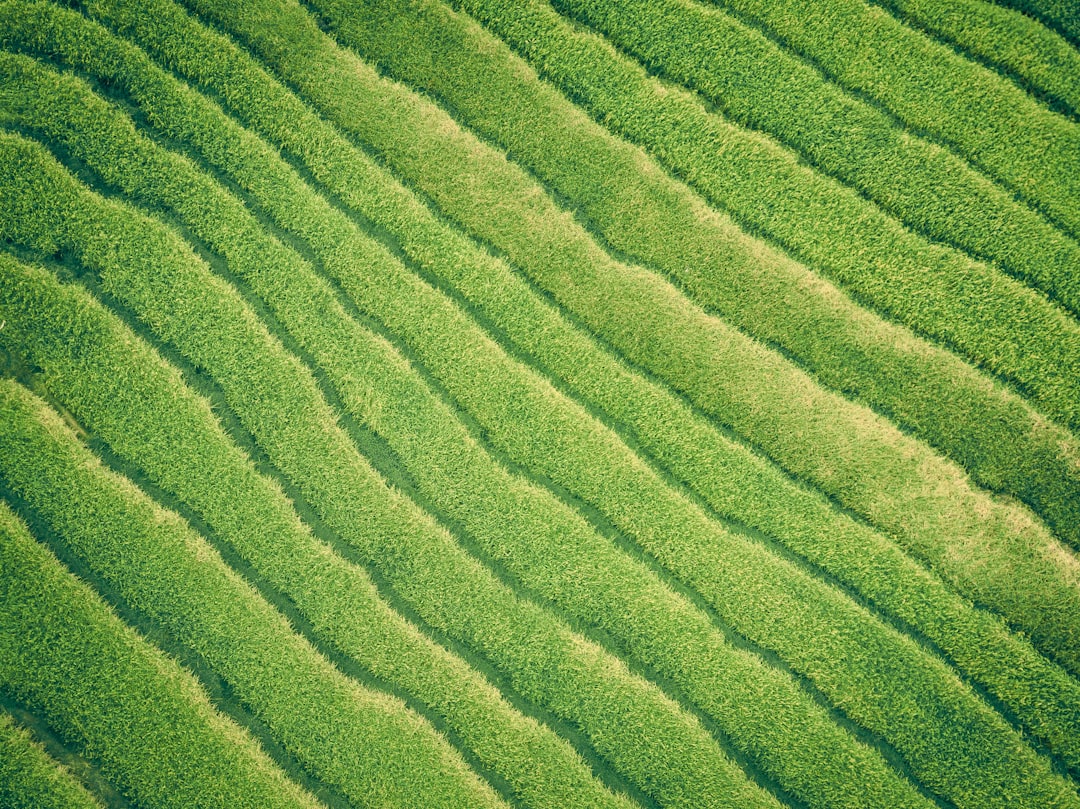
Photo by Ivan Bandura on Unsplash
When Rivers Stop Flowing to the Ocean
Every summer, a massive stretch of the Gulf of Mexico turns into a graveyard. Fish can't survive there. Crustaceans flee. Bacteria thrive. This isn't a natural disaster—it's the predictable consequence of how we grow food in the American heartland. The dead zone off the Louisiana coast has grown to roughly the size of New Jersey, and it's been getting worse for three decades.
The culprit? Nitrogen and phosphorus runoff from agricultural operations, primarily corn and soybean farms across the Midwest. These nutrients leach into the Mississippi River, which drains them straight into the gulf. Once there, the excess nutrients trigger explosive algae blooms. When that algae dies and decomposes, it consumes all the oxygen in the water, creating what scientists call hypoxic zones. Nothing with gills can live there.
Following the Nitrogen From Farm to Fisherman
The mechanism is straightforward, which somehow makes it worse. Farmers across Iowa, Illinois, and Minnesota apply synthetic fertilizers to boost yields. They're not wrong to do it—chemical fertilizers have enabled us to feed billions of people. But here's the problem: plants only use about 50-60% of the nitrogen applied to fields. The rest washes away with rain or leaches underground into aquifers.
Mike Schrader, a fourth-generation farmer in northeast Iowa, watched his family's corn yields climb for years thanks to heavy nitrogen applications. Then his daughter brought home a research paper about dead zones. "I remember thinking, 'That's my nitrogen doing that,' " he told me during a phone conversation. "I wasn't sleeping great after that."
The numbers are staggering. The U.S. applies roughly 11 million tons of nitrogen fertilizer annually. The Mississippi River basin alone discharges between 500,000 and 1.3 million tons of nitrogen into the gulf each year. Not all of it comes from synthetic fertilizers—livestock waste contributes significantly too—but the agricultural sector's fingerprints are all over the problem.
The Dead Zones Aren't Just in America
This isn't a Gulf of Mexico story. The Chesapeake Bay, the Baltic Sea, the Yangtze River estuary in China, the Black Sea—they all have dead zones. The World Resources Institute identified 415 dead zones globally, covering roughly 95,000 square miles. That's roughly the size of the entire United Kingdom, rendered biologically inactive.
Commercial fisheries suffer immediate consequences. Shrimpers in Louisiana have watched their catches decline dramatically. In the Baltic Sea, the dead zone expansion has devastated cod populations. A 2022 study suggested that dead zones cost the global economy roughly $226 billion annually through lost fisheries, tourism, and human health impacts.
What really struck me was learning that dead zones create a vicious cycle. As oxygen disappears, fish and shellfish die or migrate elsewhere. This reduces predators that would normally help control algae growth. The dead zone actually becomes *more* favorable for the algae that created it in the first place.
What Changed on Schrader's Farm
Mike Schrader didn't just feel guilty—he did something about it. He started experimenting with cover crops, planting rye and clover on his fields during winter months when they normally sat bare and vulnerable to leaching. These living root systems capture excess nitrogen and lock it into the soil instead of letting it wash away.
His yields dipped slightly in the first few years. His nitrogen fertilizer costs dropped, though. More importantly, soil organic matter increased, which improved water retention and reduced erosion. By year four, his yields bounced back. Now, fifteen years later, his operation looks radically different from neighboring farms. He's also using precision agriculture tools—soil sensors and variable-rate fertilizer application—to avoid over-applying nutrients.
"I'm not going to save the dead zone single-handedly," Schrader said. "But if thousands of us did what I'm doing, it would matter."
The Policy Problem Nobody Wants to Touch
Here's where it gets complicated. Fixing dead zones requires coordinated action across multiple states and sectors. Farmers need incentives to change practices. Policymakers need to make space for regulation without killing agricultural competitiveness. Processing companies need to adjust their sourcing expectations. Consumers need to accept potentially higher food prices.
The USDA does offer cost-sharing programs for cover crops and conservation practices, but participation remains voluntary and underfunded relative to the scale of the problem. Some states have proposed nitrogen application caps or water quality trading programs, but agricultural lobbies push back hard.
What's frustrating is that solutions exist. They're not even particularly exotic. Buffer strips along waterways reduce runoff. Rotational grazing prevents nutrient concentrations. Precision fertilizer application cuts waste. Perennial crops like switchgrass require fewer inputs than annual monocultures. We know what works. Implementation is what's lacking.
The Mississippi River Basin Initiative, launched in 2008, set an ambitious goal of reducing nitrogen loading into the gulf by 45%. We're not close. Current reductions hover around 5-8%. Unless something changes dramatically, the dead zone will continue expanding, and the economic and ecological costs will keep climbing.
Maybe the real shift happens one farm at a time, like Schrader's. Maybe it happens through regulation. Probably, it requires both. But the dead zones won't wait for us to figure out policy. They expand every summer, a growing monument to our agricultural system's hidden costs. For anyone interested in the broader ecosystem collapse happening beneath the surface, I'd recommend reading about the insect apocalypse and why your garden's gone quiet—it's part of the same troubling pattern.
Comments (0)
No comments yet. Be the first to share your thoughts!
Sign in to join the conversation.