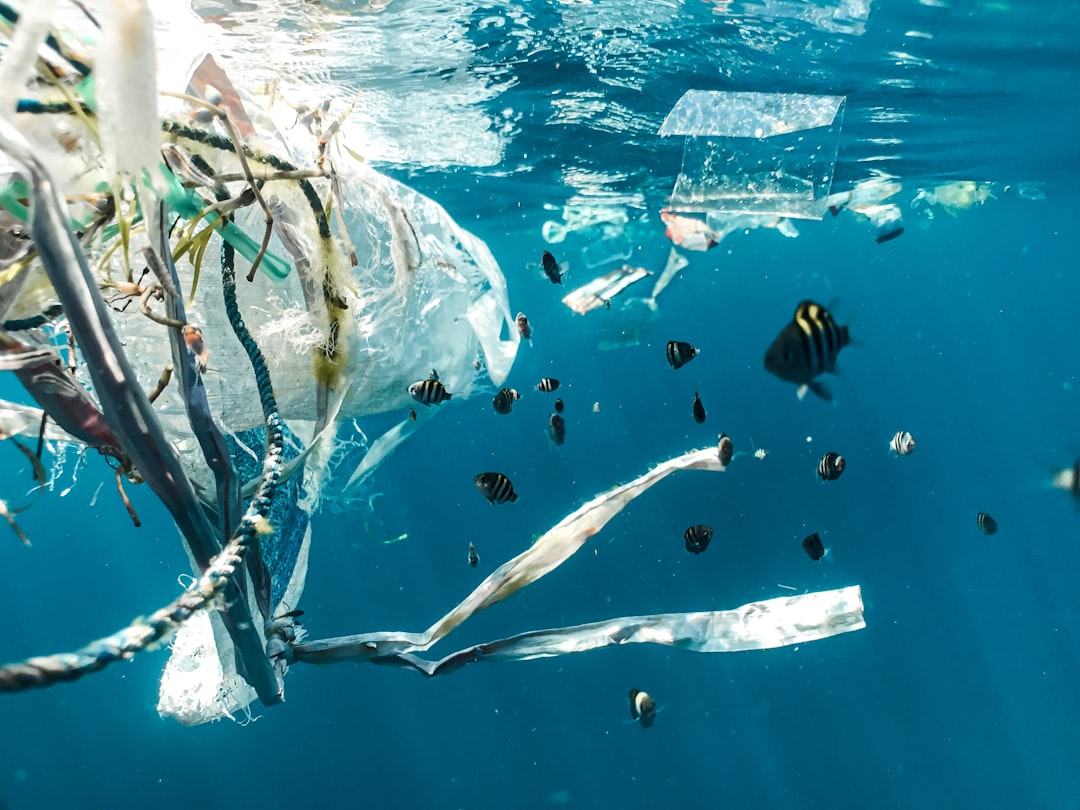
Photo by Naja Bertolt Jensen on Unsplash
On a gray November morning, Tom Bauer waded into the Little Sioux River with a shovel and a vision that most of his neighbors thought was pure insanity. The water was murky, choked with algae, and hadn't supported a healthy fish population in over thirty years. This wasn't supposed to work. Yet five years later, minnows dart through the shallows, herons hunt along the banks, and the river's oxygen levels have climbed out of the danger zone.
Bauer's transformation of his 200-acre stretch of Iowa farmland represents something increasingly rare in American agriculture: a complete reversal of industrial river management. Instead of fighting his water system with concrete and chemicals, he's working with nature. The results are reshaping how we think about environmental restoration.
The Death of a Thousand Cuts
America's interior rivers didn't become dead zones overnight. They died a slow, methodical death through a century of agricultural choices that seemed perfectly sensible at the time.
Starting in the 1950s, farmers like Bauer's father straightened meandering rivers into efficient canals. The reasoning was logical: straighter water meant faster drainage, which meant better cropland. Wetlands were drained. Riparian buffers—those crucial strips of vegetation along riverbanks—were ripped out to maximize planting space. By the 1980s, the Little Sioux looked less like a river and more like a drainage ditch.
The consequences accumulated silently. Without vegetation to filter runoff, nitrogen and phosphorus from fertilizers flowed directly into the water. Straight channels moved water too quickly for any ecosystem to establish itself. Fish habitat vanished. The river became a conveyor belt of chemicals, not a living system.
When the Environmental Protection Agency measured the Little Sioux in 1995, dissolved oxygen levels registered at 2 milligrams per liter. Most fish need at least 5. The river was technically alive, but barely.
The Crazy Idea That Actually Works
Tom Bauer first mentioned his plan at the local feed store, where he was met with barely concealed eye rolls. He wanted to remove drain tiles from his fields. He wanted to replant willows and sedges. He wanted to reintroduce beavers.
In agricultural communities where efficiency is gospel, this sounded like economic suicide.
"I lost maybe 12 percent of productive acreage," Bauer told me, walking through a section of his property where native grasses now wave instead of corn. "But my input costs dropped dramatically. I'm not buying as much fertilizer because the restored wetlands filter the water naturally." He paused. "And honestly, I sleep better at night."
What Bauer didn't fully anticipate was the cascading ecological recovery. The replanted vegetation created shade, which lowered water temperature. The slower-moving water behind beaver dams allowed sediment to settle out. Insects—mayflies, caddisflies, stoneflies—returned in numbers not seen in decades. By 2019, fish surveys counted 47 different species in his stretch of river. Five years earlier, that number had been 8.
The beavers, which Bauer was initially skeptical about, became the restoration's unlikely MVPs. Their dams created pools that became spawning grounds. The dams raised water tables, feeding adjacent wetlands. One dam constructed in 2018 now supports a small population of muskrats, otters, and turtles.
A Model That's Actually Spreading
Bauer's success hasn't remained a local curiosity. The Nature Conservancy noticed his work in 2017 and began documenting the changes. That attention sparked something unexpected: other farmers started calling.
Today, seventeen adjacent landowners have begun similar restoration work on their properties. The collective effort now spans almost 3,000 acres of the Little Sioux watershed. Initial water quality data suggests dissolved oxygen levels in the main channel have climbed to 4.2 milligrams per liter—still not perfect, but moving in the right direction for the first time in three decades.
What makes this model different from traditional conservation efforts is that it's farmer-led and economically transparent. Government agencies didn't mandate this. Environmentalists didn't impose it from outside. Bauer's neighbors are adopting it because they can see the results and understand the financial logic.
"The real revelation," says Sarah Chen, an agricultural economist at Iowa State University, "is that restoring ecosystem health doesn't have to mean less farming. It means different farming." Chen's research shows that farmers in Bauer's region who've adopted riparian restoration spend an average of $800 less per acre annually on inputs once the system stabilizes.
For context, consider the scope of America's agricultural waters. Of the Mississippi River's 1.25 million-square-mile drainage basin, roughly 40 percent comes from agricultural land. Similar conditions plague the Ohio, Missouri, Arkansas, and Platte Rivers. If Bauer's model scaled, it could transform water systems across the entire continent.
The Remaining Obstacles
Success stories are encouraging, but Bauer is the first to admit that replication faces real barriers. Most farmers operate on thin margins that don't accommodate a 12 percent acreage reduction. Government farm subsidy programs still incentivize maximum production. And unlike Bauer, not every farmer has the time or patience to experiment.
There's also a learning curve that's genuinely steep. Bauer spent his first two years making expensive mistakes—planting willows in the wrong soil type, underestimating how aggressively beavers would dam certain areas, misjudging water flow rates.
Perhaps most challenging is the timeline. Ecological recovery measured in decades, not quarters, makes it incompatible with conventional agricultural investment models. A farmer won't see measurable returns for 3-5 years. That's not how commodity farming works.
Yet if you've spent time on the Little Sioux lately, you understand what Bauer is chasing. Last summer, a local high school biology class measured dissolved oxygen and water clarity—metrics they're tracking year to year. An osprey pair has nested on the river for two consecutive seasons. The murkiness that characterized the water for decades has cleared considerably.
Bauer's work suggests something heretical in agricultural circles: that the most profitable farm operation might be one that works with natural systems instead of against them. For a river that most people had written off as permanently dead, that could be the difference between extinction and recovery.
If you're interested in how industrial practices harm aquatic ecosystems, you might also want to read about Ghost Fishing: The Abandoned Nets Killing Oceans Silently—another human activity with profound environmental consequences.
Comments (0)
No comments yet. Be the first to share your thoughts!
Sign in to join the conversation.