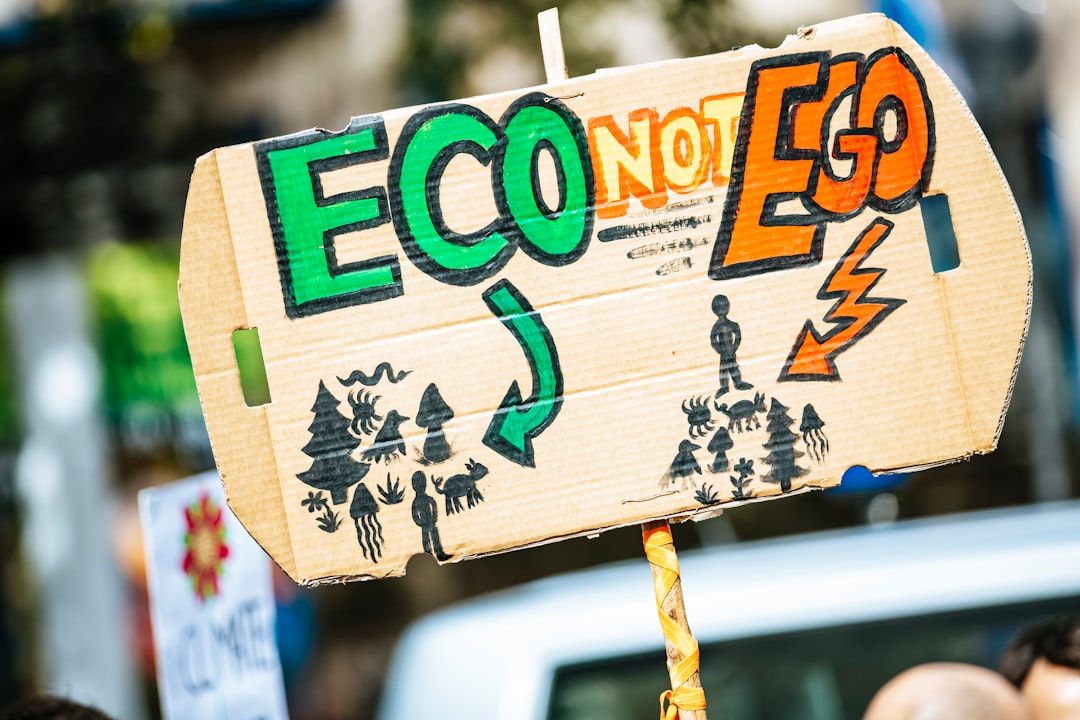
Photo by Markus Spiske on Unsplash
Every summer, a swath of the Gulf of Mexico roughly the size of New Jersey becomes a graveyard. Fish flee. Crustaceans burrow into the mud. Anything that can't escape dies. This isn't a temporary condition. It happens year after year, predictable as a season, invisible to everyone above the waterline.
These are hypoxic zones—areas where oxygen levels drop so low that most marine life cannot survive. And they're not unique to the Gulf. Since the 1960s, the number of dead zones worldwide has quadrupled. Today, over 700 dead zones cover roughly 245,000 square kilometers of ocean. To put that in perspective, that's larger than the entire state of New Zealand.
What's particularly unsettling is how recent this explosion has been. Between 1960 and 2010, dead zones expanded exponentially. We're not just seeing a slow degradation—we're watching an ecological system collapse in real time, accelerated by a combination of agricultural runoff, climate change, and coastal development that we've known about for decades but have failed to adequately address.
The Nitrogen Fertilizer Highway to Oblivion
The origin story of most dead zones traces directly back to American farms. When farmers in Iowa, Illinois, and Minnesota apply nitrogen-heavy fertilizers to their crops, something interesting happens: not all of it gets absorbed by the plants. Excess nitrogen washes into rivers. Those rivers feed the Mississippi. The Mississippi dumps directly into the Gulf of Mexico.
Since the 1950s, nitrogen fertilizer use has exploded. We apply it because it works—it produces more food, feeds more people, fuels economies. But the unintended consequence is that nutrient-laden water reaches the Gulf, triggering massive algal blooms. When these algae die and decompose, they consume oxygen. The water becomes anoxic. Dead zones form.
The numbers are staggering. The Mississippi River basin—which drains 40% of the continental United States—now carries approximately 1.57 million tons of nitrogen annually into the Gulf. That's roughly 10 times what it carried in 1900. Agricultural runoff also introduces phosphorus, creating a double hit that supercharges algal growth.
What's infuriating is that this isn't mysterious. Researchers identified the nitrogen-dead zone connection in the 1970s. We've known the problem for fifty years. Yet nitrogen fertilizer use has continued climbing, and dead zones have continued expanding, because the economic incentives for farmers to reduce fertilizer are weak while the incentives to maximize yields remain strong.
Climate Change Is Turning Up the Heat
If agricultural runoff is the primary culprit, climate change is the accomplice that's making everything worse. Warmer water holds less oxygen. Simple chemistry, devastating consequences.
As ocean temperatures rise, the water column becomes more stratified—warmer layers on top, colder layers below. This stratification prevents oxygen from mixing downward into deeper waters. The result is oxygen depletion happens faster and creates stronger barriers that prevent recovery. It's like watching an ecosystem being suffocated in slow motion.
In 2023, the Gulf's dead zone expanded to roughly 8,600 square miles—larger than the state of New Hampshire. Forecasters had predicted around 5,300 square miles. The discrepancy highlights how climate models are struggling to keep pace with the accelerating degradation. We're not just dealing with the problem we predicted; we're dealing with a worse version of it.
The Baltic Sea tells a similar story. With warming temperatures and persistent nutrient loading, dead zones there have become nearly permanent fixtures rather than seasonal events. Some years, hypoxic conditions persist for months at a time, turning productive fishing grounds into biological deserts.
The Ecosystem Collapse We're Not Talking About
When oxygen disappears, entire food webs collapse. Fish that need oxygen migrate away or die. Benthic organisms—the creatures living on the ocean floor that form the foundation of marine food chains—get wiped out. We're not just losing individual animals; we're dismantling ecosystems.
The commercial fishing industry has already felt the impact. In the Gulf, shrimpers have had to move their operations. Fisheries that depended on diverse species have shifted to rely on only the most resilient species—usually jellyfish and other opportunistic organisms that thrive in low-oxygen conditions. This isn't adaptation; it's impoverishment.
But perhaps the most troubling aspect is the feedback loop we've created. As dead zones expand and ecosystems degrade, their ability to recover weakens. Degraded systems are more vulnerable. More vulnerable systems are easier to collapse further. We're approaching tipping points where some dead zones might become permanent features rather than seasonal variations. If that happens, restoration becomes exponentially harder and more expensive—if it's even possible at all.
For more context on how interconnected ecological systems truly are, consider the mycorrhizal network beneath forests, which reveals how disturbance in one part of an ecosystem can cascade unpredictably through connected systems.
What Would Actually Work
Here's the uncomfortable truth: we know how to fix this. We just haven't committed to doing it.
Reducing nitrogen fertilizer use in the Mississippi River basin by 25% would cut dead zone size by roughly half. That's not some speculative number—that's based on extensive modeling. We could achieve this by promoting cover crops, improving fertilizer application timing, installing buffer strips along waterways, and investing in precision agriculture that uses less fertilizer more efficiently.
Would this cost money? Yes. Would it reduce some farmers' short-term yields? Possibly. Would it require policy changes and economic incentives that challenge existing agricultural systems? Absolutely.
But the alternative is accepting a future where hundreds of dead zones strangle our oceans while we watch. Where commercial fisheries collapse not because fish have been overharvested but because the water itself has become hostile to life. Where we've traded temporary agricultural gains for permanent ecological losses.
The window for meaningful action is narrowing. Every year we delay makes recovery harder. Every year of increased fertilizer use and warming temperatures pushes us deeper into a crisis that our grandchildren will inherit as permanent reality. The dead zones aren't coming. They're already here. And they're growing.
Comments (0)
No comments yet. Be the first to share your thoughts!
Sign in to join the conversation.