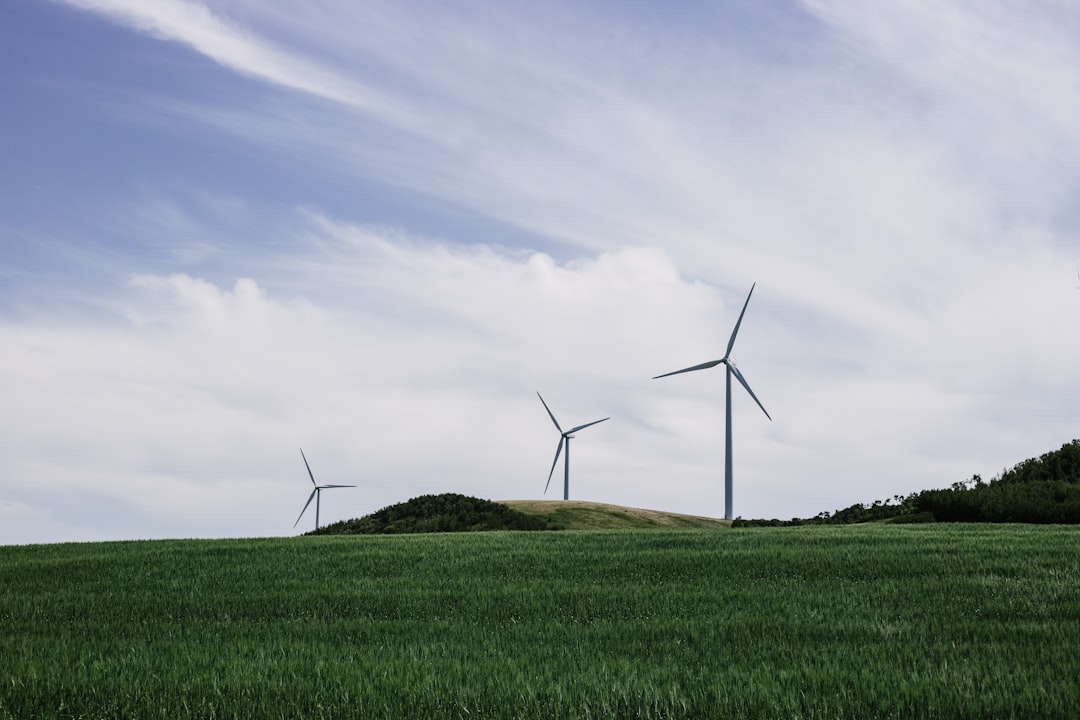
Photo by Priscilla Du Preez 🇨🇦 on Unsplash
Palisade, Colorado sits in a valley so beautiful it almost hurts to look at. Red rock cliffs tower above orchards that have thrived here for over a century. But if you stand at the edge of town and listen long enough, you'll notice something unsettling: the river that built this place is disappearing.
The Colorado River is sick. Really sick. And the sickness is spreading downstream, affecting 40 million people across seven states and Mexico. This isn't speculation or doom-mongering. It's happening now, and the consequences are reshaping how America thinks about water, survival, and the cost of climate change.
The Numbers Don't Lie
The Colorado River was supposed to flow 15 million acre-feet of water per year. That measurement still shows up in the 1922 compact that governs who gets what water—a document written during an unusually wet period, a detail nobody mentioned at the time.
Reality is far less generous. Between 2000 and 2023, the river delivered an average of just 12.4 million acre-feet annually. Some years it's lower. The river has become so depleted that in 2023, Lake Mead—the massive reservoir that supplies water to Las Vegas and Southern California—dropped to its lowest level since it was first filled in 1937. You could see the ghostly white "bathtub rings" on the canyon walls where water used to touch.
Lake Powell, upstream in Utah, has been equally devastated. Both reservoirs serve as the system's critical storage buffers, and they're running toward empty simultaneously. The U.S. Bureau of Reclamation had to enact emergency curtailment measures for the first time in the river's managed history. Arizona lost 21% of its water allocation. Nevada lost 25%. California—which receives the lion's share—faced cuts too.
For small communities like Palisade, these abstract percentages translate into concrete nightmares. The town's agricultural economy, built on peaches, pears, and wine grapes, depends entirely on Colorado River water diverted through local canals. When water allocations shrink, farmers face impossible choices: fallowed land, lost crops, economic collapse.
When the River Runs on Empty
Colorado farmers have been receiving reduced water supplies for three consecutive years now. Some operations have taken the heartbreaking step of stopping irrigation on entire fields. Others have leased their water rights to cities willing to pay premium prices. It's a grim auction of necessity.
The psychological toll runs deeper than economics. Third-generation orchardists watch their family legacy wither. Groundwater depletion means even wells—the supposed backup plan—are running dry in some areas. The aquifers that took millennia to fill are emptying in decades.
But Palisade's struggle also illustrates something more complex. The town sits in western Colorado, relatively upstream on the river's path. Places downstream have suffered far worse. The Salton Sea in California, once a thriving recreational destination, has become a shrinking, increasingly toxic body of water as agricultural runoff concentrates and inflow diminishes. Wetlands in the Colorado River Delta in Mexico—habitat that once supported jaguars and ocelots—have essentially vanished.
The human cost compounds layer upon layer. Indigenous communities like the Colorado River Indian Tribes have senior water rights on paper, but actually exercising those claims would mean taking water from established agricultural and urban users. It's a political minefield nobody wants to touch.
The Elephant in the Room: Climate Change
The 1922 compact assumes the Colorado River is inexhaustible. It wasn't written by scientists studying climate patterns. It was written by negotiators divvying up what they thought was an infinite resource. Then came the megadrought.
Since 2000, the Southwest has experienced the driest period in at least 1,200 years, according to paleoclimate research. Scientists have detected a clear warming trend, reducing snowpack in the Rocky Mountains and increasing evaporation from reservoirs. The river's flow has declined by roughly 20% due to climate change alone—a reduction that has rippled through every sector dependent on its water.
This matters because solutions are finite. You can't negotiate your way out of a physical shortage. You can't legislate water into existence. The 1922 compact allocated 16.5 million acre-feet total to the seven basin states and Mexico. That's 1.5 million acre-feet more than the river actually carries. The math was never going to work.
Climate models suggest it could get worse. Some research indicates the river's flow could decline another 10-30% by 2050 as warming continues. Agricultural regions face an existential question: How do you sustain farming economies when water becomes scarcer than gold?
What Happens When There's No More to Cut
Right now, states are negotiating what's called the "post-2026 framework." The current water-sharing agreement expires in 2026, and everyone needs to figure out how to divide a shrinking pie. California wants to protect its agricultural industry. Arizona needs water for Phoenix and Tucson. Nevada has already cut heavily. Mexico, with its own water-stressed regions, is part of the negotiation too.
Some proposals are radical. Importing water from the Pacific Northwest. Massive desalination plants powered by renewable energy. Agricultural transition programs that pay farmers to grow less water-intensive crops. Others suggest accepting the reality: some regions simply won't sustain their current populations without imported water.
Palisade represents a choice point. The town could fight to maintain its agricultural identity through technology and efficiency. Some local farmers have switched to drip irrigation and drought-resistant crops. Wine grapes, it turns out, produce excellent quality with less water than some traditional orchard crops. But even optimized agriculture has limits.
The harder truth is that the Colorado River can't support everyone's current expectations. Something has to give—crop patterns, population distribution, economic models. There's no technical fix that lets everyone win. There's only negotiation about who loses least.
The Question We're Not Asking
If you've been following climate and environmental news, you've probably heard about species extinction and ecosystem collapse. Read about how insect populations are vanishing, and you're touching the same thread as the Colorado River crisis. These aren't separate problems. They're symptoms of the same underlying shift: human demands are outrunning what the planet can provide.
What makes the Colorado River story particularly stark is that it's not theoretical. It's happening in real time, in a wealthy developed nation with the resources to adapt. If wealthy states can't figure out how to share water fairly while managing climate change, what hope do water-stressed regions in developing countries have?
Palisade won't disappear. American ingenuity will find ways to survive. But survival and thriving are different things. The question these communities are wrestling with now is which one they're going to get.
Comments (0)
No comments yet. Be the first to share your thoughts!
Sign in to join the conversation.